


Pengzhou Expands Drone Fleet To Strengthen Low-Altitude Services
Pengzhou, a mountainous city in southwest China’s Sichuan Province, is expanding its drone fleet to support urban management, emergency rescue operations and equipment testing. The initiative forms part of a broader effort to improve the safety and efficiency of low-altitude flight services across the city’s challenging terrain.
At the centre of this development is a smart governance centre that functions as Pengzhou’s digital command hub. The platform continuously collects real-time information on residents, vehicles and urban conditions across different districts. As a result, authorities can monitor operations more effectively and respond quickly to emerging situations.
According to Zhang Guojun, vice president of operations at Sichuan Zongheng Fuyao Technology Co., Ltd., the system was designed specifically for government services. It provides information on airspace conditions, tracks equipment and its distribution, and follows the progress of operational tasks.
Smart Governance Supported By Drones
Zhang explained that the platform enables rapid coordination during emergencies. For example, when a fire was detected during a patrol mission, the emergency command centre immediately assigned the case and transmitted instructions through the relevant departments. Various agencies then coordinated on-site efforts, leading to the successful extinguishing of the fire.
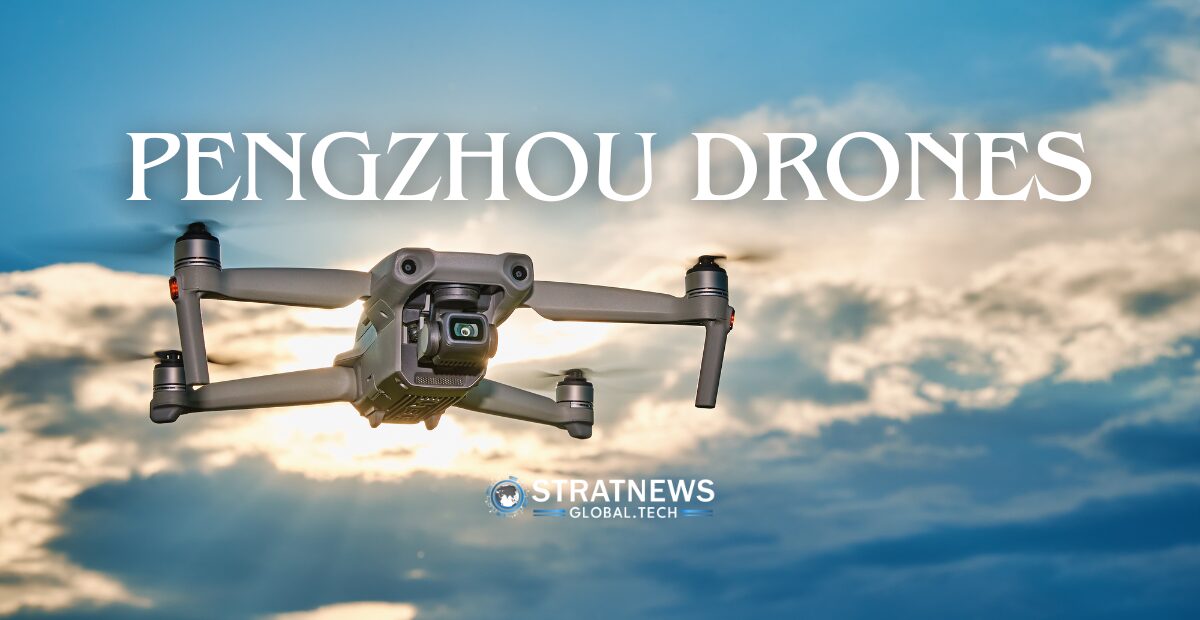
Supporting this digital infrastructure is a growing fleet of drones operating across the city and in remote mountainous areas. These aircraft perform a wide range of tasks while supplying critical data to decision-makers.
Zhang said the latest generation of drones from the company features an integrated design that allows seamless battery replacement and continuous operation. He added that 10 of these units have already been deployed in Pengzhou.
Drones Operating Across Complex Terrain
The drones carry out multiple functions throughout the region. Some survey mountain slopes and road networks, while others monitor potential disaster risks or inspect locations that are difficult to access through conventional means.
In a mountainous city such as Pengzhou, low-altitude operations provide benefits beyond saving time. They also improve the efficiency of urban management and strengthen the city’s ability to respond to emergencies and environmental challenges.
Testing Ground For Low-Altitude Aviation
Beyond its smart city ambitions, Pengzhou is also emerging as a major testing location for the low-altitude industry. The city’s elevation ranges from roughly 400 metres to nearly 4,800 metres above sea level, creating suitable conditions for aircraft testing in complex mountain environments.
Ni Feng’an, director of the Low-altitude Economy Service Department at Sichuan Xiangpeng Zhihang Technology Co., Ltd., highlighted the importance of testing aircraft performance under severe weather conditions. He noted that drones can continue missions during sudden heavy rainfall, although intense weather may prevent a safe return flight. The company is also conducting field tests to evaluate how effectively the aircraft withstand heavy rain.
Looking ahead, Zhang Zhichen, deputy chief of the Low-Altitude Economy Section at the Pengzhou Transportation Bureau, said the city is focusing on two key priorities. First, it aims to strengthen flight testing, verification and inspection services through its national-level testing base. Second, it is working with Amap to develop an integrated low-altitude system covering route planning and flight services. The objective is to build a comprehensive platform that improves operational efficiency and enhances safety throughout the region.
With inputs from Reuters