

Close Menu
Stratnews GlobalStratnews Global
    Facebook X (Twitter) Instagram
    Trending
    • Global Equity Funds Inflows Hit Five Week High On AI Optimism
    • PM AI Roundtable Highlights India’s Deeptech Innovation Push
    • Architecting India’s AI Future With Autonomy Infrastructure And Mass Empowerment
    • AI For Oceans Of Tomorrow At India AI Impact Summit 2026
    • Meta Stock Option Cuts As Meta AI Investment Surges
    • Nvidia OpenAI Investment Nears 30 Billion Agreement
    • Gaganyaan Drogue Parachute Test Marks Major Milestone For India Space Mission
    • Budget 2026: Is India Attempting A Moonshot?
    Stratnews GlobalStratnews Global
    Write for Us
    Friday, February 20
    • Space
    • Science
    • AI and Robotics
    • Industry News
    Stratnews GlobalStratnews Global
    Home » Scientists Use Drones in Breakthrough “Tap-and-Go” Whale Tagging Method

    Scientists Use Drones in Breakthrough “Tap-and-Go” Whale Tagging Method

    ReshamBy ReshamAugust 20, 2025 AI and Robotics No Comments2 Mins Read
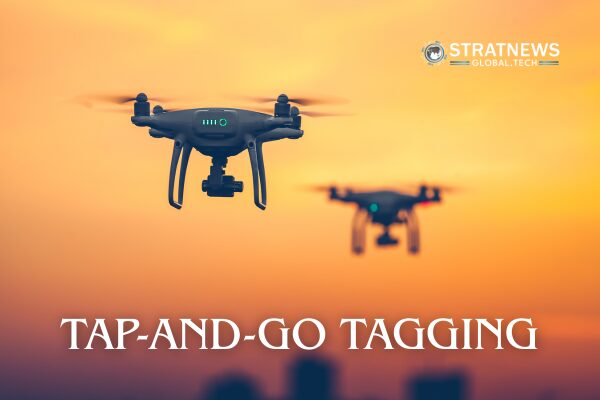
    Tap-and-go

    Researchers Pioneer Drone-Based “Tap-and-Go” Whale Tagging

    Scientists have developed an innovative “tap-and-go” method to tag whales using drones, offering a less invasive and faster approach to studying marine mammals. The breakthrough, published in PLOS One, comes from Project CETI (Cetacean Translation Initiative), a research effort dedicated to decoding sperm whale communication through non-invasive technologies.

    A Gentler, Faster Alternative to Traditional Tagging

    Traditionally, researchers have relied on pole tagging from boats, which requires close approaches and can disturb the animals. The new technique, tested on sperm whales off Dominica, instead uses modified First Person View (FPV) racing drones to place suction-based tags from above.

    These tags collect vital data such as dive depth and bioacoustic recordings. Project CETI founder Professor David Gruber explained: “The tap-and-go drone tagging approach is a new way of being able to put basically a small computer on the back of a whale… the tag is just gently tapped on the back of the whale and then the drone goes.”

    High Efficiency and Lower Costs

    The study found that drones could attach tags in just over one minute, compared to three to five minutes for pole tagging. The success rate exceeded 55%, with most failures attributed to water on the whale’s back or safety concerns during the approach.

    Drone pilot Zahrek Gonzalez-Peltier noted that safety remains a priority: “Sometimes if the drone goes up, but we deem it unsafe to tag at that moment, we will not tag. So the drone will be recalled.”

    Importantly, the drone method is cost-effective, with components costing around $1,300, making it far more affordable than many traditional marine research tools.

    Future of Marine Mammal Research

    While challenges remain—such as the need for skilled pilots and the drones’ sensitivity to sea conditions—the method could pave the way for more automated whale tagging. This would expand research capacity and support conservation efforts worldwide.

    Gruber emphasised the significance of the innovation: “Even just finding the whale and being able to get the tag on the whale at the right place in the most gentle way possible has been our challenge. This tap-and-go is one step forward and opens up new possibilities for this research.”

    with inputs from Reuters

    Author

    • Resham
      Resham

      Research Associate at Interstellar.| China Scholar | China Social Media & Foreign Affairs|

      View all posts
    Featured
    Share. Facebook Twitter Pinterest LinkedIn Tumblr Email Reddit Telegram WhatsApp
    Resham
    • X (Twitter)

    Research Associate at Interstellar.| China Scholar | China Social Media & Foreign Affairs|

    Keep Reading

    Global Equity Funds Inflows Hit Five Week High On AI Optimism

    PM AI Roundtable Highlights India’s Deeptech Innovation Push

    Architecting India’s AI Future With Autonomy Infrastructure And Mass Empowerment

    AI For Oceans Of Tomorrow At India AI Impact Summit 2026

    Meta Stock Option Cuts As Meta AI Investment Surges

    Nvidia OpenAI Investment Nears 30 Billion Agreement

    Add A Comment
    Leave A Reply Cancel Reply

    Anti Drone System (CUAS)
    Latest Posts

    Global Equity Funds Inflows Hit Five Week High On AI Optimism

    February 20, 2026

    PM AI Roundtable Highlights India’s Deeptech Innovation Push

    February 20, 2026

    Architecting India’s AI Future With Autonomy Infrastructure And Mass Empowerment

    February 20, 2026

    AI For Oceans Of Tomorrow At India AI Impact Summit 2026

    February 20, 2026

    Meta Stock Option Cuts As Meta AI Investment Surges

    February 20, 2026

    Nvidia OpenAI Investment Nears 30 Billion Agreement

    February 20, 2026

    Gaganyaan Drogue Parachute Test Marks Major Milestone For India Space Mission

    February 20, 2026

    Budget 2026: Is India Attempting A Moonshot?

    February 19, 2026

    Google And Sea Partner To Develop AI Tools For E Commerce And Gaming

    February 19, 2026

    Microsoft Says ICE Not Using Its Technology For Mass Surveillance

    February 19, 2026

    Subscribe to News

    Get the latest sports news from NewsSite about world, sports and politics.

    • Astronomical Events
    • Space Missions
    • Industry News
    • Science
    StratNewsGlobal Tech
    Facebook X (Twitter) Instagram LinkedIn YouTube
    © 2026 StratNews Global, A unit of BharatShakti Communications LLP
    • About Us
    • Contributors
    • Copyright
    • Contact
    • Write for Us

    Type above and press Enter to search. Press Esc to cancel.