


AcuRite Users Frustrated As Company Retires My AcuRite App
AcuRite is facing backlash from long-time customers after announcing the shutdown of its My AcuRite mobile app and online dashboard, forcing users onto its newer AcuRite NOW platform.
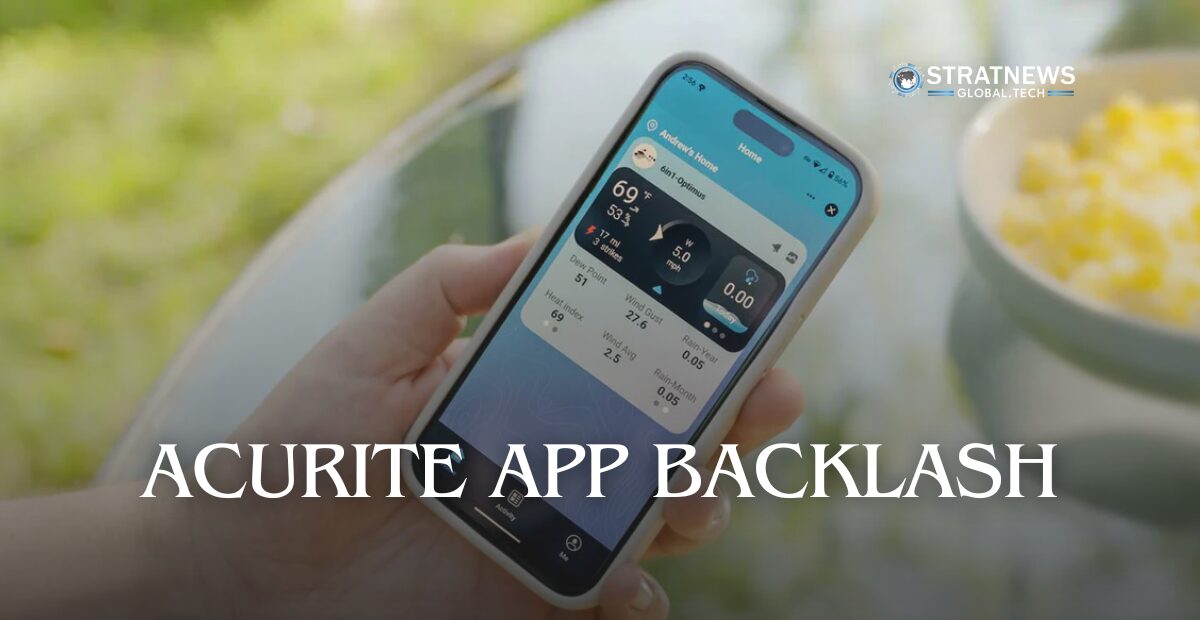
The smart weather device manufacturer confirmed that the My AcuRite app for iOS and Android will stop working after May 30. Following the shutdown, users must migrate to AcuRite NOW, which launched in June 2025 as the company’s next-generation connected platform.
However, many customers have criticised the move because the new app currently lacks several features available in the older software.
Customers Criticise Missing Features
Long-time users say AcuRite NOW removes important functions they relied on for years. For example, the newer platform does not currently allow users to rename multiple temperature sensors, reorganise sensor displays, or show temperature readings with decimal precision.
AcuRite stated that it is working to restore some of these capabilities through future updates. Nevertheless, frustration has grown because customers are being required to switch before feature parity has been achieved.
The transition has also upset users because sharing weather data with Weather Underground now requires a paid subscription through AcuRite NOW. Previously, My AcuRite supported the feature free of charge.
AcuRite Defends Move To New Platform
Speaking to Ars Technica, Jeff Bovee, Vice President of Product Development at AcuRite, explained that My AcuRite relied on ageing infrastructure that could no longer support modern development needs.
According to Bovee, the older platform was originally designed as a weather-station dashboard with limited flexibility for future expansion, cloud services, smart home integration, and support for newer connected devices.
In contrast, AcuRite NOW uses a newer cloud-connected architecture designed to support mobile-first development, longer weather history, improved account management, device pairing, notifications, and integrations with external ecosystems such as Tuya’s SmartLife platform.
Bovee also argued that maintaining two separate platforms was not financially or technically sustainable in the long term.
He stated that even if the older app continued functioning for some users, the underlying systems still required ongoing hosting, monitoring, security maintenance, compatibility updates, and infrastructure support as operating systems and cloud services evolved.
Online Dashboard Also Discontinued
Alongside the mobile app shutdown, AcuRite also removed the browser-based dashboard tied to the My AcuRite platform.
Bovee explained that the web dashboard, mobile app, cloud services, and device connections all depended on the same legacy system. As a result, the browser platform could not continue operating independently after the retirement of the underlying infrastructure.
The company is now developing a replacement web dashboard for AcuRite NOW, although no launch timeline has been confirmed.
Broader Concerns Around Smart Devices
The controversy highlights wider concerns surrounding smart devices and connected services. Many users argue that customers who purchased hardware tied to specific software features should not suddenly lose access or face additional subscription charges years later.
Critics also point out that forcing customers onto an unfinished platform damages trust, especially when the replacement experience offers fewer capabilities than the original software.
At the same time, smart device manufacturers continue searching for sustainable business models in a rapidly evolving market. Many companies increasingly rely on subscriptions, cloud services, and ecosystem integrations to support long-term operations and product development.
Still, the AcuRite backlash reflects growing consumer unease over how quickly companies can alter the functionality of connected products after purchase. For many users, the situation serves as another reminder that ownership of smart devices often remains closely tied to changing software policies and cloud platforms.