

Close Menu
Stratnews GlobalStratnews Global
    Facebook X (Twitter) Instagram
    Trending
    • China Launches Algerian Satellite AlSat-3A into Orbit
    • PRAGATI: The System That Changed How India Governs
    • Australian Teen Ban Leads to Nearly Five Million Social Media Account Closures
    • Ancient Wolf Pup Meal Reveals Woolly Rhino DNA and Ice Age Extinction Secrets
    • SpaceX Crew Returns Early After Astronaut’s Health Emergency
    • Musk’s Grok Faces Global Bans over Sexualised AI Deepfakes
    • SpaceX Capsule Returns Early to Earth After Astronaut Medical Emergency
    • Microsoft Strikes Record $228 Million Soil Carbon Deal to Boost Climate Goals
    Stratnews GlobalStratnews Global
    Write for Us
    Thursday, January 15
    • Space
    • Science
    • AI and Robotics
    • Industry News
    Stratnews GlobalStratnews Global
    Home » German Minister Urges Civilian Scientists to Support Defence Research

    German Minister Urges Civilian Scientists to Support Defence Research

    Arushi PandeyBy Arushi PandeyNovember 24, 2025 World No Comments2 Mins Read
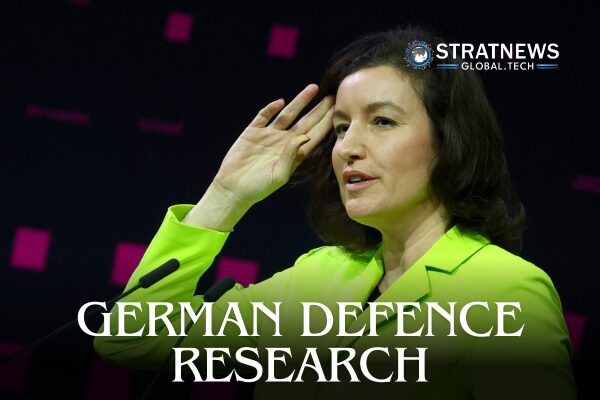
    German Defence Research

    German Minister Urges Civilian Scientists to Back Military Research for Europe’s Security

    Germany’s Research and Technology Minister, Dorothee Baer, has called on civilian scientists to embrace the potential military applications of their work, arguing that Europe’s security and independence depend on greater collaboration between academic and defence research.

    Rethinking Germany’s ‘Civilian Clauses’

    Speaking to Reuters, Baer said she supported revisiting long-standing “civilian clauses” at German universities — policies that prohibit research with possible military uses. These clauses, introduced after World War Two, were designed to ensure that public institutions remained dedicated solely to peaceful purposes. However, the minister believes the global security environment has changed dramatically since Russia’s invasion of Ukraine.

    “I am fundamentally in favour of reconsidering the so-called civilian clauses at universities,” Baer said. “To maintain peace today, we cannot afford to impose restrictions on thought and research.” She added that any decision to change these rules should ultimately rest with individual universities and researchers.

    Supporting Start-Ups and Innovation

    Baer noted that strict barriers between civilian and military research have also hindered innovation, particularly among technology start-ups spun out from universities. By allowing greater flexibility, she argued, Germany could help young companies explore defence-related applications without stigma or legal uncertainty.

    Many European policymakers now view dual-use technologies — those with both civilian and military functions — as critical to building resilience against external threats. Baer’s comments come as Germany seeks to strengthen its position within Europe’s growing defence and security framework.

    Space and Defence Cooperation on the Horizon

    The debate is expected to intensify following the defence ministry’s announcement of a €35 billion ($40 billion) investment in space capabilities. The initiative aims to make the military the backbone of Germany’s national space strategy, blending civilian expertise with defence priorities.

    As Germany moves to align research, innovation, and national security, Baer’s remarks signal a significant shift in the country’s approach to science policy — one that could redefine the boundary between academic freedom and defence preparedness.

    with inputs from Reuters

    Author

    • Arushi Pandey
      Arushi Pandey

      View all posts
    Featured
    Share. Facebook Twitter Pinterest LinkedIn Tumblr Email Reddit Telegram WhatsApp
    Arushi Pandey

      Keep Reading

      China Launches Algerian Satellite AlSat-3A into Orbit

      PRAGATI: The System That Changed How India Governs

      Australian Teen Ban Leads to Nearly Five Million Social Media Account Closures

      Ancient Wolf Pup Meal Reveals Woolly Rhino DNA and Ice Age Extinction Secrets

      SpaceX Crew Returns Early After Astronaut’s Health Emergency

      Musk’s Grok Faces Global Bans over Sexualised AI Deepfakes

      Add A Comment
      Leave A Reply Cancel Reply

      Anti Drone System (CUAS)
      Latest Posts

      China Launches Algerian Satellite AlSat-3A into Orbit

      January 15, 2026

      PRAGATI: The System That Changed How India Governs

      January 15, 2026

      Australian Teen Ban Leads to Nearly Five Million Social Media Account Closures

      January 15, 2026

      Ancient Wolf Pup Meal Reveals Woolly Rhino DNA and Ice Age Extinction Secrets

      January 15, 2026

      SpaceX Crew Returns Early After Astronaut’s Health Emergency

      January 15, 2026

      Musk’s Grok Faces Global Bans over Sexualised AI Deepfakes

      January 15, 2026

      SpaceX Capsule Returns Early to Earth After Astronaut Medical Emergency

      January 15, 2026

      Microsoft Strikes Record $228 Million Soil Carbon Deal to Boost Climate Goals

      January 15, 2026

      Trump Faces Criticism for Allowing Nvidia to Sell AI Chips to China

      January 15, 2026

      China Bans U.S. and Israeli Cybersecurity Firms over National Security Concerns

      January 15, 2026

      Subscribe to News

      Get the latest sports news from NewsSite about world, sports and politics.

      • Astronomical Events
      • Space Missions
      • Industry News
      • Science
      StratNewsGlobal Tech
      Facebook X (Twitter) Instagram LinkedIn YouTube
      © 2026 StratNews Global, A unit of BharatShakti Communications LLP
      • About Us
      • Contributors
      • Copyright
      • Contact
      • Write for Us

      Type above and press Enter to search. Press Esc to cancel.