


Close Menu
Stratnews GlobalStratnews Global
    Facebook X (Twitter) Instagram
    Trending
    • BlackRock Sees AI Dominating Markets but Warns of Turbulent 2026
    • Russia Bans Roblox Over “Extremist” and “LGBT Propaganda” Claims
    • Kodaikanal Observatory Data Maps Solar Magnetic Patterns Shaping Space Weather
    • U.S. Halts China Sanctions to Protect Fragile Trade Truce
    • AI Boom Fuels Hopes of Growth but Risks Overheating Economy
    • EU to Probe Meta Over WhatsApp AI Integration
    • Satellite Surge Puts Space Telescope Observations at Risk
    • Global Memory Chip Shortage Disrupts AI and Consumer Tech Industries
    Stratnews GlobalStratnews Global
    Write for Us
    Thursday, December 4
    • Space
    • Science
    • AI and Robotics
    • Industry News
    Stratnews GlobalStratnews Global
    Home » Kodaikanal Observatory Data Maps Solar Magnetic Patterns Shaping Space Weather

    Kodaikanal Observatory Data Maps Solar Magnetic Patterns Shaping Space Weather

    Aditya LenkaBy Aditya LenkaDecember 4, 2025 Space No Comments3 Mins Read
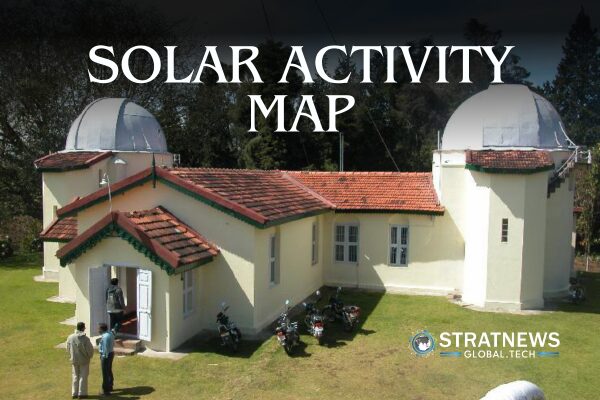
    Kodaikanal Solar Magnetic Patterns

    Kodaikanal Solar Observatory Data Maps Solar Magnetic Patterns Impacting Space Weather

    Astronomers from the Indian Institute of Astrophysics (IIA) have developed a new method to trace how the Sun’s magnetic activity varies with latitude, shedding light on the mechanisms driving solar cycles and their effects on Earth’s space environment. The research, based on long-term observations from the historic Kodaikanal Solar Observatory, offers valuable insights into how solar magnetic fields influence satellite communication and climate systems.

    Tracking the Sun’s Magnetic Rhythm

    The Sun, far from being a static sphere of plasma, is a dynamic, magnetically active star that follows an approximately 11-year cycle of activity. These fluctuations are crucial to understanding space weather, which can disrupt satellite operations, navigation systems and even terrestrial power grids.

    The IIA team analysed 11 years of data (2015–2025) captured at the Kodaikanal Solar Observatory using the calcium K (Ca-K) spectral line, which appears at 393.4 nm in the violet region of the spectrum. This spectral line, originating in the Sun’s chromosphere—the layer above its visible surface—acts as a powerful diagnostic tool for tracing magnetic activity. Continuous daily solar observations from the observatory, which recently marked its 125th anniversary, have provided an unparalleled record of the Sun’s changing behaviour.

    Innovative Method Reveals Latitude-Based Activity

    Instead of examining individual sunspots, the researchers applied a technique developed by IIA professor Jagdev Singh, which involves analysing sunlight from entire latitude bands across the Sun. “We sliced the Sun into horizontal strips from pole to pole and studied the combined light from each band,” explained K. P. Raju of IIA. “This helps reveal large-scale magnetic patterns that isolated features might miss.”

    By measuring the widths and intensity ratios of multiple components within the Ca-K spectral line, the team tracked changes in solar magnetic activity across latitude bands from the peak of solar cycle 24 through the rise of the ongoing cycle 25.

    Their results showed that most solar magnetic activity is concentrated between 40° north and south, with particularly strong signals near 15°–20° in both hemispheres—the same regions where sunspot activity typically peaks. These findings were confirmed through comparisons with NASA’s Solar Dynamics Observatory (SDO) data, using filling factor analysis to correlate spectral signals with actual magnetic coverage on the Sun’s surface.

    Hemispheric Asymmetries and Solar Dynamo Insights

    The study also uncovered clear north–south asymmetries in solar behaviour. The southern hemisphere displayed steeper increases in magnetic activity at higher latitudes and stronger correlations with magnetic indicators. By calculating how the spectral line’s shape changed with varying magnetic intensity, the researchers produced “spectral response profiles” that revealed systematic latitude-dependent differences between the hemispheres.

    “These asymmetries provide important clues about the workings of the solar dynamo—the process that generates the Sun’s magnetic field,” said K. Nagarju, an IIA faculty member and co-author. Apoorva Srinivasa, now a PhD researcher at Amrita Vishwa Vidyapeetham, added, “Our results confirm that solar activity follows predictable latitude-based patterns that evolve over the solar cycle, reflecting underlying changes in temperature and magnetic strength across the chromosphere.”

    The study, published in the Monthly Notices of the Royal Astronomical Society, was co-authored by researchers from IIA, IIT BHU and Amrita Vishwa Vidyapeetham. The findings not only enhance understanding of the Sun’s magnetic evolution but may also improve predictive models of space weather—vital for protecting communication satellites and power infrastructure on Earth.

    with inputs from Reuters

    Author

    • Aditya Lenka
      Aditya Lenka

      A multi-faceted professional with a diverse range of skills and experiences. He currently works as a Producer, Digital Marketer, and Journalist for several well-known media outlets, namely StratNewsGlobal, BharatShakti, and Interstellar. With a passion for storytelling and a keen eye for detail, Aditya has covered a wide range of topics and events across India, bringing a unique perspective to his work.When he's not busy producing content, Aditya enjoys exploring new places and cuisines, having traveled extensively throughout India. He's also an avid writer and poet, often penning his thoughts and musings in his free time. And when he wants to unwind and relax, Aditya spends time with his two loyal companions, Zorro and Pablo, his beloved dogs.Aditya's dynamic personality and varied interests make him a unique individual, always eager to learn and experience new things.

      View all posts
    Featured
    Share. Facebook Twitter Pinterest LinkedIn Tumblr Email Reddit Telegram WhatsApp
    Aditya Lenka
    Aditya Lenka

      A multi-faceted professional with a diverse range of skills and experiences. He currently works as a Producer, Digital Marketer, and Journalist for several well-known media outlets, namely StratNewsGlobal, BharatShakti, and Interstellar. With a passion for storytelling and a keen eye for detail, Aditya has covered a wide range of topics and events across India, bringing a unique perspective to his work.When he's not busy producing content, Aditya enjoys exploring new places and cuisines, having traveled extensively throughout India. He's also an avid writer and poet, often penning his thoughts and musings in his free time. And when he wants to unwind and relax, Aditya spends time with his two loyal companions, Zorro and Pablo, his beloved dogs.Aditya's dynamic personality and varied interests make him a unique individual, always eager to learn and experience new things.

      Keep Reading

      Russia Bans Roblox Over “Extremist” and “LGBT Propaganda” Claims

      U.S. Halts China Sanctions to Protect Fragile Trade Truce

      AI Boom Fuels Hopes of Growth but Risks Overheating Economy

      EU to Probe Meta Over WhatsApp AI Integration

      Satellite Surge Puts Space Telescope Observations at Risk

      Global Memory Chip Shortage Disrupts AI and Consumer Tech Industries

      Add A Comment
      Leave A Reply Cancel Reply

      Anti Drone System (CUAS)
      Latest Posts

      BlackRock Sees AI Dominating Markets but Warns of Turbulent 2026

      December 4, 2025

      Russia Bans Roblox Over “Extremist” and “LGBT Propaganda” Claims

      December 4, 2025

      Kodaikanal Observatory Data Maps Solar Magnetic Patterns Shaping Space Weather

      December 4, 2025

      U.S. Halts China Sanctions to Protect Fragile Trade Truce

      December 4, 2025

      AI Boom Fuels Hopes of Growth but Risks Overheating Economy

      December 4, 2025

      EU to Probe Meta Over WhatsApp AI Integration

      December 4, 2025

      Satellite Surge Puts Space Telescope Observations at Risk

      December 4, 2025

      Global Memory Chip Shortage Disrupts AI and Consumer Tech Industries

      December 4, 2025

      Trump’s NASA Pick Jared Isaacman Pledges to Return America to the Moon Before China

      December 3, 2025

      India Eases Stance on Mandatory Cybersecurity App Amid Privacy Backlash

      December 3, 2025

      Subscribe to News

      Get the latest sports news from NewsSite about world, sports and politics.

      • Astronomical Events
      • Space Missions
      • Industry News
      • Science
      StratNewsGlobal Tech
      Facebook X (Twitter) Instagram LinkedIn YouTube
      © 2025 StratNews Global, A unit of BharatShakti Communications LLP
      • About Us
      • Contributors
      • Copyright
      • Contact
      • Write for Us

      Type above and press Enter to search. Press Esc to cancel.