


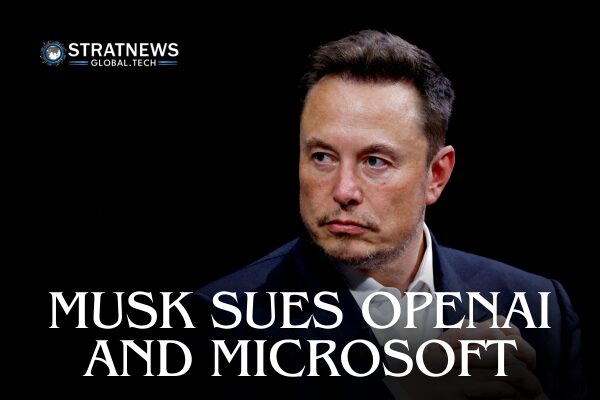
Elon Musk Seeks $134 Billion from OpenAI and Microsoft in Court Battle
Elon Musk is demanding as much as $134 billion from OpenAI and Microsoft, claiming he deserves a share of what he calls their “wrongful gains” from his early involvement in founding the artificial intelligence company. The claim was detailed in a court filing submitted on Friday ahead of a trial expected to begin in April.
Musk’s Claims Against OpenAI and Microsoft
According to the filing, Musk argues that OpenAI profited between $65.5 billion and $109.4 billion from his early financial and reputational support, while Microsoft, OpenAI’s main investor and partner, gained between $13.3 billion and $25.1 billion. Musk contends that his early contributions were instrumental in building OpenAI’s foundation and success.
“Without Elon Musk, there’d be no OpenAI,” his lead lawyer Steven Molo said in a statement to Reuters. “He provided the bulk of the seed funding, lent his reputation, and taught them all he knows about scaling a business.”
Musk’s court filing claims he contributed roughly $38 million, representing about 60% of OpenAI’s initial seed funding. He also says he helped recruit early staff, connected the founders with investors and advisers, and gave the project credibility in its infancy. His argument rests on the idea that his early investment entitled him to share in the vast gains the companies allegedly reaped.
OpenAI and Microsoft Push Back
OpenAI dismissed Musk’s claim as an “unserious demand,” calling it part of what it described as his ongoing “harassment campaign” against the company. Microsoft, which has invested billions in OpenAI since 2019, did not comment on the compensation figure outside business hours.
Both companies have filed their own court responses disputing Musk’s claims. OpenAI said the lawsuit was “baseless,” while a Microsoft attorney argued that there was no evidence suggesting the company “aided and abetted” any wrongdoing.
In a joint filing, OpenAI and Microsoft asked the judge to restrict the testimony of Musk’s financial expert, economist C. Paul Wazzan. They called his valuation “made up,” “unverifiable” and “unprecedented,” warning it could mislead jurors by suggesting an “implausible” transfer of billions from a nonprofit to a former donor who has since become a competitor.
Trial Set for April in California
A judge in Oakland, California, has ruled that a jury will hear the case, which centres on Musk’s claim that OpenAI abandoned its founding mission to develop artificial intelligence for the benefit of humanity. Musk alleges the company’s restructuring into a for-profit entity violated its original nonprofit purpose.
Now leading his own AI venture, xAI, and promoting its chatbot Grok as a rival to ChatGPT, Musk has positioned his lawsuit as a challenge to what he sees as OpenAI’s drift from its original ideals. The filing indicates he may also seek punitive damages and an injunction, though it does not specify what form that injunction might take.
with inputs from Reuters

