


Pakistan’s Defence Industry Booms as ‘Combat-Tested’ Weapons Draw Global Interest
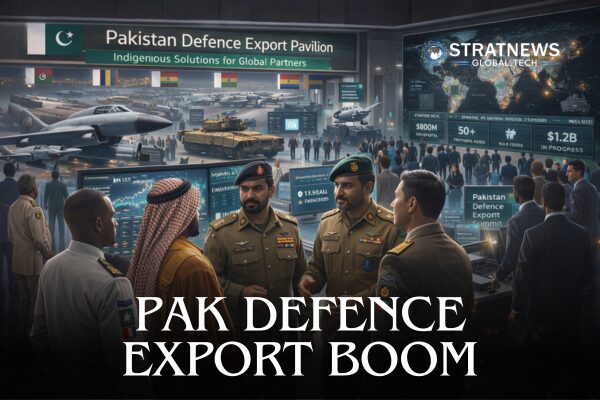
Pakistan’s defence manufacturing sector is experiencing rapid growth after its aircraft, drones and missiles earned the sought-after “combat tested” label during a conflict with India last year. This validation has drawn significant international attention, with Islamabad engaging in talks with 13 countries, six to eight of which are in advanced negotiation stages. The discussions centre on deals involving JF-17 fighter jets jointly developed with China, along with training aircraft, drones and weapons systems, according to Pakistani sources familiar with the matter.
Although the country’s defence ministry and military have not disclosed specific details, Defence Production Minister Raza Hayat Harraj confirmed that several nations had shown interest in Pakistani military equipment. He highlighted that negotiations were ongoing but often conducted discreetly due to geopolitical sensitivities.
“There are a lot of queries but we are negotiating,” Harraj told Reuters, noting that discussions cover air force hardware, ammunition and training. He also pointed out that Pakistani-made weapons cost significantly less than Western equivalents. For instance, a JF-17 jet costs around 30 to 40 million dollars, roughly a third of what similar U.S. or European aircraft cost.
Expanding Buyer Base and Regional Influence
Countries currently in talks with Pakistan include Sudan, Saudi Arabia, Indonesia, Morocco, Ethiopia and Nigeria, as well as eastern Libya’s administration led by Khalifa Haftar. Negotiations with Bangladesh and Iraq have already been publicly acknowledged, though further details remain confidential.
Most potential buyers are Muslim-majority nations, many from the Middle East, where Pakistan has historically acted as a security partner. Retired Air Marshal Asim Suleiman said three additional African nations were also in discussions for defence purchases. Among the most advanced negotiations is a wide-ranging defence cooperation and intelligence-sharing deal with Bangladesh. This proposed agreement reportedly covers JF-17 Block III multi-role fighters, MFI-17 Mushshak trainers, Shahpar drones, air defence systems and Mohafiz armoured vehicles.
Scaling Up Production Capacity
A major challenge for Pakistan lies in expanding its production capacity, particularly for the JF-17, the cornerstone of its defence exports. Suleiman said output could potentially double by 2027, aided by factory upgrades and new investments. Analysts believe Pakistan’s growing partnership with China will help overcome logistical and technical barriers.
According to Andreas Krieg of King’s College London, Pakistan is emerging as a “flexible, mid-tier provider of defence capacity.” He said the country offers a combination of cost-effectiveness, quick deployment and political neutrality that appeals to many African and Middle Eastern clients.
Private companies are also playing a growing role. Sysverve Aerospace, based in Rawalpindi, produces hundreds of drones annually for the army. “The trend in the army is naturally moving toward engaging the private sector,” said company director Saad Mir.
Navigating Geopolitical and Chinese Constraints
Despite the momentum, experts caution that some prospective sales could face obstacles. Siemon Wezeman of the Stockholm International Peace Research Institute warned that China might oppose certain deals, particularly those involving countries like Sudan and Libya, which are under U.N. arms embargoes.
Pakistan also faces a delicate balancing act in the Middle East, where rivalries between Saudi Arabia and the United Arab Emirates could complicate future agreements. Islamabad has a mutual defence pact with Riyadh and is exploring a broader trilateral arrangement involving Turkey. Analysts say Pakistan’s ideological alignment leans toward Saudi Arabia, but its commercial interests often overlap with the UAE’s regional ambitions.
with inputs from Reuters