


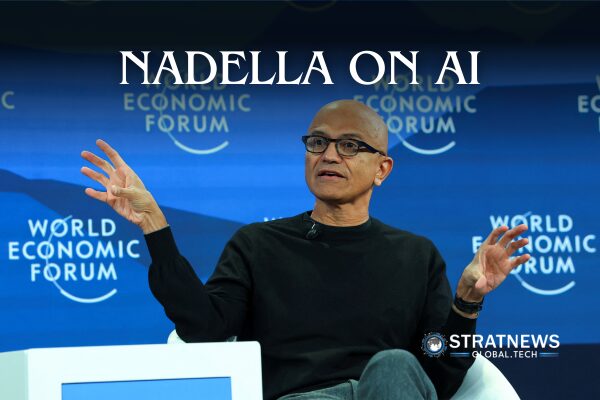
Microsoft’s Nadella Says AI Must Prove Real-World Value to Justify Its Energy Use
Microsoft Chief Executive Satya Nadella has warned that artificial intelligence must demonstrate clear and measurable benefits in areas such as healthcare, education and public-sector efficiency if it is to retain public backing amid growing concerns about its heavy energy demands.
Speaking at the World Economic Forum in Davos on Tuesday in a session moderated by BlackRock CEO Larry Fink, Nadella emphasised that energy is now a scarce and valuable resource. He said the technology industry must justify the vast power consumption required to train and operate AI systems by ensuring that the outcomes improve lives and strengthen economies.
“If AI does not produce tangible improvements in real-world outcomes, it will struggle to sustain public support for the energy required to run it,” Nadella said.
Building on Cloud and Mobile Revolutions
The Microsoft chief described artificial intelligence as the next major technological wave following the rise of cloud computing and mobile connectivity. He said AI is already spreading rapidly across industries, helping boost productivity, efficiency and innovation.
Nadella noted that the technology’s transformative potential extends beyond corporate profits or capital investment. By enabling more effective resource use and enhancing decision-making, AI could help generate “local economic surplus” in communities worldwide while also supporting broader global growth.
He added that the key challenge for governments and companies alike will be ensuring that AI adoption leads to measurable social value rather than simply automating existing processes or concentrating economic gains among a few large players.
Balancing Progress and Responsibility
Nadella’s comments reflect a growing recognition among business and political leaders that artificial intelligence, while transformative, carries significant environmental and ethical costs. Data centres powering large-scale AI models consume vast amounts of energy and water, raising questions about sustainability and long-term viability.
The Microsoft CEO has repeatedly stressed that technological progress must align with societal goals, including the responsible management of energy and environmental resources. In Davos, he reiterated that AI’s future credibility will depend on its ability to deliver meaningful progress in people’s daily lives.
with inputs from Reuters