


China Showcases Atlas Drone Swarm System In Full Process Demonstration
China has unveiled footage presenting the first full process demonstration of its domestically developed Atlas drone swarm operations system. The system highlights expanding battlefield applications for drone swarms while also reflecting rapid progress in algorithm driven technologies shaping modern warfare.
System Composition And Battlefield Capabilities
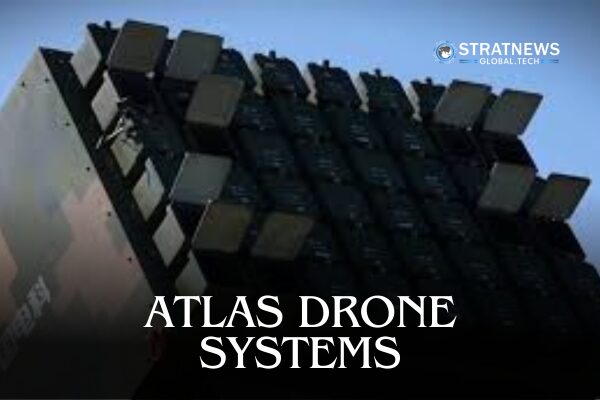
The Atlas system consists of the Swarm 2 ground combat vehicle, a command vehicle, and a support vehicle. Together, these components enable coordinated operations across reconnaissance and strike missions. Moreover, the system demonstrates how integrated platforms can execute complex battlefield tasks with speed and precision.
During the demonstration, three visually similar targets were positioned within a strike zone at a test range. The system quickly carried out coordinated reconnaissance and autonomously identified the command vehicle. It then opened its launcher and deployed a swarm of drones. These drones locked onto the target mid air and executed a precise strike.
Swarm 2 Vehicle And Drone Deployment Mechanism
The Swarm 2 ground combat vehicle uses a timed launch mechanism with three second intervals. As a result, it releases one drone every three seconds, ensuring safe spacing and controlled flight paths. In total, a single vehicle can carry and launch up to 48 fixed wing drones.
Each drone supports multiple payload options, including electro optical reconnaissance tools and strike munitions. Furthermore, operators can combine these drones into flexible operational groupings. This allows the system to form multifunctional swarms capable of handling varied mission requirements.
Adaptive Mission Configuration And Swarm Intelligence
The system allows flexible configuration of both drone types and launch sequences. For instance, reconnaissance drones can deploy first to gather intelligence. Subsequently, electronic warfare drones can suppress adversaries before attack drones engage targets. This layered approach enables tailored responses to different combat scenarios.
Powered by swarm intelligence, nearly 100 high speed drones can form dense and precise formations within a short period. Additionally, these drones adjust autonomously to environmental conditions such as airflow disturbances, reducing the risk of mid air collisions.
Advanced Algorithms And Operational Control
The system relies on advanced swarm control algorithms that provide each drone with a functional smart brain. These algorithms enable communication, information sharing, and real time positional adjustments. Consequently, drones maintain coordinated formations throughout mission execution.
Notably, a single operator can control up to 96 drones simultaneously. The system also incorporates drones of varying sizes, which deliver layered and complementary capabilities within the swarm.
The Swarm 2 ground combat vehicle first appeared at the 15th China International Aviation and Aerospace Exhibition, also known as Airshow China, held in Zhuhai in Guangdong Province in November 2024.
With inputs from Reuters

