


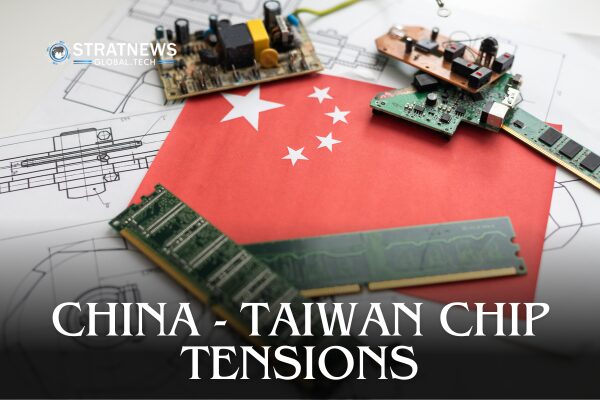
China Targets Taiwan Chip Sector Amid Rising Tech Tensions
China is increasingly focusing on Taiwan’s advanced semiconductor sector to gain access to critical technology and skilled talent, according to a report issued by Taiwan’s leading security authority. This effort reflects Beijing’s broader ambition to overcome international restrictions and strengthen its domestic chip capabilities.
As competition with the United States intensifies, China has accelerated its pursuit of semiconductor expertise. Consequently, Taiwan has become a primary target due to its globally dominant chip manufacturing industry. The report highlights that Chinese entities are actively attempting to attract Taiwanese firms, particularly those involved in artificial intelligence and semiconductor production, to operate within mainland China.
Efforts To Acquire Talent And Technology
Taiwanese authorities have repeatedly uncovered networks linked to Chinese firms seeking to recruit high-tech professionals through illegal means. Therefore, Taiwan has implemented strict legal measures to prevent the transfer of its most advanced technologies. Despite these safeguards, the report states that China continues to exploit indirect channels to secure talent, access sensitive technologies, and obtain controlled equipment.
Moreover, these efforts are aimed at acquiring core technologies, including advanced semiconductor processes. By doing so, China seeks to bypass what it perceives as international technological containment. Although China maintains its claim over Taiwan, the island firmly enforces its own regulations to protect its strategic industries.
Election Interference And Cyber Threats
In addition to economic and technological activities, the report warns of potential interference in Taiwan’s upcoming local elections. China is expected to employ hybrid tactics, such as deepfake content and fabricated opinion polls, to influence public perception. Furthermore, cyber threats remain a significant concern, with Taiwan’s government networks facing over 170 million intrusion attempts in the first quarter alone.
These actions suggest a coordinated effort to expand intelligence gathering, surveillance, and data theft. As a result, Taiwan continues to strengthen its cybersecurity defences while monitoring external influence operations closely.
Military Pressure And Strategic Risks
Alongside cyber and political activities, China has maintained sustained military pressure on Taiwan. During the first quarter, more than 420 Chinese military aircraft operated near the island, often in coordination with naval forces. These joint operations underline Beijing’s broader strategy of military intimidation.
At the same time, the report notes that China faces internal and external challenges, including economic strain and geopolitical competition. Nevertheless, it continues to apply a combination of military, technological, and informational tactics against Taiwan.
Taiwan’s government rejects China’s sovereignty claims and maintains that only its citizens have the authority to determine their future.
With inputs from Reuters