


Univity Funding Boost Fuels Europe Satellite Ambitions
Univity, a satellite internet startup backed by the French state, has secured 27 million euros in a Series A funding round as it accelerates plans to deploy a large satellite network. The company aims to position itself as Europe’s largest satellite operator by launching thousands of satellites in the coming years.
Combined with a 31 million euro contract from the French space agency, the latest funding brings Univity’s total secured capital to 68 million euros. Chief executive Charles Delfieux confirmed that state-backed investment bank Bpifrance, along with other financial partners, participated in the round.
This funding milestone reflects France’s broader push to strengthen Europe’s independence in satellite communications and reduce reliance on foreign providers.
Telecom-Focused Model Sets Univity Apart
Unlike major competitors that sell services directly to consumers, Univity has adopted a different approach. The company focuses on telecom operators, offering space-based internet and mobile connectivity that can be integrated into existing networks.
This strategy allows operators to extend coverage into remote or underserved areas without incurring the high costs of expanding terrestrial infrastructure. As a result, Univity has already signed 16 agreements with telecom providers across four continents.
By targeting business clients rather than individual users, the company aims to carve out a distinct position in the rapidly evolving satellite communications market.
Massive Satellite Fleet Planned In Low Orbit
Founded in 2022, Univity plans to build a constellation of up to 3,400 satellites in very low Earth orbit, approximately 375 kilometres above the planet. This would make it the largest satellite operator in Europe once fully deployed.
Operating at such low altitudes offers potential advantages, including reduced latency and improved service quality. However, it also presents technical challenges, particularly in maintaining satellite durability and managing atmospheric drag.
The company intends to begin with the launch of two initial satellites, using current funding to validate its technology before scaling up production.
Vertical Integration To Drive Cost Efficiency
Univity plans to manufacture its satellites near Toulouse, a move designed to control costs and improve efficiency. By internalising production, the company aims to remain competitive in a market increasingly defined by scale and pricing pressure.
This approach reflects a broader industry trend towards vertical integration, as satellite providers seek to optimise operations and reduce dependency on external suppliers.
Furthermore, the company expects to transition to an infrastructure financing model from 2028. This phase will likely involve large institutional investors and telecom operators to support full-scale deployment.
Europe Pushes For Strategic Autonomy In Space
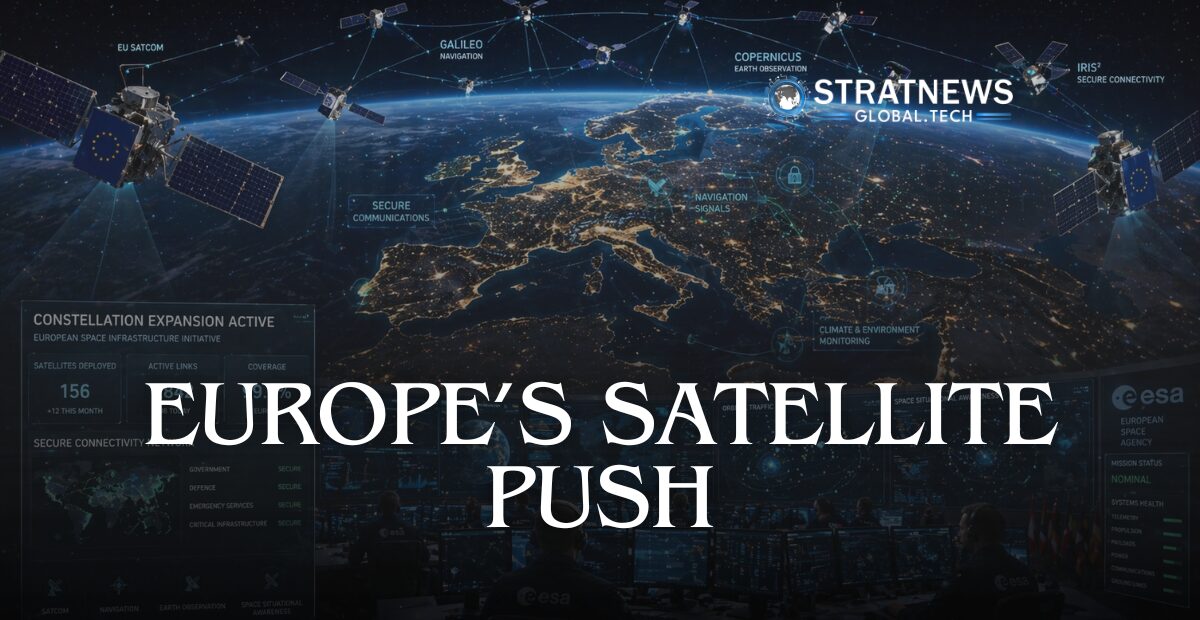
The rise of Univity highlights Europe’s determination to strengthen its position in satellite communications. Governments and industry players are increasingly focused on building domestic capabilities to ensure secure and reliable connectivity.
At the same time, global demand for satellite-based services continues to grow. Telecom operators are actively partnering with satellite providers to bridge connectivity gaps, particularly in regions where traditional networks are impractical.
Univity’s expansion plans underscore the strategic importance of space-based infrastructure in the modern digital economy, as competition intensifies and new players seek to reshape the market.
With inputs from Reuters