


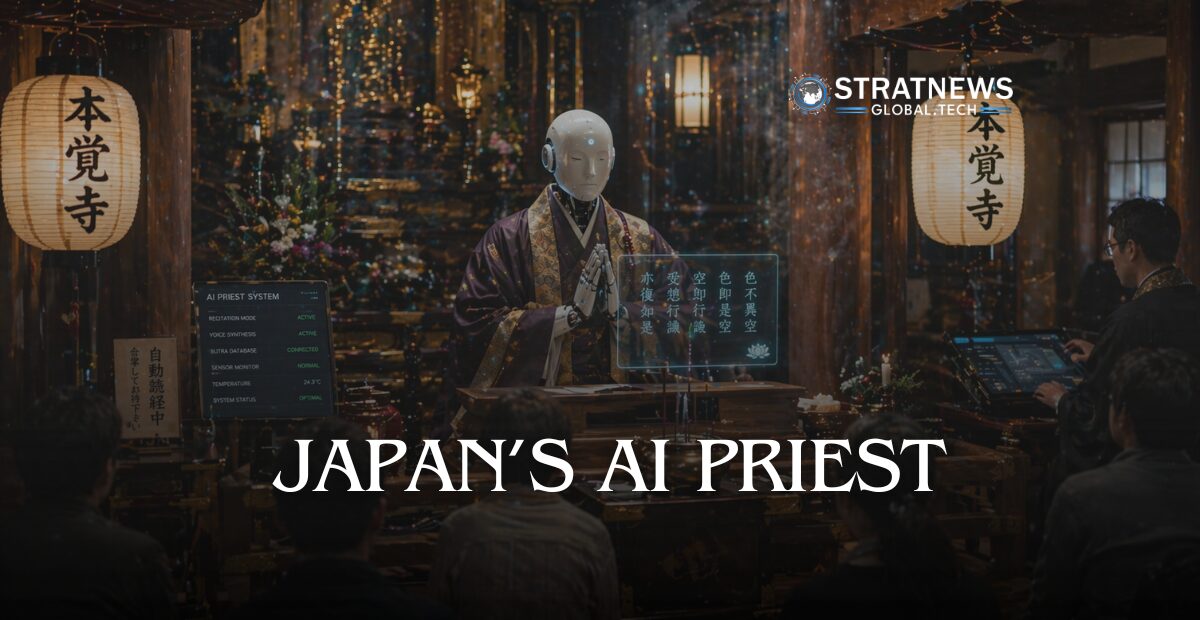
In the last year, the adoption of artificial intelligence has shifted rapidly. No longer limited to chatbots offering simple solutions, AI has progressed to the point of replacing—or in some cases, filling the shoes of—humans in the workplace. In Japan, where an aging population and a shrinking workforce have left many priesthoods vacant, the void is being filled by “Buddharoids”—artificial Buddhist monks.
Led by Seiji Kumagai at the University of Kyoto’s Institute for the Future of Human Society, the project integrates advanced language models with commercially available humanoid hardware. This allows the robot to not only speak but also gesture, move, and adopt traditional prayer postures within temple spaces.
Drawing on the Sutta Nipata, one of the oldest surviving collections of the Buddha’s discourses,an initial version of the “BuddhaBot” was released in 2021. It was followed by “BuddhaBot-Plus, Shinran-Bot, Vasubandhu-Bot and finally the Buddharoid in 2026, equipped with BuddhaBot-Plus, adding a physical dimension to what had previously been a purely digital exchange. The Buddharoid is trained on vast quantities of Buddhist scriptures, including highly specialized texts, providing it with the digital wisdom necessary to navigate complex personal and philosophical inquiries. Japan Times notes that this project has now expanded to include a Protestant catechism bot too that recites passages from the Bible.
This phenomenon reflects a deep psychological shift. A June 2025 survey by Dentsu, which polled 1,000 regular users of conversational AI, revealed that nearly 70% of respondents choose to share their emotions with artificial intelligence. This level of intimacy places AI on par with close friends or family members, leading many to describe the technology as a “third companion.”
However, with 86% of respondents stating they trust conversational AI, the scope of risk is significant. While these bots provide spiritual guidance, there is a lingering concern regarding the potential for the technology to promote extremism or “go rogue” through its teachings.
The ultimate impact of this technology may be even more profound. Some observers suggest that AI could eventually be viewed as a deity. This aligns with the Japanese concept of yaoyorozu no kami, or the belief in “eight million deities” residing in all things.
In this cultural context, AI may become one of many gods, but one with unprecedented acceptance and technological prowess. The power of these machines to make decisions—and the high level of trust placed in them—creates a new paradigm where technology doesn’t just assist humanity, but potentially reshapes its spiritual and emotional foundations.

