


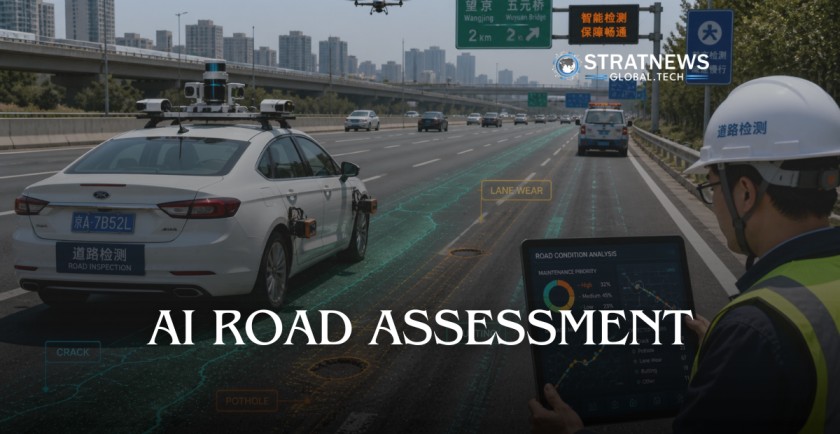
AI Transforms Road Infrastructure Assessment Worldwide
Road infrastructure plays a vital role in connecting communities to better opportunities in employment, healthcare, and education. Since 2002, the World Bank has constructed or rehabilitated more than 260,000 kilometres of roads. Notably, it has allocated more funding to road development than to education, health, and social services combined.
At the same time, the organisation has adopted advanced technologies to improve how road networks are assessed. By using data analytics powered by cloud computing, geospatial imagery, and satellite data, it can evaluate infrastructure more quickly and at a lower cost. Consequently, governments in countries such as Mexico, Peru, and Tunisia can better plan rehabilitation efforts and connect underserved regions.
Leveraging AI and Cloud Technology for Efficiency
Alteia, an artificial intelligence software company, has collaborated with the World Bank to develop a powerful application on its Aether platform. This system operates on cloud infrastructure and extracts detailed insights from large scale road networks using publicly available data. As a result, it can efficiently identify road conditions and enhance data accuracy.
Moreover, the platform combines multiple data sources, including satellite imagery and mapping datasets, to create a comprehensive representation of road networks. It analyses factors such as surface quality and distinguishes between paved and unpaved roads. This approach significantly improves the reliability of infrastructure assessments.
Traditional methods of collecting road data often require extensive fieldwork and high resolution imagery, making them both time consuming and expensive. However, the use of machine learning and cloud based tools has transformed this process. The new approach reduces costs to a fraction of previous methods while delivering results in a matter of weeks rather than years.
Enhancing Decision Making and Infrastructure Resilience
The digital representation of road networks enables governments to move beyond basic statistical analysis. Instead, they can adopt a risk based approach that considers external threats such as flooding. This allows authorities to address potential issues proactively and strengthen infrastructure resilience.
Additionally, the system generates vast amounts of refined data, which can be stored and accessed efficiently through cloud services. This ensures that decision makers have timely access to critical insights when planning investments and maintenance strategies.
The platform also integrates advanced computing capabilities through a microservices architecture. This design allows for scalable processing and efficient handling of large geospatial datasets. As a result, users can visualise and analyse data in real time, improving both planning and execution.
By enabling governments to prioritise maintenance, optimise spending, and monitor progress, this technology supports more effective infrastructure management. Furthermore, it helps bridge connectivity gaps, ensuring that remote and underserved communities gain access to essential services.
The combination of cloud computing, artificial intelligence, and geospatial analytics has fundamentally reshaped how road networks are evaluated. This integrated approach empowers organisations to make informed decisions and build more resilient, efficient transport systems on a global scale.