


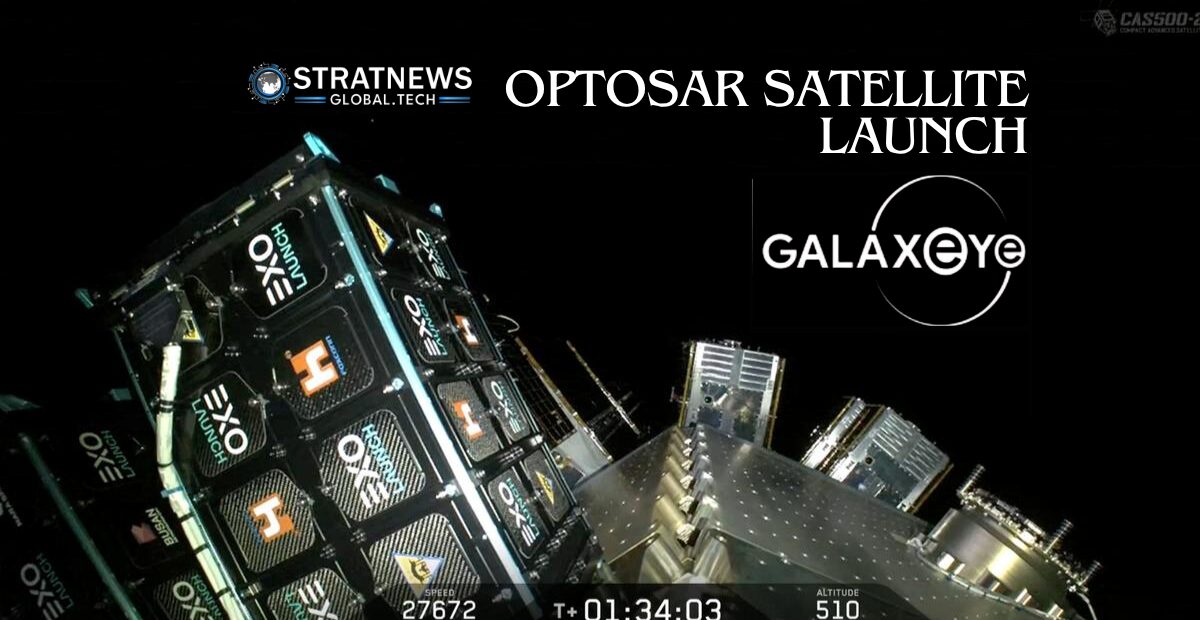
Mission Drishti, the world’s first OptoSAR satellite developed by Bengaluru-based space start-up GalaxEye, was successfully launched on Sunday, May 3, 2026. The satellite travelled aboard a Falcon 9 rocket from Vandenberg, California, marking a significant step in private sector space capabilities.
Weighing 190 kilograms, Mission Drishti stands as India’s largest privately developed Earth observation satellite. Its launch reflects the growing maturity and ambition of private space ventures in the country.
Breakthrough OptoSAR Technology
Mission Drishti introduces a major technological advancement by combining Electro-Optical and Synthetic Aperture Radar sensors into a single operational platform. This integration allows the satellite to capture images regardless of weather conditions or time of day. As a result, it ensures consistent and reliable data acquisition across a wide range of environmental scenarios.
Traditional systems often face limitations due to cloud cover or poor lighting. However, this combined approach overcomes such constraints and enhances imaging continuity. Consequently, users can expect improved data quality and higher observation frequency.
GalaxEye stated that the satellite represents the culmination of over five years of dedicated research and development. The company highlighted that this innovation addresses long-standing gaps in Earth observation capabilities.
Deployment, Demand, and Early Operations
Following its successful deployment, the satellite has entered its commissioning phase. During this period, systems will be tested and calibrated to ensure optimal performance. Initial imagery is expected to be delivered to customers within the coming weeks.
Meanwhile, the satellite has already attracted strong global interest. Both government and commercial stakeholders have expressed demand for the high-quality, high-frequency datasets generated by the OptoSAR payload. This early traction indicates significant market potential for the technology.
GalaxEye’s leadership noted that the mission represents a critical milestone. At the same time, the company remains focused on completing commissioning and scaling access to its data products.
Strengthening India’s Space Ecosystem
The successful launch also reflects broader developments within India’s private space sector. Sustained efforts over the past five to six years have focused on building confidence, enhancing capacity, and promoting commercialisation. These initiatives are now yielding tangible outcomes.
Mission Drishti demonstrates how private players can contribute meaningfully to the global space economy. As more companies execute real missions and engage international customers, confidence in India’s capabilities is expected to grow further.
The satellite serves dual-use applications across defence, agriculture, disaster management, maritime monitoring, and infrastructure planning. Additionally, it complements India’s wider Earth observation framework, including the existing fleet of 29 satellites outlined in recent national reports.