


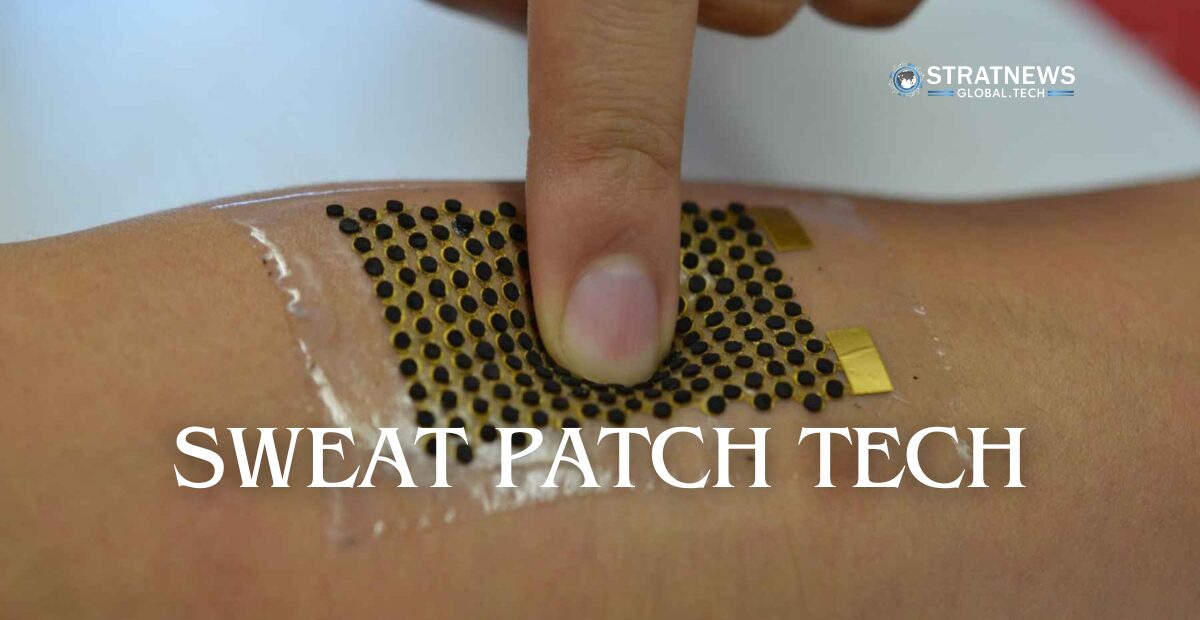
Japan is working on creating a health tracker that isn’t really a wearable but instead, it has to be stuck on. Researchers are looking to reimagine human perspiration into a form of renewable energy that never requires a wall socket.
The development, emerging from the Tokyo University of Science, introduces a wearable biofuel cell that effectively alchemizes sweat into electricity. The team led by Professor Isao Shitanda is trying to create an organic solution to replace a bulky piece of machinery strapped to the arm.
This one is a sophisticated, paper-based device that functions more like a high-tech bandage than a traditional battery. It utilizes a specific enzyme called lactate oxidase, to react with the lactate found in human sweat, that will essentially make the tracker record your health data.
The metabolic byproduct of a morning jog will be turned into a high-tech fuel source if this experiment can be scaled into manufacturing, proving that the future of wearable electronics may lie in human fluids.
The clever use of high-resolution screen printing will allow researchers to lay down electrodes on a thin, flexible water-resistant paper, making the entire setup cost-effective and remarkably unobtrusive, reported Econews, a digital newspaper edited by ECOticias.com that specializes in environmental and sustainability news. During tests, the device also generated enough current to power small electronics, including LEDs and oxygen sensors, purely from the moisture excreted by the wearer during physical activity.
This technology could be a game -changer in the space of health trackers as the current ones are weight and power sources. However, some challenges remain: Real-life applications such as bending, rubbing, heavy moisture are yet to be tested. Paper substrates also need coatings or designs that will ensure steady performance irrespective of how much sweat is produced or what the external weather conditions are like.

