


U.S.-China AI Guardrails Talks Focus On Security Risks
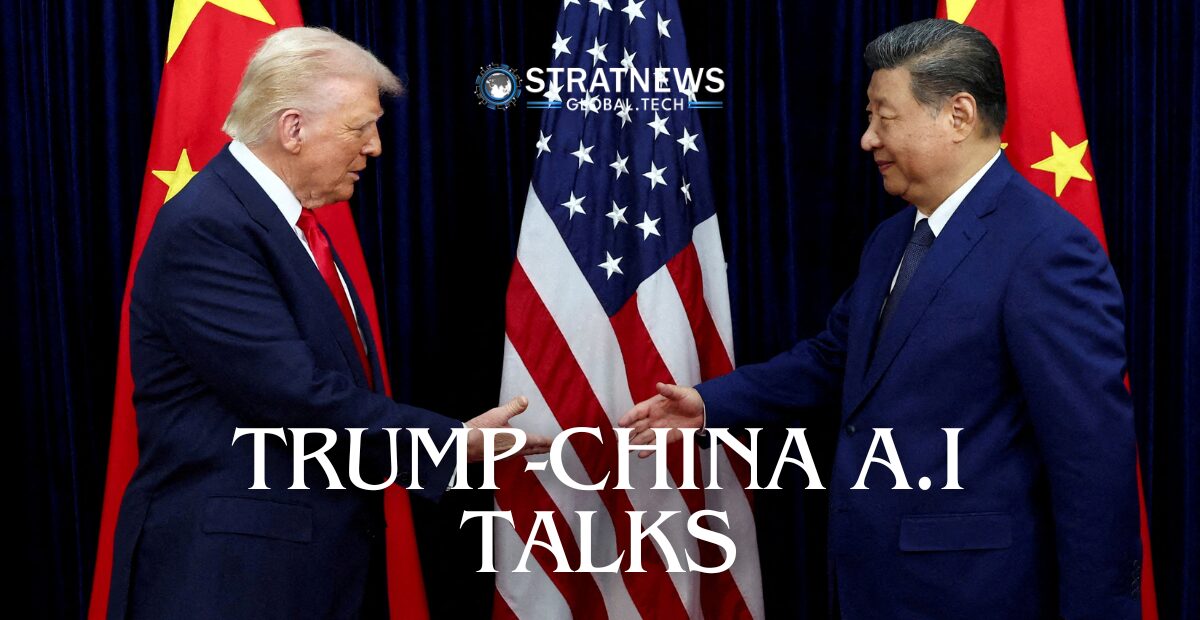
U.S. and Chinese delegations are discussing artificial intelligence guardrails during their summit in Beijing. The talks will establish a protocol for best practices aimed at preventing non-state actors from exploiting the most advanced AI models.
U.S. Treasury Secretary Scott Bessent said in a pre-recorded CNBC interview on Thursday that maintaining the United States’ lead over China in artificial intelligence remains a top priority. He added that Beijing’s interest in discussing AI guardrails reflects the importance of the technology race.
U.S. Pushes For Innovation And Safety
Bessent stressed that Washington does not want to restrict technological progress while implementing safeguards around advanced AI systems.
“What we don’t want to do is stifle innovation. So our responsibility is to come up with the highest performance calculus where we can get the most innovation and the highest level of safety,” Bessent said.
Meanwhile, the discussions come as Anthropic’s new Mythos AI tool exposed significant software security vulnerabilities. As a result, banks and major companies have rushed to repair weaknesses in their systems through urgent software updates and network patches.
Government officials have also warned that criminal groups, terrorists and other non-state actors could exploit Mythos to disrupt financial markets and the wider global financial system.
Nvidia CEO Attends Beijing Summit
Nvidia Chief Executive Jensen Huang attended the Beijing summit as discussions over AI policy intensified. Reuters also reported that the United States cleared around 10 Chinese companies to purchase Nvidia’s H200 chip, the company’s second most-powerful semiconductor for AI computing.
However, Bessent said he had no knowledge of the reported approvals. He added that decisions involving semiconductor exports fall under the authority of the U.S. Commerce Department rather than the Treasury Department.
U.S. Consulting Major AI Companies
Bessent said that breakthroughs similar to Anthropic’s Mythos model are expected from other leading AI firms, including Alphabet’s Google and OpenAI.
He noted that the U.S. government is actively consulting with all three companies and described them as “very good partners.”
In addition, the Treasury Department has been working with the 11 largest U.S. banks to strengthen protections against vulnerabilities linked to advanced AI systems. Bessent said officials would expand those efforts to super-regional and community banks.
He also expressed confidence that the financial sector would manage a “smooth transition” as AI capabilities rapidly evolve.
U.S. Aims To Shape Global AI Standards
Bessent said he believes China would not engage in discussions over AI safeguards if it were leading the global AI race.
“So we’re going to put in U.S. best practices, U.S. values on this, and then roll those out to the world,” he said regarding advanced AI models.
With inputs from Reuters