


Bangladesh Tests Agrivoltaics To Grow Food And Generate Solar Power
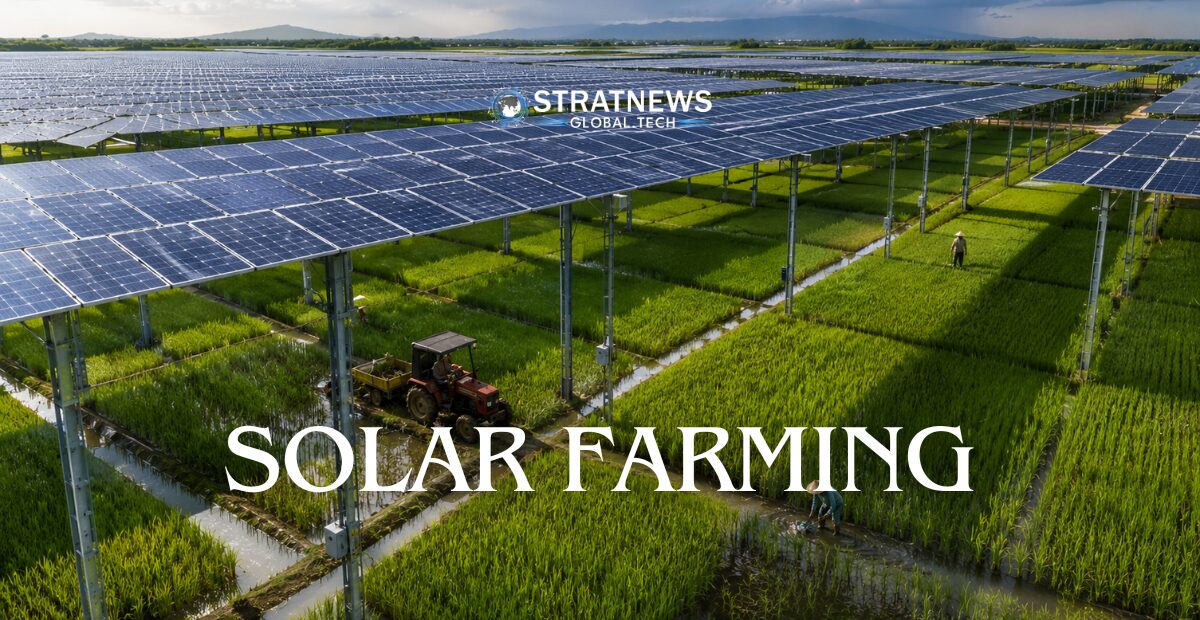
In a rice field in central Bangladesh, workers are cultivating crops beneath elevated solar panels as part of an innovative effort to address two pressing challenges at once: food production and clean energy generation. The experiment reflects the country’s search for solutions that can maximise limited land resources while reducing dependence on imported energy.
Bangladesh, home to 175 million people, imports around 95% of its energy needs. Rising energy costs, partly driven by geopolitical tensions in the Middle East, have increased the urgency of diversifying the nation’s energy supply. Although solar power is Bangladesh’s largest renewable energy source, it currently accounts for only about 4.5% of the country’s total electricity-generating capacity.
Agrivoltaics Offers A Dual-Use Solution
One of the main obstacles to expanding solar energy in Bangladesh is the shortage of available land. Rooftop solar installations face space constraints, while ground-mounted solar farms often compete with agriculture and housing for land use.
As a result, researchers are exploring agrivoltaics, an emerging approach that combines agriculture and solar power generation on the same plot of land. Under this model, crops or livestock share space with solar panels installed above farming areas.
The Bangladeshi development organisation BRAC and the Institute of Governance and Development (BIGD) launched a research project this year in Manikganj, around 50 kilometres west of Dhaka. Supported by the H&M Foundation, the project aims to determine whether food production and solar energy generation can coexist effectively.
Balancing Crop Growth And Solar Generation
At the Manikganj site, solar panels are mounted more than two metres above the ground, allowing sunlight to reach crops below. Researchers are collecting data on rainfall, wind speed and other environmental factors while comparing crop performance with nearby control fields.
The project includes crops such as rice, coriander, pumpkins, bottle gourds and onions. Farm workers receive standard daily agricultural wages while managing the fields beneath the solar installations.
According to workers involved in the project, the shade created by the panels helps retain soil moisture and provides relief during periods of intense summer heat. Earlier agrivoltaic trials in Bangladesh demonstrated promising results for shade-tolerant crops such as ginger and turmeric. In addition, some experiments successfully integrated goat and poultry farming within solar-powered agricultural systems.
Can Rice Thrive Under Solar Panels?
Rice presents a more complex challenge. As Bangladesh’s staple food, rice requires substantial sunlight for healthy growth. Consequently, researchers are focusing heavily on identifying panel configurations that can support rice cultivation without significantly reducing yields.
BIGD researchers are studying how factors such as panel height, spacing and crop selection affect productivity. They are also assessing the durability of solar infrastructure in flood-prone regions and areas vulnerable to severe storms.
Flood-resistant rice varieties may prove particularly important in low-lying regions such as Manikganj, which experience seasonal monsoon flooding.
Economic Benefits Could Drive Adoption
The financial viability of agrivoltaics remains a critical consideration. Although these systems generally cost more to install than traditional ground-mounted solar facilities, researchers believe combined income from electricity generation and agricultural production could improve returns.
A 2024 pilot study in Chuadanga estimated that revenue from crops and power generation could reduce the payback period for solar installations from five or six years to approximately three years under favourable conditions.
Lower solar structures are cheaper to build but create more shade, while taller and more widely spaced systems cost more but may better support sunlight-dependent crops such as rice. Early results from the Manikganj project suggest rice yields are encouraging, although researchers emphasise that more growing cycles are needed before drawing firm conclusions.
Electricity generated at the site currently powers irrigation systems for nearby farmland. Future plans could include exporting surplus power to the national grid, though regulatory changes would be necessary to allow farmers and project operators to receive direct compensation for electricity sales.
Researchers believe the long-term success of agrivoltaics will depend not only on technical performance but also on creating fair arrangements that allow farmers, landowners, workers and solar developers to share the economic benefits.
With inputs from Reuters