


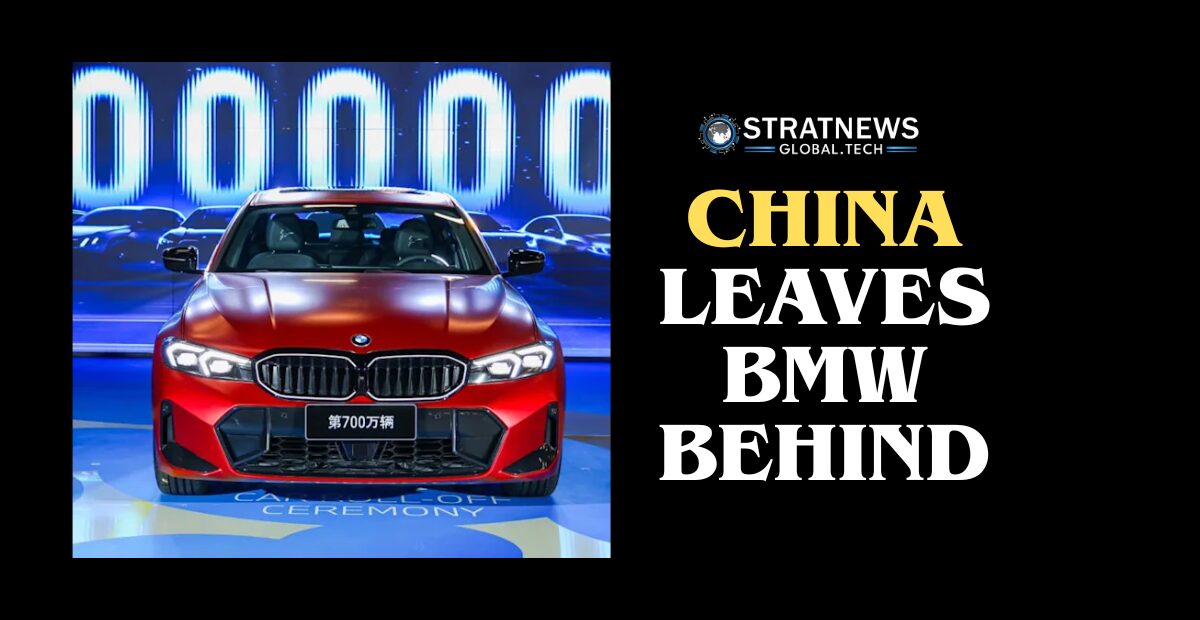
BMW is banking on its next-generation Neue Klasse electric vehicles to revive its struggling business in China, but analysts say the German luxury carmaker may have arrived too late to keep pace with the country’s rapidly evolving EV market.
The company, now led by Chief Executive Milan Nedeljkovic, has endured two consecutive years of declining sales in China. Last month, BMW issued its third profit warning in under three years, citing weak demand in the world’s largest car market. On Friday, the automaker reported that its China sales plunged 30% in the second quarter.
BMW’s first Neue Klasse model for China the iX3 electric SUV is scheduled to go on sale in November. The new platform underpins around 40 upcoming models and is central to BMW’s global electric vehicle strategy.
However, industry experts believe the Chinese market has evolved far more quickly than BMW anticipated.
“If this had launched two years ago, it could have been a game-changer,” said Yale Zhang, Managing Director of Shanghai-based consultancy Automotive Foresight. “In today’s Chinese auto market, it is hard to stand out.”
Chinese EV makers such as Nio, Zeekr, Xiaomi and Aito have accelerated product development cycles to as little as 18 months while introducing increasingly advanced technologies, from AI-powered driver assistance to intelligent suspension systems and highly connected digital cabins.
The shift has left traditional premium brands facing a new reality.
While BMW, Mercedes-Benz and Audi continue to emphasise engineering heritage and driving dynamics, Chinese consumers are placing greater value on software, intelligent features and digital experiences.
According to Global Mobility data, fully electric vehicles account for 46% of all new vehicle sales in China, yet only around 5% of BMW’s sales in the country are fully electric.
BMW’s sales declined throughout both 2024 and 2025, while Mercedes-Benz and Audi also reported first-half sales declines of 28% and 19%, respectively.
Analysts say aggressive discounting is no longer enough to win customers.
According to Shanghai consultancy LandRoads, BMW’s average transaction price in China during 2025 was 341,000 yuan, lower than premium domestic brands including Nio, Aito and Denza. BMW confirmed it adjusted some list prices earlier this year alongside local authorities, although dealers remain free to offer additional discounts.
Despite the price cuts, industry observers argue that buyers increasingly prioritise technology over brand prestige.
“Chinese consumers today don’t just pick a car based solely on deep discounts,” said Wang Xianbin, Vice President of the Gasgoo Research Institute.
BMW also delayed the Chinese launch of the iX3 after replacing its in-house assisted-driving system with software developed by Chinese autonomous driving company Momenta, reflecting the growing importance of advanced driver-assistance features in the market.
The company said its development approach prioritises extensive testing and customer safety rather than matching the rapid development pace of local competitors.
Some investors believe BMW underestimated how quickly China’s market has changed.
Hendrik Schmidt of DWS, one of BMW’s largest shareholders, said the company had not fully appreciated the speed of transformation in China, while EV commentator Chang Yan argued that BMW’s focus on solving “range anxiety” reflects concerns that dominated the market several years ago rather than today’s priorities.
Analysts also note that many of the qualities traditionally associated with German luxury cars—such as handling and performance—carry less influence among younger Chinese buyers, who increasingly favour connected technologies, smart cabins and AI-driven features.
With the Neue Klasse finally arriving in China, BMW hopes it can regain momentum. But in a market where domestic rivals continue to innovate at remarkable speed, many industry observers believe the German automaker is now playing catch-up rather than setting the pace.
(with inputs from Reuters)