

Close Menu
Stratnews GlobalStratnews Global
    Facebook X (Twitter) Instagram
    Trending
    • Anthropic’s Claude Code Leak: April Fool’s Story or Opportunity?
    • IndiaAI Hackathon Drives Health Innovation Solutions
    • China Energy Storage Capacity Set to Surge by 2030
    • China Digital Humans Rules Tighten AI Oversight
    • Artemis II Trajectory Guides Lunar Return
    • Artemis II Crew Shares Space Journey Insights
    • Australia Social Ban Enforcement Gains Global Focus
    • Artemis II Mission Launch Advances Moon Exploration
    • Support Us
    Stratnews GlobalStratnews Global
    Write for Us
    Saturday, April 4
    • Space
    • Science
    • AI and Robotics
    • Industry News
    • Support Us
    Stratnews GlobalStratnews Global
    Home » China’s Tsinghua University demonstrates in-orbit space debris monitoring with a nano-satellite

    China’s Tsinghua University demonstrates in-orbit space debris monitoring with a nano-satellite

    StratNewsGlobal Tech TeamBy StratNewsGlobal Tech TeamApril 21, 2023 Science No Comments2 Mins Read
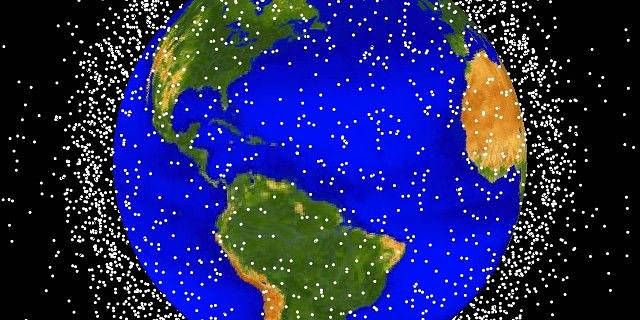
    image Credit: NASA

    China’s Tsinghua Science Satellite is crucial in collecting data to help precisely track and forecast space debris. Wang Zhaokui, a professor at Tsinghua University, shared this information at the 5th Committee on Space Research Symposium held in Singapore on Thursday.

    Launched from northwestern China’s Jiuquan Satellite Launch Center on August 6, 2020, the satellite generally operates in orbit. It continuously collects precision orbital data to improve the Earth’s upper atmosphere model, essential to precisely tracking and forecasting space debris.

    According to Wang, the satellite weighs 21.2 kg and operates from an altitude of 500 km. It features a unique pure spherical configuration that ensures the atmospheric drag is independent of the satellite’s attitude, significantly improving the accuracy of atmospheric density measurement. The team also developed an electromagnetic separation system, a supercapacitor-battery power system, and an integrated full-field solar sensor. This R&D provides a solid foundation for the future R&D of small satellites built for carrying scientific payloads.

    The development of this satellite has allowed the research team to cultivate a team with an average age of just 25 years old. These young researchers will be a substantial reserve for conducting China’s space science research.

    The event, held at Nanyang Technological University from April 16 to 21, attracted over 200 scientists, researchers, and industry experts to discuss advances in space sciences. The symposium focused on the emerging field of small satellite development, rapidly gaining attention for its potential to revolutionise space exploration and scientific research.

    Overall, the development and successful operation of the Tsinghua Science Satellite represent a significant achievement for China’s space program. The satellite’s cutting-edge technology and the young research team’s talent and dedication make them well-positioned to advance China’s space science research in the future.

    Author

    • StratNewsGlobal Tech Team
      StratNewsGlobal Tech Team

      View all posts
    Featured
    Share. Facebook Twitter Pinterest LinkedIn Tumblr Email Reddit Telegram WhatsApp
    StratNewsGlobal Tech Team
    • Website

    Keep Reading

    Anthropic’s Claude Code Leak: April Fool’s Story or Opportunity?

    IndiaAI Hackathon Drives Health Innovation Solutions

    China Energy Storage Capacity Set to Surge by 2030

    China Digital Humans Rules Tighten AI Oversight

    Artemis II Trajectory Guides Lunar Return

    Artemis II Crew Shares Space Journey Insights

    Add A Comment
    Leave A Reply Cancel Reply

    Anti Drone System (CUAS)
    Latest Posts

    Anthropic’s Claude Code Leak: April Fool’s Story or Opportunity?

    April 3, 2026

    IndiaAI Hackathon Drives Health Innovation Solutions

    April 3, 2026

    China Energy Storage Capacity Set to Surge by 2030

    April 3, 2026

    China Digital Humans Rules Tighten AI Oversight

    April 3, 2026

    Artemis II Trajectory Guides Lunar Return

    April 3, 2026

    Artemis II Crew Shares Space Journey Insights

    April 3, 2026

    Australia Social Ban Enforcement Gains Global Focus

    April 3, 2026

    Artemis II Mission Launch Advances Moon Exploration

    April 2, 2026

    India’s Census 2027: Growth Story or Reality Check?

    April 2, 2026

    Sodium-Ion Battery Project Turns Bio-Waste To Energy

    April 2, 2026

    Subscribe to News

    Get the latest sports news from NewsSite about world, sports and politics.

    • Astronomical Events
    • Space Missions
    • Industry News
    • Science
    StratNewsGlobal Tech
    Facebook X (Twitter) Instagram LinkedIn YouTube
    © 2026 StratNews Global, A unit of BharatShakti Communications LLP
    • About Us
    • Contributors
    • Copyright
    • Contact
    • Write for Us

    Type above and press Enter to search. Press Esc to cancel.