

Close Menu
Stratnews GlobalStratnews Global
    Facebook X (Twitter) Instagram
    Trending
    • AI Takes Center Stage in India’s Space Sector Ahead of AI Summit
    • Railways Strengthens Cybersecurity, Ensuring Smooth Tatkal Booking
    • National Biodiversity Authority Secures ₹2.40 Crore Through ABS Contributions
    • Failed Supernova Black Hole Formation Observed in Andromeda
    • Eutelsat, Starlink Rival Revenue Beats Forecasts
    • Mexico World Cup Counter-Drone Systems Unveiled for 2026 Tournament
    • Ariane 6 Amazon Satellite Launch Deploys 32 Spacecraft
    • GE Aerospace Singapore Automation Targets Repair Bottlenecks
    Stratnews GlobalStratnews Global
    Write for Us
    Monday, February 16
    • Space
    • Science
    • AI and Robotics
    • Industry News
    Stratnews GlobalStratnews Global
    Home » Shenzhou-18 Crew Advances Space Research in Tiangong Space Station

    Shenzhou-18 Crew Advances Space Research in Tiangong Space Station

    ReshamBy ReshamSeptember 2, 2024 Space Missions No Comments2 Mins Read
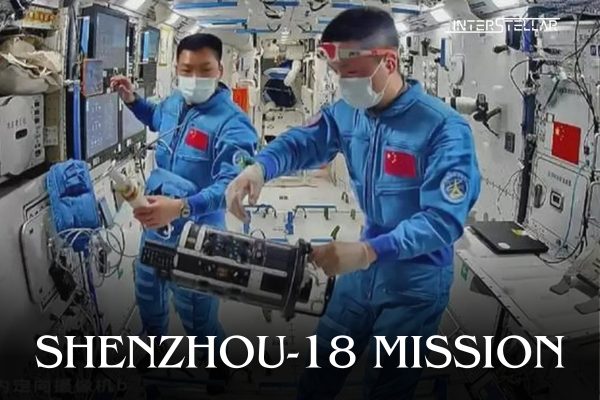
    Shenzhou-18 Mission

    Shenzhou-18 Crew Advances Research in Space as Mission Progresses

    The Shenzhou-18 crew, now in the second half of their mission, continues to carry out significant studies, research, and daily activities aboard China’s space station, Tiangong.

    Ongoing Research and Experiments

    The China Manned Space Agency (CMSA) recently shared new footage of the Shenzhou-18 crew, highlighting their ongoing efforts in space science experiments, station environment monitoring, and overall station management. The mission, which began on April 25, has seen astronauts Ye Guangfu, Li Cong, and Li Guangsu in orbit for over four months.

    Last week, the crew focused on improving the habitability of the space station. They completed panoramic imaging and 3D scanning of the station, gathering data on spatial dimensions, equipment layout, and user interface usability. This research aims to identify and address habitability challenges, ultimately providing insights for designing future space stations.

    Advanced Space Science Research

    The astronauts also employed the space Raman spectrometer for in-orbit nutritional metabolomics research, analysing metabolites in urine samples. This work contributes to understanding the effects of long-duration spaceflights and offers valuable data for developing effective in-orbit medication.

    In the realm of space life sciences and biotechnology, the crew conducted research on space radiation damage and the adaptability of anaerobic archaea. Using a small centrifuge module, they tested the survival of these microorganisms under Mars-like conditions and extreme cosmic radiation, contributing to the ongoing search for extraterrestrial life.

    Other Essential Tasks and Station Maintenance

    The Shenzhou-18 crew continued their experiments in microgravity fluid physics, combustion science, and space materials science. Their tasks included replacing samples in fluid physics and containerless cabinets, as well as performing vacuum operations in the combustion chamber.

    Additionally, the crew has been diligent in maintaining their health, regularly performing medical check-ups that include ultrasound, electrocardiographs, and blood pressure monitoring. For station management, they have completed routine cabin cleaning and maintenance tasks, ensuring the smooth operation of the Tiangong space station.

    Author

    • Resham
      Resham

      Research Associate at Interstellar.| China Scholar | China Social Media & Foreign Affairs|

      View all posts
    Featured
    Share. Facebook Twitter Pinterest LinkedIn Tumblr Email Reddit Telegram WhatsApp
    Resham
    • X (Twitter)

    Research Associate at Interstellar.| China Scholar | China Social Media & Foreign Affairs|

    Keep Reading

    AI Takes Center Stage in India’s Space Sector Ahead of AI Summit

    Railways Strengthens Cybersecurity, Ensuring Smooth Tatkal Booking

    National Biodiversity Authority Secures ₹2.40 Crore Through ABS Contributions

    Failed Supernova Black Hole Formation Observed in Andromeda

    Eutelsat, Starlink Rival Revenue Beats Forecasts

    Mexico World Cup Counter-Drone Systems Unveiled for 2026 Tournament

    Add A Comment
    Leave A Reply Cancel Reply

    Anti Drone System (CUAS)
    Latest Posts

    AI Takes Center Stage in India’s Space Sector Ahead of AI Summit

    February 15, 2026

    Railways Strengthens Cybersecurity, Ensuring Smooth Tatkal Booking

    February 13, 2026

    National Biodiversity Authority Secures ₹2.40 Crore Through ABS Contributions

    February 13, 2026

    Failed Supernova Black Hole Formation Observed in Andromeda

    February 13, 2026

    Eutelsat, Starlink Rival Revenue Beats Forecasts

    February 13, 2026

    Mexico World Cup Counter-Drone Systems Unveiled for 2026 Tournament

    February 13, 2026

    Ariane 6 Amazon Satellite Launch Deploys 32 Spacecraft

    February 13, 2026

    GE Aerospace Singapore Automation Targets Repair Bottlenecks

    February 13, 2026

    Why Nirmala Sitharaman’s 9th Budget Is A Turning Point

    February 12, 2026

    Iron Mountain AI Data Center Revenue Forecast Beats Estimates

    February 12, 2026

    Subscribe to News

    Get the latest sports news from NewsSite about world, sports and politics.

    • Astronomical Events
    • Space Missions
    • Industry News
    • Science
    StratNewsGlobal Tech
    Facebook X (Twitter) Instagram LinkedIn YouTube
    © 2026 StratNews Global, A unit of BharatShakti Communications LLP
    • About Us
    • Contributors
    • Copyright
    • Contact
    • Write for Us

    Type above and press Enter to search. Press Esc to cancel.