

Close Menu
Stratnews GlobalStratnews Global
    Facebook X (Twitter) Instagram
    Trending
    • Anthropic’s Claude Launches An OpenClaw-Like Assistant
    • China Flags Spy Risks, Warns Of Infrared And Laser Devices 
    • Russia’s ‘Rassvet’ Project Moves Closer to Becoming a Real Alternative to Starlink
    • Meta AI Pay Boost Targets Executive Retention
    • KF 21 Programme Gains Boost With South Korea Investment
    • Xi Renews Push for High-Tech Hub Near Beijing
    • China Bars Manus Founders In Meta Deal Review
    • Russia Satellites Launch Marks Bid To Compete With Starlink
    • Support Us
    Stratnews GlobalStratnews Global
    Write for Us
    Wednesday, March 25
    • Space
    • Science
    • AI and Robotics
    • Industry News
    • Support Us
    Stratnews GlobalStratnews Global
    Home » China’s New Lunar Bricks Could Pave the Way for Moon Colonisation

    China’s New Lunar Bricks Could Pave the Way for Moon Colonisation

    ReshamBy ReshamOctober 22, 2024 Space No Comments3 Mins Read
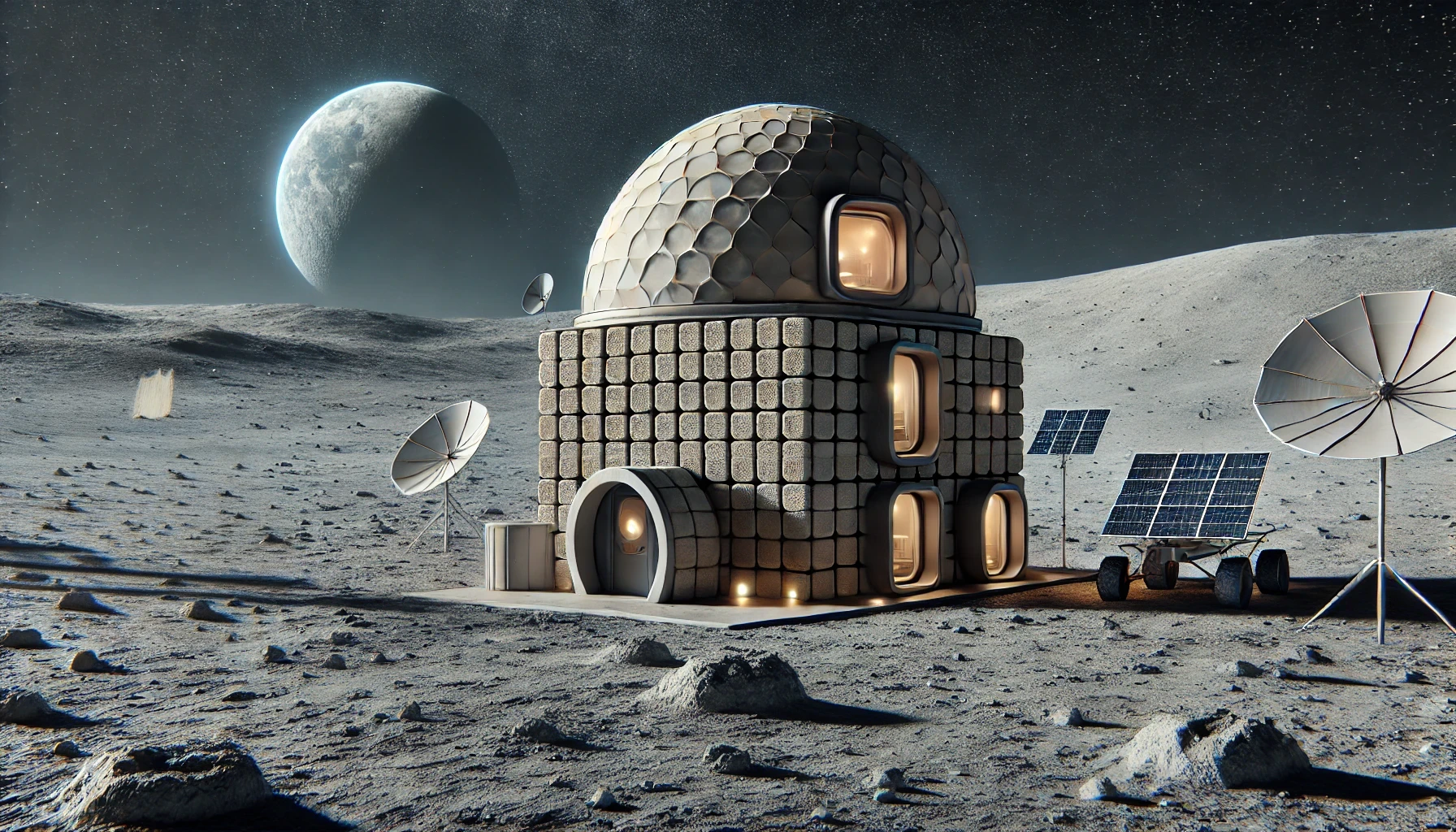
    Lunar Bricks

    Chinese Researchers Develop Bricks from Simulated Lunar Soil for Future Moon Base

    Chinese scientists have created bricks using a material that mimics the composition of lunar soil, with the hope that these bricks can one day be used to build a base on the moon. The development is seen as a significant step towards constructing sustainable structures on the lunar surface.

    Simulated Lunar Soil Bricks: Stronger and More Durable

    Zhou Cheng, a professor at the National Center of Technology Innovation for Digital Construction and the Huazhong University of Science and Technology, introduced the “lunar soil bricks.” These bricks, made from simulated lunar soil through a sintering process, have a similar density to ordinary bricks but are more than three times stronger than standard red or concrete bricks.

    The lunar environment presents extreme challenges, with surface temperatures ranging from 180°C during the day to -190°C at night. In addition to these harsh temperature shifts, the moon is bombarded by cosmic radiation and micrometeorites, and it also experiences frequent moonquakes. As such, any building materials used on the moon must be able to withstand these extreme conditions.

    “What we care about the most is its mechanical and thermal performance, including heat preservation, insulation, and radiation resistance,” Zhou explained. The moon’s vacuum environment means that cosmic radiation is a significant concern, making these factors crucial for future lunar construction.

    Testing the Bricks in Space

    To ensure the durability of these lunar bricks, the Chinese research team plans to send them to China’s space station aboard the Tianzhou-8 cargo spacecraft. Over a three-year period, the bricks will be exposed to the harsh conditions of space to test their mechanical, thermal, and radiation-resistant properties. One brick will be returned to Earth each year for analysis.

    The team has designed two types of bricks: pillar-shaped for mechanical testing and larger flakes to study thermal and radiation effects. These bricks are created using five different simulated compositions of lunar soil and undergo three sintering processes, yielding valuable data for future lunar construction.

    A Step Towards Building a Lunar Base

    China’s ambitious space program includes a roadmap for building an international lunar research station. This station is planned for the second phase of China’s national space science development program, set to begin between 2028 and 2035. The research into lunar soil bricks is an important part of this long-term plan, as it aims to develop reliable materials for lunar construction.

    Author

    • Resham
      Resham

      Research Associate at Interstellar.| China Scholar | China Social Media & Foreign Affairs|

      View all posts
    Featured
    Share. Facebook Twitter Pinterest LinkedIn Tumblr Email Reddit Telegram WhatsApp
    Resham
    • X (Twitter)

    Research Associate at Interstellar.| China Scholar | China Social Media & Foreign Affairs|

    Keep Reading

    Anthropic’s Claude Launches An OpenClaw-Like Assistant

    China Flags Spy Risks, Warns Of Infrared And Laser Devices 

    Russia’s ‘Rassvet’ Project Moves Closer to Becoming a Real Alternative to Starlink

    Meta AI Pay Boost Targets Executive Retention

    KF 21 Programme Gains Boost With South Korea Investment

    Xi Renews Push for High-Tech Hub Near Beijing

    Add A Comment
    Leave A Reply Cancel Reply

    Anti Drone System (CUAS)
    Latest Posts

    Anthropic’s Claude Launches An OpenClaw-Like Assistant

    March 25, 2026

    China Flags Spy Risks, Warns Of Infrared And Laser Devices 

    March 25, 2026

    Russia’s ‘Rassvet’ Project Moves Closer to Becoming a Real Alternative to Starlink

    March 25, 2026

    Meta AI Pay Boost Targets Executive Retention

    March 25, 2026

    KF 21 Programme Gains Boost With South Korea Investment

    March 25, 2026

    Xi Renews Push for High-Tech Hub Near Beijing

    March 25, 2026

    China Bars Manus Founders In Meta Deal Review

    March 25, 2026

    Russia Satellites Launch Marks Bid To Compete With Starlink

    March 24, 2026

    Chinese 5G Vietnam Concerns Over EU Investor Warning

    March 24, 2026

    Sam Altman Helion Exit Signals Energy Deal

    March 24, 2026

    Subscribe to News

    Get the latest sports news from NewsSite about world, sports and politics.

    • Astronomical Events
    • Space Missions
    • Industry News
    • Science
    StratNewsGlobal Tech
    Facebook X (Twitter) Instagram LinkedIn YouTube
    © 2026 StratNews Global, A unit of BharatShakti Communications LLP
    • About Us
    • Contributors
    • Copyright
    • Contact
    • Write for Us

    Type above and press Enter to search. Press Esc to cancel.