

Close Menu
Stratnews GlobalStratnews Global
    Facebook X (Twitter) Instagram
    Trending
    • SpaceX Loses Starlink Satellite After Rare Orbital Mishap
    • Stocks Rally on Easing Inflation, Micron’s AI Boom Forecast
    • Trump Media Merges with TAE Technologies in $6 Billion Fusion Energy Deal
    • House Passes SPEED Act to Overhaul U.S. Energy Permitting Rules
    • Trump Administration Reviews Nvidia H200 Chip Sales to China
    • ByteDance Forms U.S. TikTok Joint Venture to Avoid Government Ban
    • Trump Sets 2028 Moon Landing Goal in New Space Superiority Order
    • India’s $100 Billion Trade Gamble: Inside the EFTA Deal
    Stratnews GlobalStratnews Global
    Write for Us
    Saturday, December 20
    • Space
    • Science
    • AI and Robotics
    • Industry News
    Stratnews GlobalStratnews Global
    Home » China’s Chang’e Missions Target Water and Habitats at Moon’s South Pole

    China’s Chang’e Missions Target Water and Habitats at Moon’s South Pole

    Aishwarya ParikhBy Aishwarya ParikhApril 2, 2025 Space No Comments3 Mins Read
    Chang’e-7

    China Eyes Moon’s South Pole with Chang’e Missions

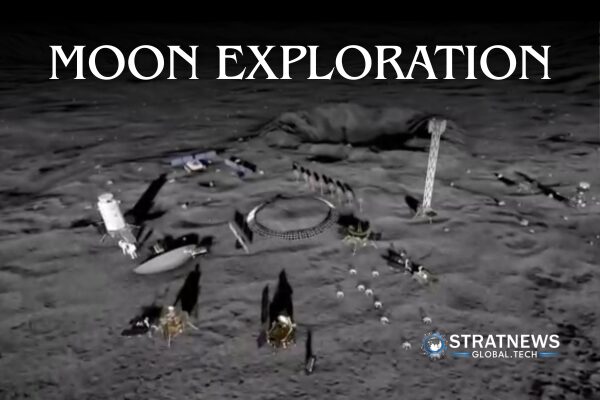
    China plans to launch its Chang’e-7 mission in 2026 to explore the moon’s south pole, focusing on environmental conditions and the potential presence of water. A follow-up mission, Chang’e-8, scheduled for 2028, will test advanced technologies for building lunar habitats using local resources.

    Aiming for Lunar Water

    Wu Weiren, chief designer of China’s Lunar Exploration Programme, shared the details in a recent interview with China Central Television. He confirmed that the programme, with a perfect success record over the past 20 years, is now entering its fourth phase.

    The Chang’e-7 mission will search for signs of water ice within permanently shadowed craters at the moon’s south pole. If successful, this could transform lunar missions. Water on the moon could support human life by providing drinking water, oxygen, and even rocket fuel.

    Wu explained that the moon’s south pole offers unique advantages for long-term exploration. Some areas receive nearly continuous sunlight for over 100 days. This makes them ideal locations for future human activity.

    “This feature lays a foundation for human presence. If water is found, it would be a huge discovery and a historic milestone,” Wu stated.

    Building Habitats with Lunar Soil

    The next step, the Chang’e-8 mission, will test the practical use of lunar soil. The mission will include experiments in communication, energy generation, and building techniques. One key goal is testing how to construct a lunar research base.

    China has developed a world-first system that creates bricks from lunar soil. The process uses sunlight concentrated through fibre optics to reach temperatures of 1400–1500°C, enough to melt the soil. The molten material is then shaped into bricks using 3D printing. These bricks could be used to build future lunar structures, reducing reliance on Earth-based supplies.

    Wu highlighted that this approach marks a major step toward sustainable space exploration. It also opens the door for further international cooperation.

    Global Collaboration on the Horizon

    China’s International Lunar Research Station has already attracted interest from countries including Egypt and Bahrain. Six foreign scientific payloads will travel aboard the Chang’e-7 probe.

    Wu invited more international researchers and institutions to join China’s lunar efforts. He believes the International Lunar Research Station can become a key platform for the next stage of global space exploration.

    “In the next 10 to 20 years, we should focus on this international station as the guiding point for expanding lunar exploration,” Wu added.

    with inputs from Reuters

    Author

    • Aishwarya Parikh
      Aishwarya Parikh

      View all posts
    Featured
    Share. Facebook Twitter Pinterest LinkedIn Tumblr Email Reddit Telegram WhatsApp
    Aishwarya Parikh

      Keep Reading

      SpaceX Loses Starlink Satellite After Rare Orbital Mishap

      Stocks Rally on Easing Inflation, Micron’s AI Boom Forecast

      Trump Media Merges with TAE Technologies in $6 Billion Fusion Energy Deal

      House Passes SPEED Act to Overhaul U.S. Energy Permitting Rules

      Trump Administration Reviews Nvidia H200 Chip Sales to China

      ByteDance Forms U.S. TikTok Joint Venture to Avoid Government Ban

      Add A Comment
      Leave A Reply Cancel Reply

      Anti Drone System (CUAS)
      Latest Posts

      SpaceX Loses Starlink Satellite After Rare Orbital Mishap

      December 19, 2025

      Stocks Rally on Easing Inflation, Micron’s AI Boom Forecast

      December 19, 2025

      Trump Media Merges with TAE Technologies in $6 Billion Fusion Energy Deal

      December 19, 2025

      House Passes SPEED Act to Overhaul U.S. Energy Permitting Rules

      December 19, 2025

      Trump Administration Reviews Nvidia H200 Chip Sales to China

      December 19, 2025

      ByteDance Forms U.S. TikTok Joint Venture to Avoid Government Ban

      December 19, 2025

      Trump Sets 2028 Moon Landing Goal in New Space Superiority Order

      December 19, 2025

      India’s $100 Billion Trade Gamble: Inside the EFTA Deal

      December 18, 2025

      Micron Shares Soar as AI Boom Drives High-Bandwidth Memory Demand

      December 18, 2025

      Roblox Seeks to Overturn Russia Ban by Adapting Platform Rules

      December 18, 2025

      Subscribe to News

      Get the latest sports news from NewsSite about world, sports and politics.

      • Astronomical Events
      • Space Missions
      • Industry News
      • Science
      StratNewsGlobal Tech
      Facebook X (Twitter) Instagram LinkedIn YouTube
      © 2025 StratNews Global, A unit of BharatShakti Communications LLP
      • About Us
      • Contributors
      • Copyright
      • Contact
      • Write for Us

      Type above and press Enter to search. Press Esc to cancel.