


Close Menu
Stratnews GlobalStratnews Global
    Facebook X (Twitter) Instagram
    Trending
    • Forget FPIs. Follow the Earnings: Sanjay Bakshi on Investing in India
    • Beyond the Strait of Hormuz: The New Battle for Energy and Trade Security
    • India’s Working-Hour Rules: Why Factories Struggle to Scale
    • Vietnam vs India: What Must Change for India to Grow at 10%?
    • India’s Green Transition: Can Sustainability and Competitiveness Go Together?
    • Can A Weakening Indian Rupee Become A Global Currency?
    • India’s Resilience Is Facing A Perfect Storm
    • Why Are Indian MSMEs So Resilient?
    • Support Us
    Stratnews GlobalStratnews Global
    Write for Us
    Sunday, November 15
    • Space
    • Science
    • AI and Robotics
    • Industry News
    • Support Us
    Stratnews GlobalStratnews Global
    Home » China Censors Social Media as US Hits Chinese Goods with 104% Tariff

    China Censors Social Media as US Hits Chinese Goods with 104% Tariff

    Kanika SharmaBy Kanika SharmaApril 9, 2025 World No Comments3 Mins Read
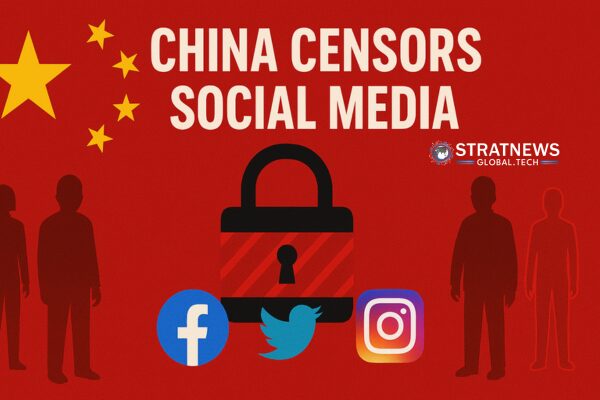
    China Censors

    China Censors Tariff Talk Online as US Slaps 104% Duties on Chinese Goods

    China censors discussions about new US tariffs on its social media platforms after sweeping “reciprocal” tariffs from Washington took effect this week. These include a staggering 104% duty on Chinese goods, prompting online outrage and ridicule in China—but only selective posts remain visible.

    Hashtags Blocked, Mockery Allowed

    Searches for keywords such as “tariff” or “104” on Weibo now lead to error messages, with most content blocked. Even related hashtags were suppressed, reflecting the Chinese government’s efforts to control the narrative. Meanwhile, anti-US content—especially those mocking the United States—was left untouched or even promoted.

    A top trending hashtag launched by state broadcaster CCTV, “#UShastradewarandaneggshortage”, implied that the US is suffering food shortages while imposing tough trade policies. The post claimed the US was “urgently asking for eggs” even as it struck high-profile tariff deals against the EU and China.

    On WeChat, a popular Chinese messaging app, posts by local businesses discussing the damage caused by the US tariffs were removed. The platform flagged them for violating “relevant laws, regulations, and policies,” according to a Reuters review.

    Beijing’s Response and Public Sentiment

    China has announced its own retaliatory tariffs and vowed to confront what it calls economic blackmail. Although Beijing may struggle to match the scale of US tariffs—given it exports three times more to the US than it imports—it has few alternatives. State media and online influencers are now building public support for a long-term trade standoff.

    Prominent Beijing lawyer Pang Jiulin, who has over 10 million followers on Weibo, warned that Chinese companies might lose access to the US market. He noted that other countries like Vietnam and India could quickly replace China’s exports.

    “If China also imposes 104% tariffs, the prices of American products such as Apple and Tesla goods will spike,” Pang said, warning that Chinese consumers will bear the cost of such retaliation.

    Market Reaction and National Messaging

    The Shanghai Composite Index had its worst trading day in five years on Monday, dropping 7%, but rebounded on Wednesday after government reassurances of market support.

    Hu Xijin, a well-known commentator, slammed the US tariff strategy, calling it “delusional” and destined to fail. “They are at war not only with the whole world, but also with the most basic rules of human society,” Hu said. He predicted the US tariffs would be remembered as a “historical embarrassment.”

    While Beijing tightens its grip on sensitive online topics, it continues to use social media to stir nationalist sentiment and reinforce its stance against the US in what appears to be a new phase of trade conflict.

    with inputs from Reuters

    Author

    • Kanika Sharma
      Kanika Sharma
      View all posts
    Featured
    Share. Facebook Twitter Pinterest LinkedIn Tumblr Email Reddit Telegram WhatsApp
    Kanika Sharma
    Kanika Sharma

      Keep Reading

      Social Media Bans Expand For Children Worldwide

      Perplexity Valuation Could Exceed $30 Billion

      Vatican Renewable Energy Plant To Power Holy See

      Terrier Cyber Quest 2026 Opens National Hackathon

      Firebase Banking Scams Prompt India Action Against Google

      China Indonesia Energy Technology Cooperation Expands

      Add A Comment
      Leave A Reply Cancel Reply

      Anti Drone System (CUAS)
      Latest Posts

      Forget FPIs. Follow the Earnings: Sanjay Bakshi on Investing in India

      November 12, 2026

      Beyond the Strait of Hormuz: The New Battle for Energy and Trade Security

      November 6, 2026

      India’s Working-Hour Rules: Why Factories Struggle to Scale

      October 29, 2026

      Vietnam vs India: What Must Change for India to Grow at 10%?

      October 22, 2026

      India’s Green Transition: Can Sustainability and Competitiveness Go Together?

      October 15, 2026

      Can A Weakening Indian Rupee Become A Global Currency?

      October 8, 2026

      India’s Resilience Is Facing A Perfect Storm

      October 1, 2026

      Why Are Indian MSMEs So Resilient?

      September 24, 2026

      9/11@25: How Terrorism Reshaped Global Geopolitics

      September 17, 2026

      The Indian Economy Keeps Beating Expectations

      September 10, 2026

      Subscribe to News

      Get the latest sports news from NewsSite about world, sports and politics.

      • Astronomical Events
      • Space Missions
      • Industry News
      • Science
      StratNewsGlobal Tech
      Facebook X (Twitter) Instagram LinkedIn YouTube
      © 2026 StratNews Global, A unit of BharatShakti Communications LLP
      • About Us
      • Contributors
      • Copyright
      • Contact
      • Write for Us

      Type above and press Enter to search. Press Esc to cancel.