


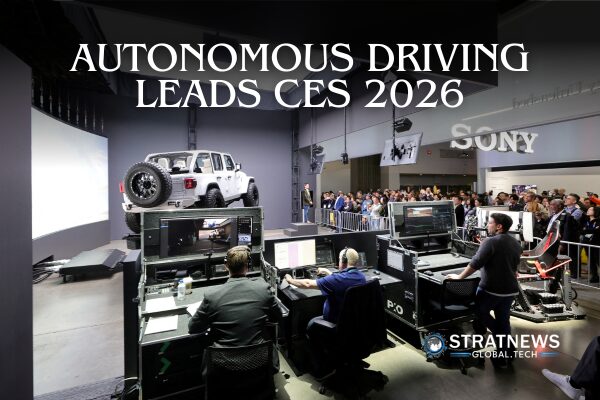
Autonomous Driving Takes Centre Stage at CES 2026 amid Industry Shift
Autonomous driving technology is set to dominate the CES 2026 trade show in Las Vegas this week, as investors look to artificial intelligence to revitalise an auto industry grappling with slow innovation, safety concerns and high costs.
Focus Shifts from Electric to Autonomous
With many automakers scaling back electric vehicle (EV) plans due to weaker demand and reduced incentives, attention has turned to the next frontier: autonomy. A wave of auto suppliers and start-ups are expected to unveil new hardware and software designed to reduce, or even eliminate, the need for human drivers.
“This year you will see more and more focus on AI and autonomous,” said C.J. Finn, U.S. automotive industry leader at PwC. “How companies use AI to address the safety challenges of driverless cars will be front and centre.”
AI integration will extend well beyond the automotive sector. From wearable gadgets and home devices to robots and health technology, artificial intelligence is expected to be embedded across nearly every product category at the event.
CES 2026, formerly known as the Consumer Electronics Show, runs from 6 to 9 January. The event will feature keynotes from Nvidia CEO Jensen Huang and AMD CEO Lisa Su, both central figures in the AI hardware boom.
Industry Pullback from EVs
Once a major stage for electric vehicle launches, CES 2026 reflects a changing automotive landscape. The rollback of EV-friendly policies and incentives by the Trump administration has dampened demand, forcing automakers to rethink investment plans.
This year, few major automakers are expected to unveil new EVs — a sharp contrast to previous shows, where electric mobility dominated the spotlight. The shift marks a strategic realignment as companies search for profitability in an increasingly competitive and cost-sensitive market.
Renewed Momentum for Autonomy
Commercialising self-driving technology remains a difficult challenge, with heavy research costs and regulatory barriers deterring progress. However, recent developments have renewed optimism. Tesla’s pilot robotaxi service in Austin, Texas, and the accelerated rollout of Alphabet’s Waymo operations have injected new life into the autonomous sector.
Driver-assistance technologies have also advanced, with automakers offering hands-free highway driving and automatic lane changing. Companies like Rivian are now developing “eyes-off” functionality, allowing full self-driving in city environments.
“That’s starting to align with where people are putting their money and how they are allocating capital,” said Finn.
Cost Competitiveness and Tariff Pressures
Despite renewed focus on autonomy, cost pressures remain significant. Automakers are still contending with the financial fallout of abandoned EV programmes and new U.S. tariffs on imported vehicles and parts. Many firms have absorbed these costs rather than passing them on to consumers, squeezing margins further.
Felix Stellmaszek, global automotive and mobility leader at Boston Consulting Group, said cost efficiency will be a major talking point at CES. “The main theme we expect to see is around cost and cost competitiveness,” he noted, adding that automakers face heightened competition from Chinese manufacturers with lower production costs.
As CES 2026 opens, the spotlight on AI-driven autonomy reflects both a technological pivot and a strategic recalibration for an industry under pressure to innovate while controlling costs.
with inputs from Reuters