


Google Expands Gemini AI Push With Enterprise Upgrades And Smarter Search Tools
Alphabet’s Google has unveiled a broad range of artificial intelligence products and upgrades at its annual I/O developer conference, intensifying competition with rivals such as Anthropic and OpenAI in the rapidly expanding enterprise AI market.
The announcements focused heavily on enterprise adoption, AI-powered search and autonomous software agents integrated across Google’s ecosystem. Executives also highlighted major pricing changes aimed at attracting corporate customers seeking lower-cost alternatives to rival frontier AI models.
The conference in Mountain View, California marked Google’s most ambitious AI showcase since the launch of the updated Gemini model family last winter.
Gemini Becomes Central To Google’s AI Strategy
Google used the event to position Gemini at the centre of its long-term artificial intelligence plans. The company introduced several new products powered by the Gemini 3.5 model family, including Gemini 3.5 Flash, which is designed specifically for coding, automation and workflow tasks.
Chief executive Sundar Pichai also confirmed that Gemini 3.5 Pro will launch next month.
Executives framed the event as a turning point in the evolution of AI technology. Demis Hassabis, head of Google DeepMind, described the current period as a transformative moment for humanity and suggested the industry remains only at the beginning of much larger changes ahead.
Google additionally showcased autonomous AI agents capable of performing tasks such as monitoring ticket availability, purchasing products and organising schedules across multiple services in real time.
According to Pichai, users who engage with AI-powered features inside Search tend to use Google Search more frequently, reinforcing the company’s strategy of integrating AI directly into its core products rather than treating chatbots as standalone services.
Google Targets Enterprise AI Customers With Lower Pricing
As competition increasingly shifts towards enterprise AI spending, Google placed major emphasis on affordability and operational efficiency.
The company reduced the price of its premium AI Ultra subscription from $250 to $200 per month. It also introduced a new $100 monthly subscription aimed at developers and professional users.
Pichai argued that many businesses are already exhausting annual AI token budgets only months into the year. He claimed Google’s models could offer performance comparable to competing frontier AI systems at roughly one-third of the cost.
Google also expanded its coding ambitions by unveiling a new version of its coding assistant Antigravity, positioning the platform directly against Anthropic’s Claude Code tools.
The move follows Google’s efforts to strengthen its developer ecosystem after hiring senior personnel from AI coding startup Windsurf last year.
AI Search And Consumer Integration Accelerate
Google’s latest announcements also reflected growing confidence in defending its dominance in online search despite rising competition from ChatGPT and AI search platforms such as Perplexity AI.
The company revealed that Search will increasingly answer some queries using AI-generated visuals, interactive tools and explanatory code capable of simplifying scientific concepts or creating utilities such as fitness trackers.
Liz Reid, vice president of Google Search, said the company is entering a new phase in which Search itself becomes fully AI-driven.
Nick Fox, who oversees Google’s Search and advertising business, described the changes as the most significant transformation of the search box in 25 years.
Google also introduced Gemini Spark, an AI agent capable of gathering information from applications such as Gmail, Chrome and YouTube to generate reports and manage schedules automatically using personalised user data.
Pichai stated that Gemini now serves 900 million monthly users, more than doubling from around 400 million a year earlier. AI Overviews in Search reportedly reach 2.5 billion monthly users, while AI Mode has approximately 1 billion users.
Video AI And Smart Glasses Return
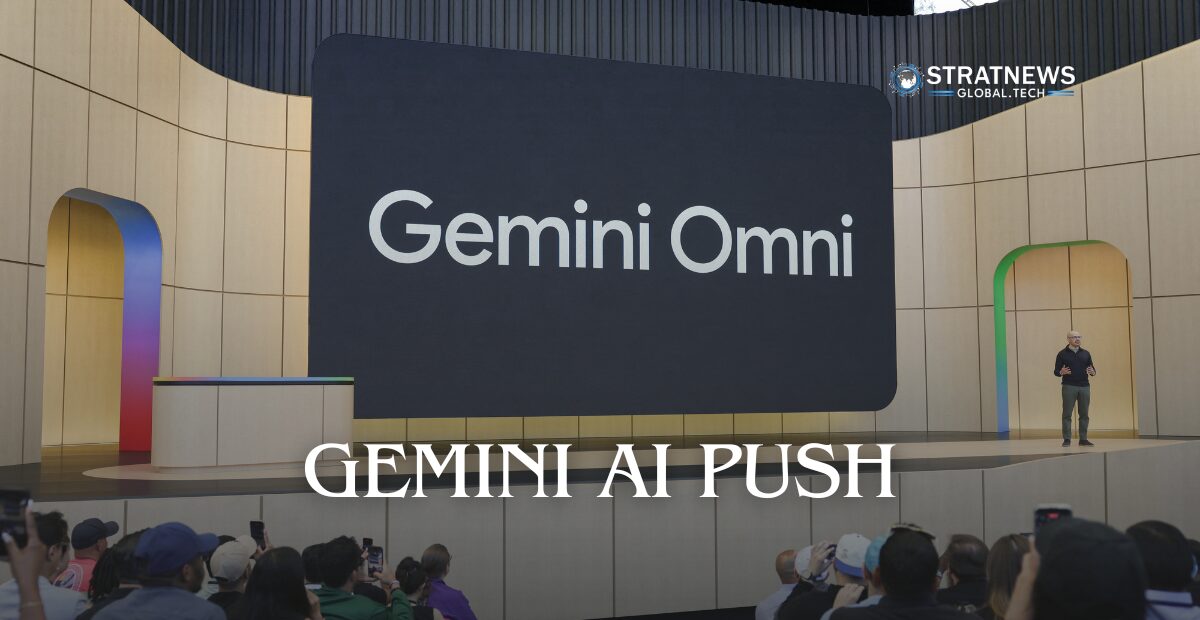
Beyond search and enterprise software, Google introduced Gemini Omni, a new AI video-generation model described as the successor to its Nano Banana image generator.
Hassabis said the technology moves Google closer to creating a broader “world model” capable of simulating physical environments. Initially focused on video, the system may eventually generate multiple forms of output from different types of input.
Google also confirmed plans to revive its smart glasses ambitions later this year through partnerships with Samsung Electronics, Warby Parker and Gentle Monster.
The company’s renewed hardware efforts come as AI increasingly shifts towards multimodal systems combining voice, video, augmented reality and real-time interaction.
Search remained Alphabet’s largest business in 2025, helping generate annual revenue of $402.8 billion. Meanwhile, the company expects capital expenditure on AI infrastructure to reach between $180 billion and $190 billion this year as competition in the sector continues to intensify.