


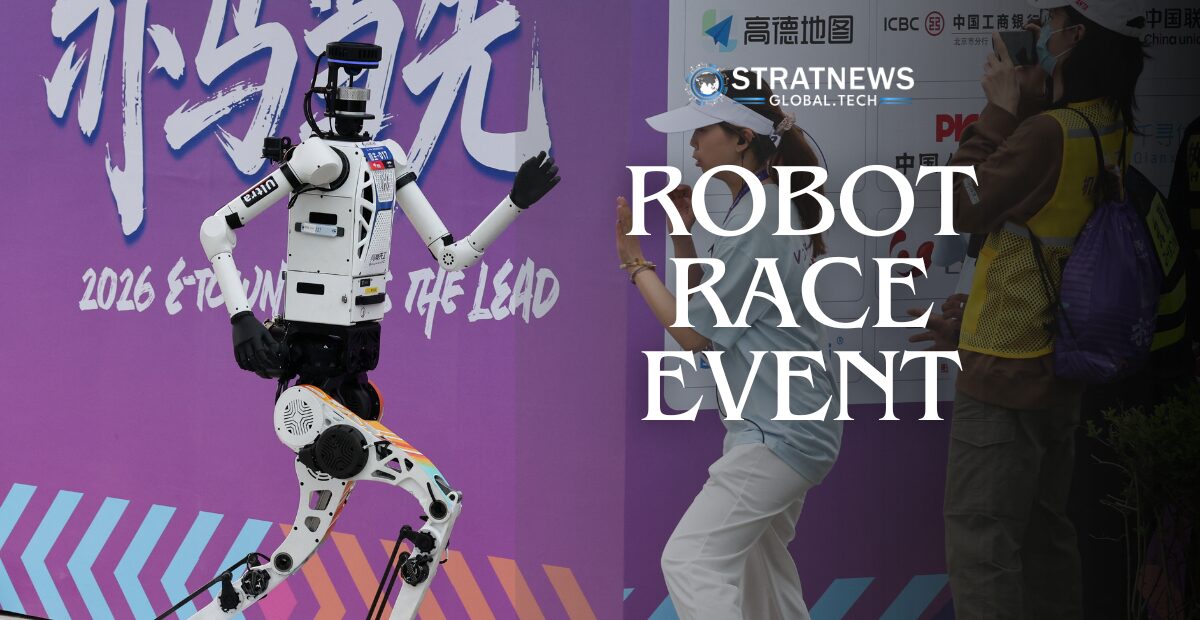
Robots Dominate Beijing Half Marathon With Impressive Performance
Humanoid robots developed independently by a leading smart device provider secured all top three positions at the 2026 Beijing E-Town Half Marathon. The event took place on April 19 in Beijing’s Yizhuang District and drew significant attention due to the scale and technological advancement on display.
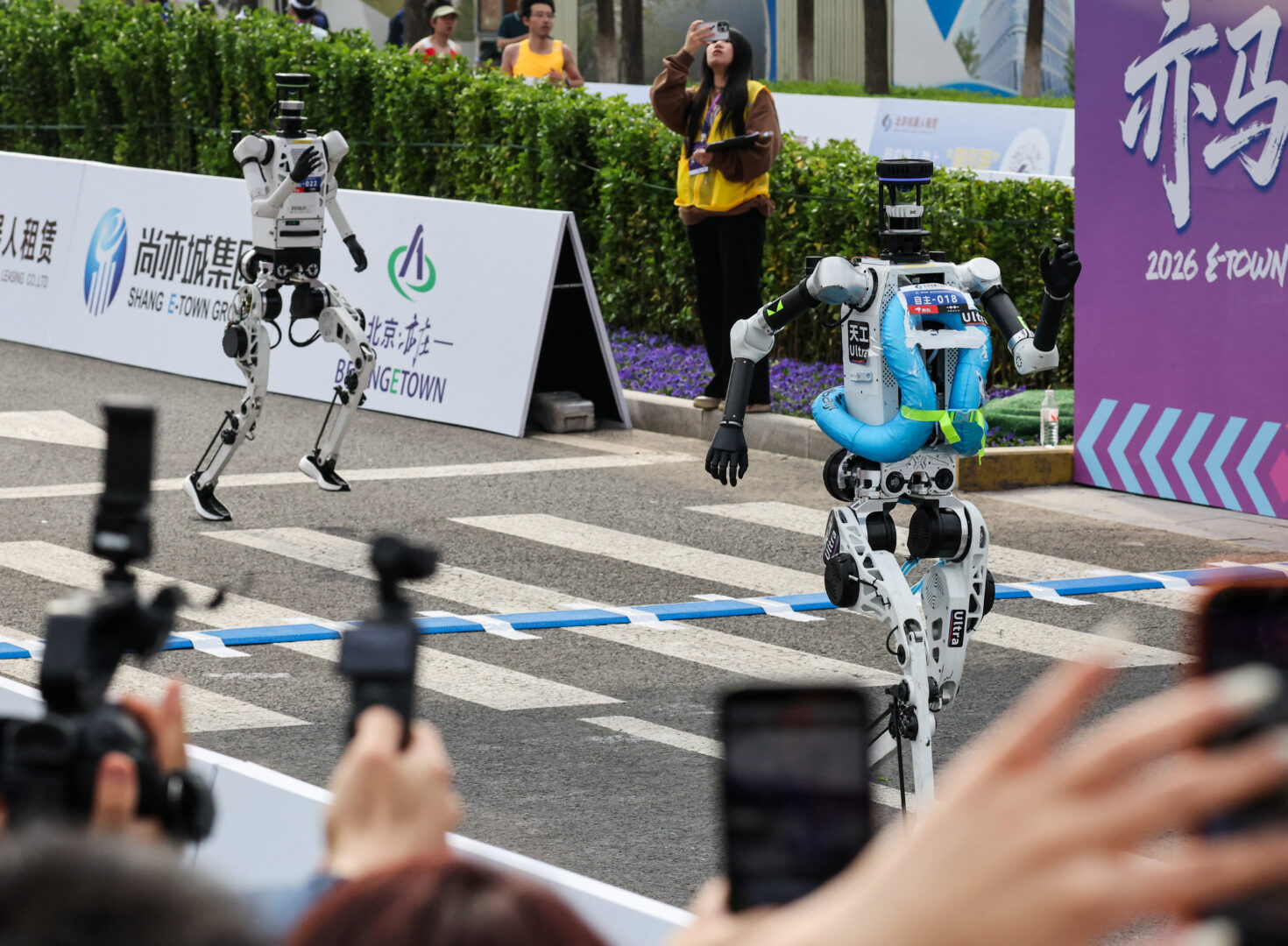
The winning team claimed first place, while another team completed the race in 50 minutes and 56 seconds to take second position. A third team followed with a finishing time of 53 minutes and one second. All three leading entries competed under the autonomous navigation category, demonstrating notable progress in robotics capability.
Challenging Course Tests Robot Endurance
The race began at 07:30 and covered a total distance of 21.0975 kilometres. Organisers introduced two competition categories, namely autonomous navigation and remote control, with both groups competing on the same course. However, results were calculated using weighted coefficients, which slightly adjusted final outcomes.
This year’s course proved more demanding than before. It included 22 turns, consisting of 12 left and 10 right bends, some approaching 90 degrees. In addition, organisers incorporated uphill and downhill sections along with ecological trails, increasing the complexity of the race. These changes required improved balance, navigation, and endurance from all competing robots.
Engineers Highlight Performance And Reliability
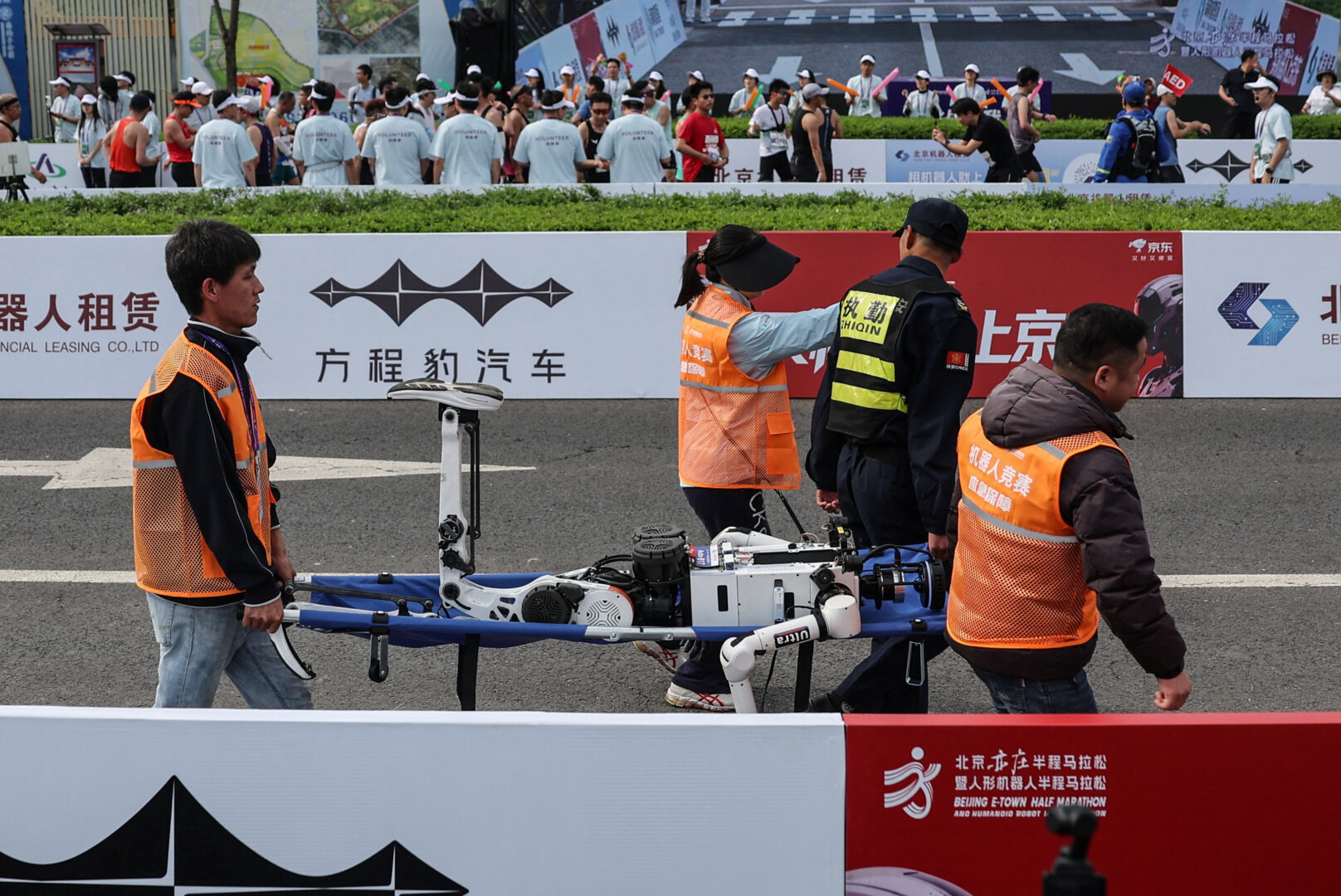
Engineers involved in the competition noted that the robots met expectations by completing the race without incidents. One model, in particular, required only a single battery replacement at the 10.6-kilometre mark before successfully finishing the course. This level of efficiency reflected advancements in both hardware and software integration.
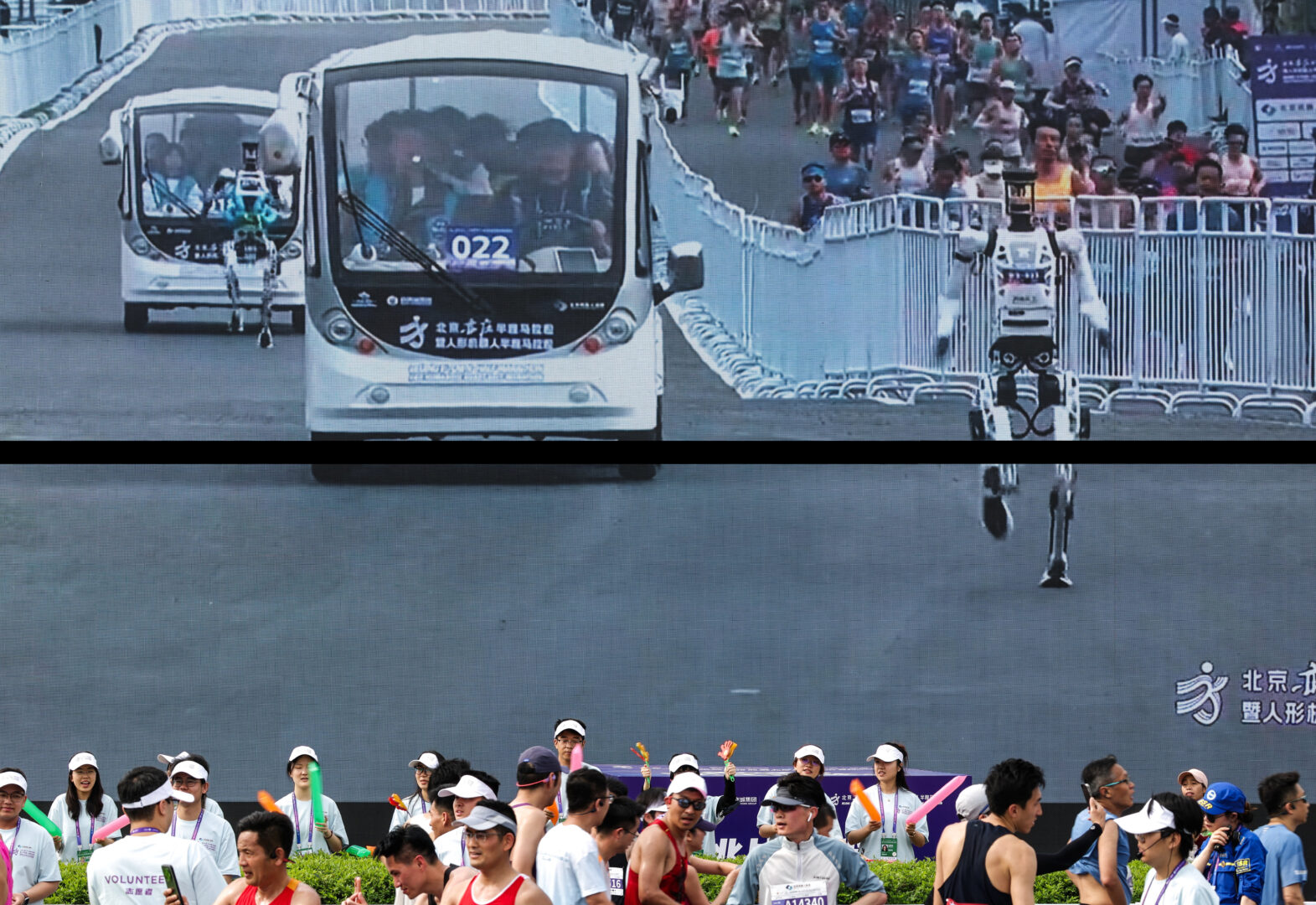
Meanwhile, the event featured participation from over 100 humanoid robot teams alongside more than 12,000 human runners. This parallel competition created a unique environment where human athletes and machines shared the same track.
Human Runners React To Robotic Competitors
Human participants expressed surprise at the speed and capability of the robots. One runner observed that several robots overtook him within the first five kilometres. He also described one robot as especially fast, noting its heavy footsteps and significantly higher speed.

Experts from international teams praised the overall standard of competition. They highlighted the impressive performance of both leading teams and smaller university groups, emphasising the rapid development within the robotics field.
Rapid Growth Marks Industry Progress
Compared with the previous year, the event expanded significantly. The inaugural race featured only 20 teams, whereas the current edition included 100 teams, among them five from overseas. Furthermore, robots demonstrated smoother movement, greater endurance, and improved algorithmic stability.
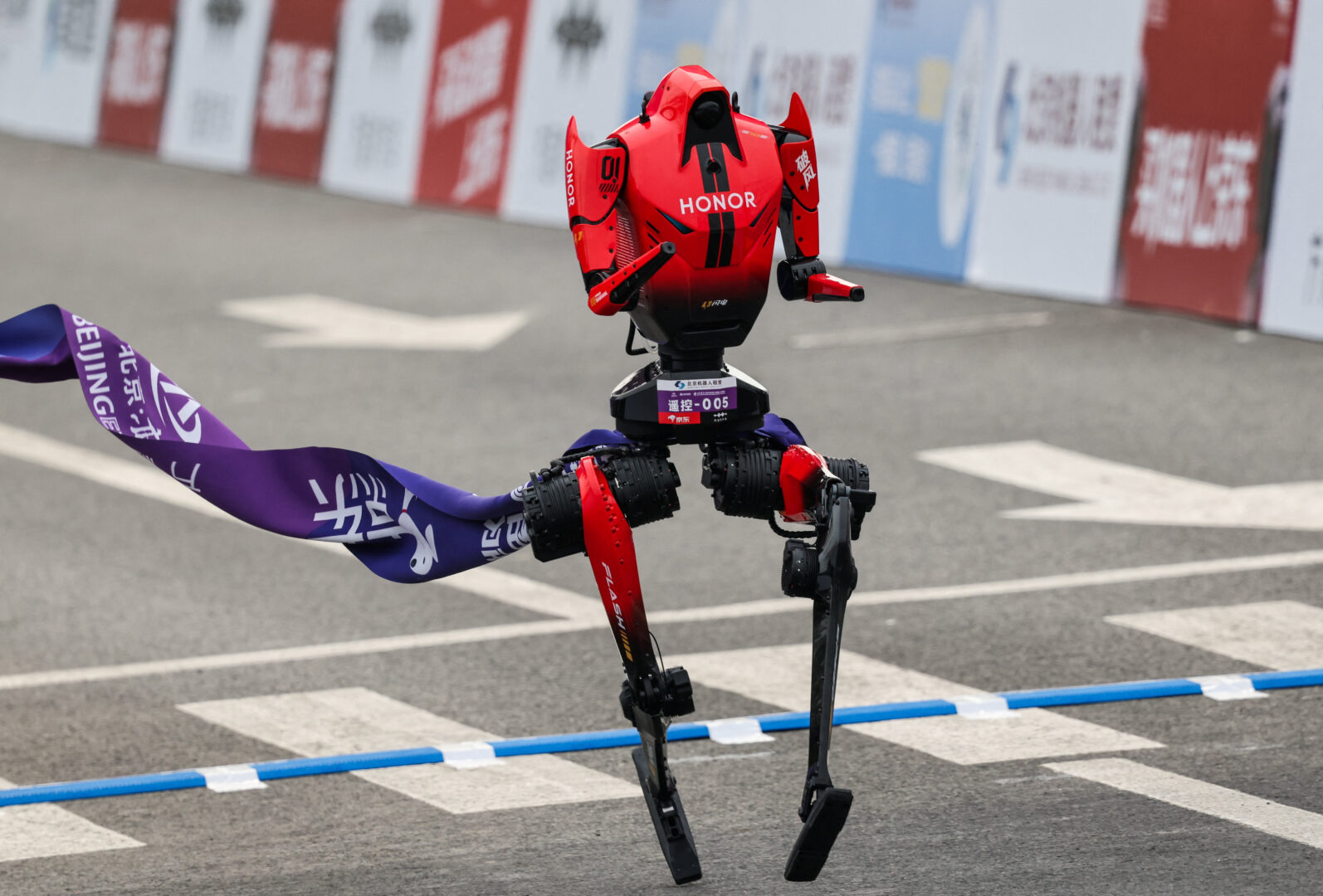
Organisers confirmed that these advancements reflect ongoing progress in humanoid robotics. The competition continues to serve as a testing ground for innovation, pushing teams to refine pe