


India’s water crisis is usually discussed in terms of scarcity. From declining groundwater reserves and recurring droughts to growing urban demand, the focus often falls on finding new sources of water.
But according to Rytis Kepalas, Head of Commerce of Lithuania-based AXIOMA Metering, a significant part of the challenge lies not in producing more water but in managing what is already available.
Speaking during an exclusive interaction, Kepalas argued that water losses within distribution networks represent one of the biggest yet least visible problems facing utilities worldwide.
“Water loss is often bigger than water scarcity,” he said. “In many cities, water never reaches the customer.”
His comments highlight the issue of non-revenue water (NRW), a term used to describe water that is treated and pumped into distribution systems but never generates revenue because it is lost through leaks, theft, inaccurate metering or operational inefficiencies. In many developing and developed markets alike, NRW remains a major burden on utilities, driving up costs while reducing the effectiveness of existing water infrastructure.
For utilities, the impact extends well beyond the value of the lost water itself. Every litre that disappears from the system has already been extracted, treated, transported and pumped, consuming energy and resources along the way.
“Only when utilities understand the real scale of losses can they begin solving the problem,” Kepalas said.
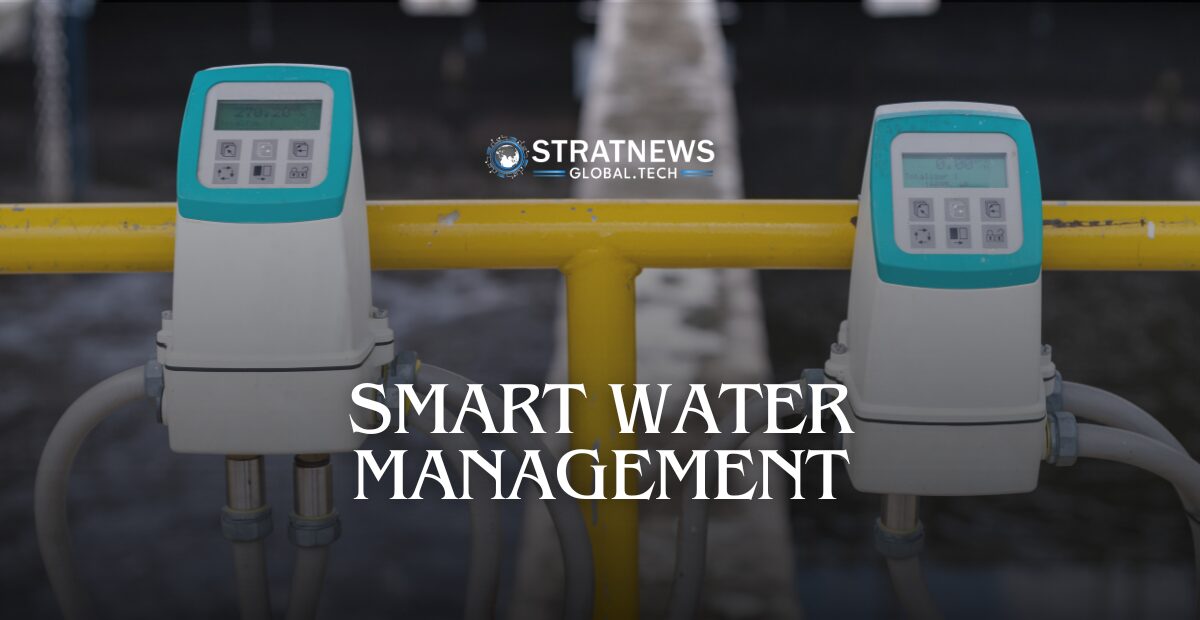
AXIOMA Metering specialises in ultrasonic smart water meters and supplies utilities across Europe, the Middle East, India and other regions. The company sold more than 1.5 million water meters globally last year and is now preparing to deepen its presence in India.
The company has already been active in the Indian market for the past few years and has a proven track record of smart water meter sales in the country. India is seen as an important market for future development, and the company is evaluating the next steps needed to support stronger local presence and potential Made in India capabilities in the future.
The expansion comes at a time when India and the European Union are seeking deeper cooperation on water resilience and sustainability. Under the framework of the India–EU Water Partnership and the broader Towards 2030: A Joint European Union-India Comprehensive Strategic Agenda, water security has emerged as an increasingly important area for collaboration.
Traditional water systems often rely on manual meter readings and ageing infrastructure, offering utilities limited visibility into network performance. Underground leaks can remain undetected for months, while inaccurate measurements make it difficult to understand actual consumption patterns.
Smart water meters, Kepalas argues, provide a different model. By transmitting consumption data in real time, they allow utilities to monitor water usage continuously and compare the volume of water entering the network with the amount being consumed.
“With digitalisation, utilities can measure how much water leaves the system and how much water is actually used,” he said. “Sometimes the difference is huge.”
The data generated by smart meters can support a range of applications beyond billing. Utilities can identify leaks earlier, optimise pressure management, improve maintenance planning and gain a more accurate understanding of system performance. Consumers can also benefit from greater transparency, receiving alerts about abnormal usage patterns that may indicate hidden leaks or unauthorised consumption.
Kepalas believes India is particularly well placed to adopt these technologies. Drawing comparisons with the country’s rapid embrace of mobile communications and digital payments, he said India has the opportunity to bypass older stages of infrastructure development and move directly towards intelligent water networks.
“India has a chance to leapfrog,” he said. “Like with telecoms and digital payments, India can move faster because it is starting later and can adopt newer technologies directly.”
The country’s Smart Cities Mission and wider digital infrastructure push have already demonstrated how technology can be deployed at scale. Similar approaches in water management could help cities cope with growing populations and rising demand while improving the efficiency of existing resources.
“We see India moving from water supply to water intelligence,” Kepalas noted.
The shift is becoming increasingly important as climate variability places greater pressure on urban water systems. Extreme weather events, changing rainfall patterns and rising demand are forcing utilities to rethink how water is monitored and distributed.
Kepalas also emphasised that water infrastructure should be viewed as a strategic asset rather than simply a public utility. In regions such as the Middle East, where AXIOMA Metering has deployed metering systems in Oman, Saudi Arabia, Bahrain and the UAE, water security has become closely linked to national resilience. Many countries depend heavily on desalination plants, making efficient management of water resources critical.
“At the end of the day, we can survive without heating. We can survive without oil. But without water, people cannot survive,” he said.
His observation resonates in India, where concerns over groundwater depletion, urban shortages and interstate water disputes continue to grow. As cities expand and climate pressures intensify, the challenge may increasingly revolve around using existing resources more effectively rather than simply developing new sources of supply.
For Kepalas, the first step is visibility. The more accurately utilities can measure and monitor water flows, the better equipped they will be to reduce losses, improve efficiency and make informed decisions.
“If people can see where water is going, then they can start changing behaviour, fixing leaks and making better decisions,” he said.
In an era where data is reshaping industries from finance to energy, water management may be the next sector poised for a digital transformation. For India, where every drop counts, smart metering could become an important tool in building a more resilient and sustainable water future.