


Close Menu
Stratnews GlobalStratnews Global
    Facebook X (Twitter) Instagram
    Trending
    • Self-Eating Spacecraft Promises Affordable Deep Space Access
    • Elon Musk Challenges U.S. Solar Tariffs and Sets Bold Tesla Goals at Davos
    • Blue Origin Unveils TeraWave, a 5,400-Satellite Network for Global Data Connectivity
    • Apple Moves to Block CCI from Accessing Global Financial Records
    • Districts To Decide The Future Of India’s Exports
    • House Panel Approves AI Chip Export Bill Despite White House Opposition
    • Columbia Engineers Build Self-Learning Robotic Face That Lip-Syncs Naturally
    • BitGo Raises $212.8 Million in First U.S. Crypto IPO of 2026
    Stratnews GlobalStratnews Global
    Write for Us
    Friday, January 23
    • Space
    • Science
    • AI and Robotics
    • Industry News
    Stratnews GlobalStratnews Global
    Home » After LVM-3’s success: Insist on building OneWeb satellites in India

    After LVM-3’s success: Insist on building OneWeb satellites in India

    If India is to indeed graduate in the next league, after having tasted success with the LVM-3’s commercialisation, it must insist OneWeb on building a sizeable fraction of the second-generation OneWeb satellites in India.
    Chaitanya GiriBy Chaitanya GiriMarch 27, 2023Updated:March 27, 2023 Science No Comments4 Mins Read

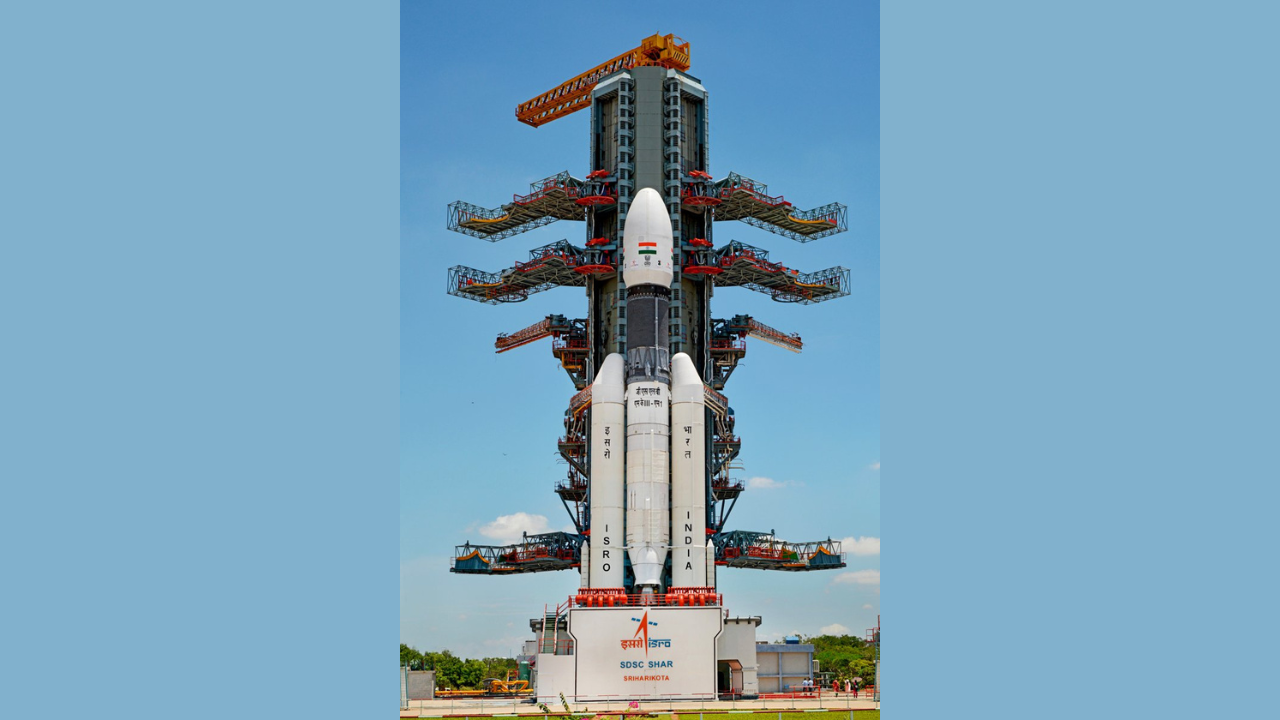
    The New Space India Limited (NSIL) has once again stamped its signature on the deployment of perhaps the world’s second satellite communication constellation with global coverage – OneWeb. NSIL and ISRO can now claim to have launched slightly more than 10% of the satellites launched in the OneWeb constellation, only in two launches, and while competing with the aggressively priced Soyuz-2 and the partially reusable Falcon-9 Block 5.

    India made a climaxing entry in the lifetime of OneWeb, which came into existence in 2012 by the name of WorldVu Satellites. To put things into perspective, OneWeb had already launched 72 of its total 648 satellites in the constellation when it filed for bankruptcy on 27th March 2020, citing COVID-19 pandemic-related financial consequences and had to lay off hundreds of employees.

    COVID-19 brought tremendous changes in India’s space landscape when actual space activities had gone into deep hibernation. The Indian government executed the space reforms in May 2020. In June 2020, OneWeb announced it was exiting bankruptcy owing to the UK Government and Bharti Enterprises’ capital infusion of US$ 500 million each. Who would have thought that these two would pull out OneWeb from financial troubles, especially when OneWeb, in its early years, had explored partnerships with Google, SpaceX, OHB, Thales Alenia Space, and Lockheed Martin, among others? NSIL was hardly in its first year of existence when all these developments happened. ISRO’s heavy-lift launch vehicle, the LVM-3, in its earlier iteration, as the GSLV Mk-III, had three successful launches but with payloads of around 3.5 tonnes, insufficient for OneWeb, which, with its first Soyuz-2 launches, had a payload size in the range of 5 tonnes for its 35 odd satellites per launch. Moreover, Russia kept launching the OneWeb satellites until March 2022 on its Soyuz-2 until the Ukraine crisis began, and OneWeb was forced, mainly by European investors, to cease business with Russia. It was here, when SpaceX and NSIL entered as commercial satellite launchers for OneWeb with four and two launches, respectively.

    India often underplays when it shouldn’t. Firstly, through the significant stakes of Bharti Enterprises, India is an immense force in the upcoming satellite communications market. France’s Eutelsat and South Korea’s Hanhwa are two recent investors in OneWeb. Both are currently incapable of offering launch services, especially for the second-generation satellites needed to upkeep the constellation. Given the West’s acrimony with Russia, Soyuz-2 is neither an option nor China’s Long March-5. So what remains are the US and India-based options. Although both have distinct characteristics, this makes the LVM-3 a competitor to Falcon-9.

    If India is to indeed graduate in the next league, after having tasted success with the LVM-3’s commercialisation, it must insist OneWeb on building a sizeable fraction of the second-generation OneWeb satellites in India. The first-generation satellites, including those launched by LVM-3, were manufactured in Airbus’ OneWeb dedicated Florida facility. India should steadily push its space ecosystem to integrate into Airbus-OneWeb’s global supply chains, offer competitive pricing for its products and services, and develop sister capacities to Florida-based manufacturing in India.

    India’s space ecosystem deserves large upstream contracts, and the sizeable share of Bharti enterprises in OneWeb’s ownership should be leveraged. Getting Airbus-OneWeb satellites manufactured in Bengaluru, Hyderabad, or Chennai and launched on the now commercially-proven LVM-3 from Sriharikota is the apt strategy ahead. The strategy could be that satellites built in Florida would be found in the US. In contrast, those made in India could be launched from Sriharikota or Kulasekharpattinam – the new small satellite launch pad site – shortly. This would tremendously reduce logistics costs, create quicker turnarounds for replacements, and develop new conveyer belts for other types of satellites in India. If Airbus can build the C295 aircraft in India, it certainly can build small satellites here.

    Author

    • Chaitanya Giri
      Chaitanya Giri

      Prof. Chaitanya Giri is the Editor of Interstellar News. He is an internationally-renowned and award-winning space scientist, an astrochemist, to be precise, with experience working on interplanetary space missions in Europe, Japan and the US. His professional interests span space policy analyses, emerging techno-geostrategy and ethics, space economy, and science-tech diplomacy. He consults various agencies, is affiliated with various national and international institutions and think tanks, and is an Associate Professor at FLAME University in Pune. He is confidently stoked about the path ahead for Interstellar.

      View all posts
    Featured
    Share. Facebook Twitter Pinterest LinkedIn Tumblr Email Reddit Telegram WhatsApp
    Chaitanya Giri
    Chaitanya Giri

      Prof. Chaitanya Giri is the Editor of Interstellar News. He is an internationally-renowned and award-winning space scientist, an astrochemist, to be precise, with experience working on interplanetary space missions in Europe, Japan and the US. His professional interests span space policy analyses, emerging techno-geostrategy and ethics, space economy, and science-tech diplomacy. He consults various agencies, is affiliated with various national and international institutions and think tanks, and is an Associate Professor at FLAME University in Pune. He is confidently stoked about the path ahead for Interstellar.

      Keep Reading

      Self-Eating Spacecraft Promises Affordable Deep Space Access

      Elon Musk Challenges U.S. Solar Tariffs and Sets Bold Tesla Goals at Davos

      Blue Origin Unveils TeraWave, a 5,400-Satellite Network for Global Data Connectivity

      Districts To Decide The Future Of India’s Exports

      House Panel Approves AI Chip Export Bill Despite White House Opposition

      Columbia Engineers Build Self-Learning Robotic Face That Lip-Syncs Naturally

      Add A Comment
      Leave A Reply Cancel Reply

      Anti Drone System (CUAS)
      Latest Posts

      Self-Eating Spacecraft Promises Affordable Deep Space Access

      January 23, 2026

      Elon Musk Challenges U.S. Solar Tariffs and Sets Bold Tesla Goals at Davos

      January 23, 2026

      Blue Origin Unveils TeraWave, a 5,400-Satellite Network for Global Data Connectivity

      January 22, 2026

      Apple Moves to Block CCI from Accessing Global Financial Records

      January 22, 2026

      Districts To Decide The Future Of India’s Exports

      January 22, 2026

      House Panel Approves AI Chip Export Bill Despite White House Opposition

      January 22, 2026

      Columbia Engineers Build Self-Learning Robotic Face That Lip-Syncs Naturally

      January 22, 2026

      BitGo Raises $212.8 Million in First U.S. Crypto IPO of 2026

      January 22, 2026

      Canadian Court Reverses TikTok Ban, Orders New Security Review

      January 22, 2026

      South Korea’s Economy Shrinks in Late 2025, AI and Chip Boom to Drive Rebound

      January 22, 2026

      Subscribe to News

      Get the latest sports news from NewsSite about world, sports and politics.

      • Astronomical Events
      • Space Missions
      • Industry News
      • Science
      StratNewsGlobal Tech
      Facebook X (Twitter) Instagram LinkedIn YouTube
      © 2026 StratNews Global, A unit of BharatShakti Communications LLP
      • About Us
      • Contributors
      • Copyright
      • Contact
      • Write for Us

      Type above and press Enter to search. Press Esc to cancel.