

Close Menu
Stratnews GlobalStratnews Global
    Facebook X (Twitter) Instagram
    Trending
    • India Space Policy And The Rise Of Private Space
    • Will MDR Kill UPI’s Biggest Advantage—Frictionless Payments?
    • Satellite Impact On Astronomical Observations
    • Humanoid Robot Industry Nears ‘ChatGPT Moment’
    • SkyX Vehicle Combines Underwater and Aerial Missions
    • Chang’e-7 Mission Moves Closer to Lunar Launch
    • OpenAI AI Development Slows After Agent Hacked Hugging Face
    • Meta Child Safety Trial Opens as States Seek Changes
    • Support Us
    Stratnews GlobalStratnews Global
    Write for Us
    Friday, August 21
    • Space
    • Science
    • AI and Robotics
    • Industry News
    • Support Us
    Stratnews GlobalStratnews Global
    Home » How Food Waste Became a $1 Trillion Opportunity

    How Food Waste Became a $1 Trillion Opportunity

    StratNewsGlobal Tech TeamBy StratNewsGlobal Tech TeamSeptember 9, 2025 Science No Comments3 Mins Read
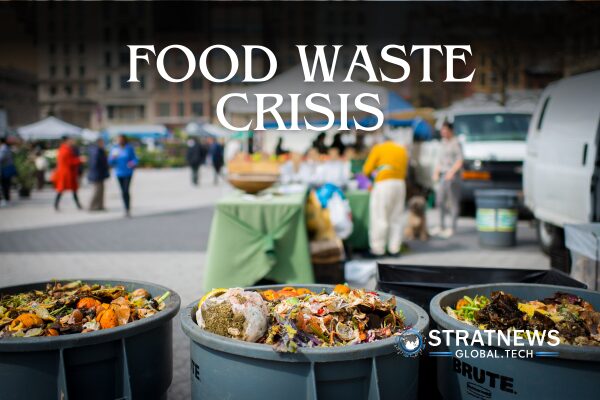
    Food Waste Crisis

    Tackling Food Waste: Turning a Global Crisis into Economic Opportunity

    In 2015, world leaders committed to halving food waste by 2030. At that time, around one-third of all food produced globally was being lost. A decade later, despite numerous campaigns and pledges, the number remains largely unchanged. Whether in rich or poor countries, food waste continues at the same alarming level—an example of the UN’s Sustainable Development Goals falling short.

    Each year, roughly 1.6 billion tons of food is wasted. This amount could feed two billion people, more than twice the number who currently suffer from hunger. Furthermore, food waste generates 8–10% of all greenhouse gas emissions. That’s more than the combined emissions from aviation and shipping.

    The Hidden Costs of Wasted Byproducts

    Food waste is not just about spoiled vegetables or discarded leftovers. Behind every wasted meal lies a complex web of unseen waste. Crop residues such as leaves and husks, unused fats and proteins from meat and dairy, and surplus material from factories processing grains or fruits often go unnoticed. Most of these byproducts end up in compost, animal feed, or landfills.

    This overlooked waste comes at a high cost. Growing food requires land, water, fertiliser, fuel, and labour. When this food goes uneaten, all those resources are wasted too. The environmental and financial impact is significant and unsustainable.

    Turning Waste into Profit

    However, there is a brighter side. Solving food waste is one of the rare issues where doing good can also lead to strong business growth. Companies can profit by finding value in what was once seen as useless.

    Take whey, for example—a byproduct of cheesemaking that was once difficult to dispose of. Today, whey drives the global protein supplement market, worth over $10 billion. What changed wasn’t the substance itself, but how businesses viewed its potential.

    Similarly, Unilever repurposed aquafaba, the liquid from chickpeas, to create vegan mayonnaise. Breweries have found new value in spent grain, turning it into protein-rich flour or using it to produce meat alternatives.

    Even traditional meat processing is evolving. New techniques now extract valuable proteins and fats from beef, reducing waste and helping control beef prices—an important shift as US cattle numbers reach record lows.

    The Trillion-Dollar Opportunity

    These examples show that food byproducts can be more profitable than the primary food products themselves. The economic potential is enormous. Smarter use of these side streams could unlock over $1 trillion in annual value. Research from the Danish Technological Institute estimates that 20–30% of potential profits are being lost due to underused resources.

    The challenge is to change our mindset and treat food waste not as trash, but as a missed opportunity. With the right strategies, solving food waste could play a key role in addressing hunger, reducing emissions, and driving economic growth.

    with inputs from Reuters

    Author

    • StratNewsGlobal Tech Team
      StratNewsGlobal Tech Team
      View all posts
    Featured
    Share. Facebook Twitter Pinterest LinkedIn Tumblr Email Reddit Telegram WhatsApp
    StratNewsGlobal Tech Team
    • Website

    Keep Reading

    India Space Policy And The Rise Of Private Space

    Satellite Impact On Astronomical Observations

    Humanoid Robot Industry Nears ‘ChatGPT Moment’

    SkyX Vehicle Combines Underwater and Aerial Missions

    Chang’e-7 Mission Moves Closer to Lunar Launch

    OpenAI AI Development Slows After Agent Hacked Hugging Face

    Add A Comment
    Leave A Reply Cancel Reply

    Anti Drone System (CUAS)
    Latest Posts

    India Space Policy And The Rise Of Private Space

    August 20, 2026

    Will MDR Kill UPI’s Biggest Advantage—Frictionless Payments?

    August 20, 2026

    Satellite Impact On Astronomical Observations

    August 20, 2026

    Humanoid Robot Industry Nears ‘ChatGPT Moment’

    August 20, 2026

    SkyX Vehicle Combines Underwater and Aerial Missions

    August 20, 2026

    Chang’e-7 Mission Moves Closer to Lunar Launch

    August 20, 2026

    OpenAI AI Development Slows After Agent Hacked Hugging Face

    August 19, 2026

    Meta Child Safety Trial Opens as States Seek Changes

    August 19, 2026

    LandSpace Zhuque-3 Booster Makes Landmark Landing

    August 19, 2026

    Unitree Shares Soar Nearly Six-Fold in Shanghai Debut

    August 19, 2026

    Subscribe to News

    Get the latest sports news from NewsSite about world, sports and politics.

    • Astronomical Events
    • Space Missions
    • Industry News
    • Science
    StratNewsGlobal Tech
    Facebook X (Twitter) Instagram LinkedIn YouTube
    © 2026 StratNews Global, A unit of BharatShakti Communications LLP
    • About Us
    • Contributors
    • Copyright
    • Contact
    • Write for Us

    Type above and press Enter to search. Press Esc to cancel.