

Close Menu
Stratnews GlobalStratnews Global
    Facebook X (Twitter) Instagram
    Trending
    • Elon Musk and Ryanair Clash over Cost of Starlink In-Flight WiFi
    • Taiwan Eyes Greater Chip Investment in Arizona to Deepen U.S. Ties
    • Microsoft Restores 365 Services After North America Outage
    • TikTok Creates U.S. Joint Venture to Secure Data and Avoid Ban
    • Self-Eating Spacecraft Promises Affordable Deep Space Access
    • Elon Musk Challenges U.S. Solar Tariffs and Sets Bold Tesla Goals at Davos
    • Blue Origin Unveils TeraWave, a 5,400-Satellite Network for Global Data Connectivity
    • Apple Moves to Block CCI from Accessing Global Financial Records
    Stratnews GlobalStratnews Global
    Write for Us
    Friday, January 23
    • Space
    • Science
    • AI and Robotics
    • Industry News
    Stratnews GlobalStratnews Global
    Home » NASA’s TEMPO Instrument, Piggybacking On A Communication Satellite, Will carry Out Real-Time Air Pollution Monitoring Over North America

    NASA’s TEMPO Instrument, Piggybacking On A Communication Satellite, Will carry Out Real-Time Air Pollution Monitoring Over North America

    StratNewsGlobal Tech TeamBy StratNewsGlobal Tech TeamApril 5, 2023 Science No Comments3 Mins Read

    Air pollution is a severe problem in North America, with cities such as Los Angeles, Mexico City, and Houston ranking among the most polluted cities globally. Air pollution poses severe health risks, particularly for the urban population. The World Health Organization estimates air pollution to be the cause of around seven million premature deaths annually. People in most regions of North America currently need more resources to know when their local air is clean. To address this challenge, NASA and the Smithsonian Astrophysical Observatory have partnered to launch TEMPO (Tropospheric Emissions: Monitoring of Pollution), a first-of-its-kind satellite mission designed to detect and measure air pollution levels in real-time over North America.

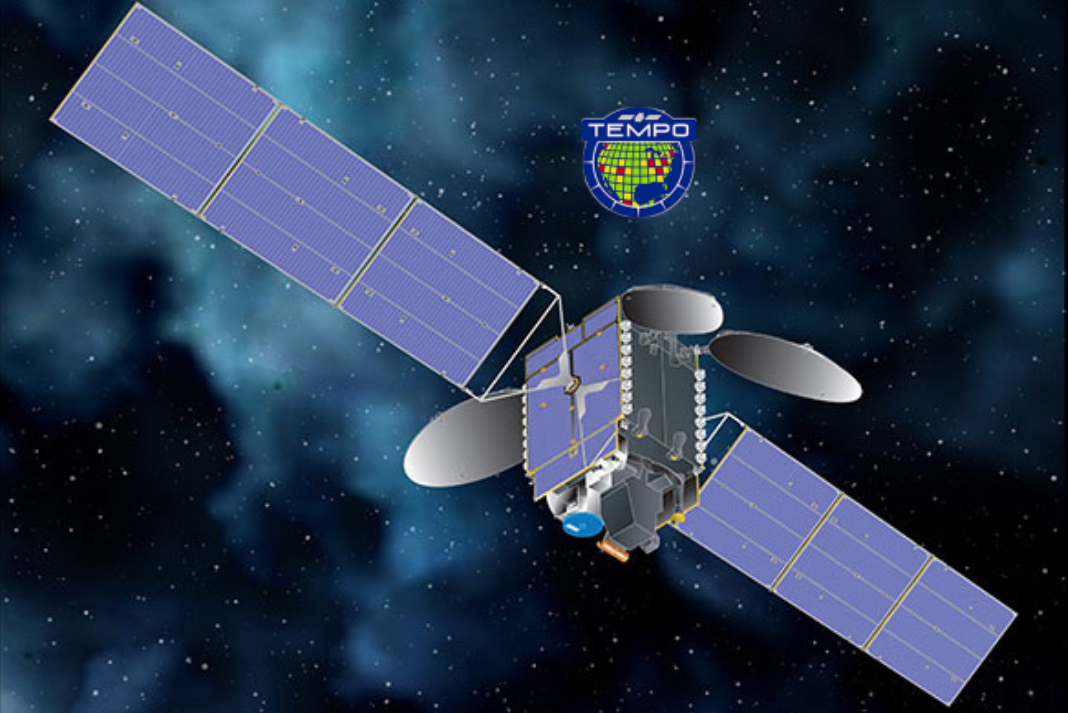
    The TEMPO mission is part of NASA’s Earth Venture Instrument program. TEMPO will launch from Cape Canaveral Space Force Station on a SpaceX Falcon 9, piggybacking on a commercial geostationary communication satellite, Intelsat 40e, that will be placed 22,235 miles directly over North America. TEMPO’s ultraviolet and visible light sensors could monitor daily ozone, nitrogen dioxide, sulfur dioxide, formaldehyde variations and tropospheric aerosols.

    Researchers could use the collected data stream to improve pollution emission inventories, evaluate effective emission control and mitigation strategies at point-of-origin, and monitor population exposure. It would monitor the dynamicity of air pollutants every daylight hour across the continent against other orbiting air-quality monitoring systems that observe air pollution at a particular location once a day.

    Moreover, TEMPO will publically provide air quality products and improve air quality forecasting. The instrument’s optical system will have a spatial resolution of four square miles, much higher than the current satellite capabilities’ spatial resolution of about 155 square miles. Its higher resolution would enable TEMPO to directly differentiate between highly and lowly polluted areas and pinpoint sources of air pollutants like factories or farms.

    The mission will be critical in addressing the air pollution crisis in North America. TEMPO can deliver air quality forecasting and public alerts when levels of particulate matter and volatile organic compounds are exceptionally high.

    TEMPO’s North American scale is part of a larger picture of other pollution-monitoring satellites worldwide. The Korea Aerospace Research Institute launched its GEO-KOMPSAT-2B satellite in 2020. The European Space Agency may launch its Sentinel-4B satellite in 2023. This constellation of international satellites will scan air pollution levels across North America, Asia and Europe.

    Real-time pollution monitoring capabilities can provide invaluable data to improve air quality forecasting, evaluate emission-control strategies, and help guide policymakers in mitigating the harmful effects of air pollution. Indian space ecosystem should think of building such an instrument, which could easily be launched on a geostationary satellite using the LVM-3.

    Author

    • StratNewsGlobal Tech Team
      StratNewsGlobal Tech Team

      View all posts
    Featured
    Share. Facebook Twitter Pinterest LinkedIn Tumblr Email Reddit Telegram WhatsApp
    StratNewsGlobal Tech Team
    • Website

    Keep Reading

    Elon Musk and Ryanair Clash over Cost of Starlink In-Flight WiFi

    Taiwan Eyes Greater Chip Investment in Arizona to Deepen U.S. Ties

    Microsoft Restores 365 Services After North America Outage

    TikTok Creates U.S. Joint Venture to Secure Data and Avoid Ban

    Self-Eating Spacecraft Promises Affordable Deep Space Access

    Elon Musk Challenges U.S. Solar Tariffs and Sets Bold Tesla Goals at Davos

    Add A Comment
    Leave A Reply Cancel Reply

    Anti Drone System (CUAS)
    Latest Posts

    Elon Musk and Ryanair Clash over Cost of Starlink In-Flight WiFi

    January 23, 2026

    Taiwan Eyes Greater Chip Investment in Arizona to Deepen U.S. Ties

    January 23, 2026

    Microsoft Restores 365 Services After North America Outage

    January 23, 2026

    TikTok Creates U.S. Joint Venture to Secure Data and Avoid Ban

    January 23, 2026

    Self-Eating Spacecraft Promises Affordable Deep Space Access

    January 23, 2026

    Elon Musk Challenges U.S. Solar Tariffs and Sets Bold Tesla Goals at Davos

    January 23, 2026

    Blue Origin Unveils TeraWave, a 5,400-Satellite Network for Global Data Connectivity

    January 22, 2026

    Apple Moves to Block CCI from Accessing Global Financial Records

    January 22, 2026

    Districts To Decide The Future Of India’s Exports

    January 22, 2026

    House Panel Approves AI Chip Export Bill Despite White House Opposition

    January 22, 2026

    Subscribe to News

    Get the latest sports news from NewsSite about world, sports and politics.

    • Astronomical Events
    • Space Missions
    • Industry News
    • Science
    StratNewsGlobal Tech
    Facebook X (Twitter) Instagram LinkedIn YouTube
    © 2026 StratNews Global, A unit of BharatShakti Communications LLP
    • About Us
    • Contributors
    • Copyright
    • Contact
    • Write for Us

    Type above and press Enter to search. Press Esc to cancel.