

Close Menu
Stratnews GlobalStratnews Global
    Facebook X (Twitter) Instagram
    Trending
    • India’s Welfare Revolution: Inside Haqdarshak’s Big Idea
    • BlackRock Sees AI Dominating Markets but Warns of Turbulent 2026
    • Russia Bans Roblox Over “Extremist” and “LGBT Propaganda” Claims
    • Kodaikanal Observatory Data Maps Solar Magnetic Patterns Shaping Space Weather
    • U.S. Halts China Sanctions to Protect Fragile Trade Truce
    • AI Boom Fuels Hopes of Growth but Risks Overheating Economy
    • EU to Probe Meta Over WhatsApp AI Integration
    • Satellite Surge Puts Space Telescope Observations at Risk
    Stratnews GlobalStratnews Global
    Write for Us
    Friday, December 5
    • Space
    • Science
    • AI and Robotics
    • Industry News
    Stratnews GlobalStratnews Global
    Home » Chang’e 6 Brings Back Lunar Samples from Moon’s Far Side

    Chang’e 6 Brings Back Lunar Samples from Moon’s Far Side

    ReshamBy ReshamJune 25, 2024Updated:June 25, 2024 Space Missions No Comments2 Mins Read
    Chang'e-6

    China’s Chang’e 6 Lunar Probe Successfully Returns with Samples

    China’s Chang’e-6 lunar probe made history by landing on Tuesday in Inner Mongolia, bringing back samples from the moon’s far side. This marks the first time any country has achieved such a feat.

    Successful Landing and Sample Collection

    The reentry capsule touched down at 2:07 p.m. Beijing time (0607 GMT), as reported by state broadcaster CCTV. The capsule carried lunar soil collected from the moon’s South Pole-Aitken Basin, a significant impact crater on the moon’s far side. Following the successful landing, Zhang Kejian, head of the China National Space Administration, declared the mission’s completion. President Xi Jinping praised the mission as a “landmark achievement” in China’s journey to becoming a leading space and scientific power.

    Launch and Return Details

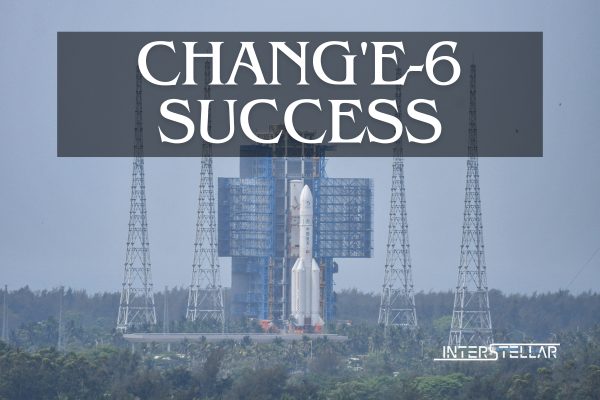
    The Chang’e-6 probe was launched on May 3 via a Long March 5 rocket from the Wenchang Satellite Launch Center on Hainan Island. The collected samples will be transported to Beijing for detailed analysis. While it is not yet confirmed if the planned 2kg of samples were returned, scientists anticipate that the samples, regardless of the quantity, will provide new insights into the formation of the Earth, moon, and solar system.

    Impact of the Chang’e-6 Mission

    Previous missions, such as Chang’e-5, which brought back samples from the moon’s near side, have already led to the discovery of new minerals and more accurate lunar geological age estimates. The success of Chang’e-6 is expected to enhance China’s standing in the global space exploration community and bolster its competition with the United States.

    Geopolitical and Scientific Collaboration

    The retrieval of samples from the moon’s far side comes at a time when the exploration of lunar resources and the militarisation of space are critical issues, influenced by geopolitical tensions. NASA Administrator Bill Nelson has expressed concern over China’s advancing lunar exploration programme, signalling an intensifying “space race” between the superpowers.

    Despite broader geopolitical tensions, European space agencies and scientists are collaborating closely with Chinese researchers. Neil Melville-Kenney, a technical officer at the European Space Agency (ESA), highlighted the scientific importance of these samples, noting that the far side of the moon has a distinct composition and history compared to the near side.

    The ESA plans to meet with the China National Space Administration in October to discuss further collaboration. Melville-Kenney expressed hope for increased cooperation in the future, despite the changing geopolitical landscape.

    Author

    • Resham
      Resham

      Research Associate at Interstellar.| China Scholar | China Social Media & Foreign Affairs|

      View all posts
    Featured
    Share. Facebook Twitter Pinterest LinkedIn Tumblr Email Reddit Telegram WhatsApp
    Resham
    • X (Twitter)

    Research Associate at Interstellar.| China Scholar | China Social Media & Foreign Affairs|

    Keep Reading

    Russia Bans Roblox Over “Extremist” and “LGBT Propaganda” Claims

    Kodaikanal Observatory Data Maps Solar Magnetic Patterns Shaping Space Weather

    U.S. Halts China Sanctions to Protect Fragile Trade Truce

    AI Boom Fuels Hopes of Growth but Risks Overheating Economy

    EU to Probe Meta Over WhatsApp AI Integration

    Satellite Surge Puts Space Telescope Observations at Risk

    Add A Comment
    Leave A Reply Cancel Reply

    Anti Drone System (CUAS)
    Latest Posts

    India’s Welfare Revolution: Inside Haqdarshak’s Big Idea

    December 4, 2025

    BlackRock Sees AI Dominating Markets but Warns of Turbulent 2026

    December 4, 2025

    Russia Bans Roblox Over “Extremist” and “LGBT Propaganda” Claims

    December 4, 2025

    Kodaikanal Observatory Data Maps Solar Magnetic Patterns Shaping Space Weather

    December 4, 2025

    U.S. Halts China Sanctions to Protect Fragile Trade Truce

    December 4, 2025

    AI Boom Fuels Hopes of Growth but Risks Overheating Economy

    December 4, 2025

    EU to Probe Meta Over WhatsApp AI Integration

    December 4, 2025

    Satellite Surge Puts Space Telescope Observations at Risk

    December 4, 2025

    Global Memory Chip Shortage Disrupts AI and Consumer Tech Industries

    December 4, 2025

    Trump’s NASA Pick Jared Isaacman Pledges to Return America to the Moon Before China

    December 3, 2025

    Subscribe to News

    Get the latest sports news from NewsSite about world, sports and politics.

    • Astronomical Events
    • Space Missions
    • Industry News
    • Science
    StratNewsGlobal Tech
    Facebook X (Twitter) Instagram LinkedIn YouTube
    © 2025 StratNews Global, A unit of BharatShakti Communications LLP
    • About Us
    • Contributors
    • Copyright
    • Contact
    • Write for Us

    Type above and press Enter to search. Press Esc to cancel.