

Close Menu
Stratnews GlobalStratnews Global
    Facebook X (Twitter) Instagram
    Trending
    • SpaceX IPO Could Top $1 Trillion as Investors Rush In
    • Time Names AI Architects as 2025 Person of the Year
    • NAACP Issues Framework to Prevent Bias in Healthcare AI
    • Cambridge Study Finds Fake Accounts Can Be Created for Just Cents
    • Caribbean Nations Unite to Harness Geothermal Energy Potential
    • U.S. Pushes to End Reliance on Chinese Lidar Technology
    • Trump Moves to Block Broadband Funds Over State AI Regulations
    Stratnews GlobalStratnews Global
    Write for Us
    Friday, December 12
    • Space
    • Science
    • AI and Robotics
    • Industry News
    Stratnews GlobalStratnews Global
    Home » Chinese Scientists Solve Mystery of Sticky Moon Soil from Chang’e-6 Mission

    Chinese Scientists Solve Mystery of Sticky Moon Soil from Chang’e-6 Mission

    ReshamBy ReshamNovember 25, 2025 Space No Comments2 Mins Read
    Chinese Chang'e-6

    Chinese Scientists Explain Why Moon’s Far-Side Soil Is Extra Sticky

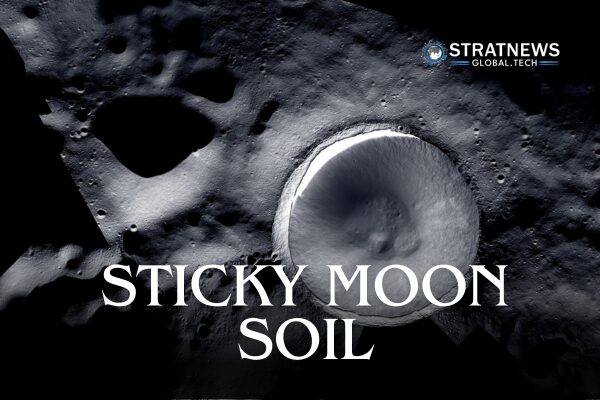
    Chinese scientists have discovered why the lunar soil collected by the Chang’e-6 mission from the far side of the moon is unusually cohesive. The sticky and clumpy texture of these samples, unlike those gathered from the moon’s near side, has fascinated researchers since their return to Earth in 2024.

    Experiments Reveal Key Soil Differences

    A team from the Institute of Geology and Geophysics under the Chinese Academy of Sciences led the investigation, publishing their findings in Nature Astronomy. To study the unusual soil properties, the team performed fixed funnel and drum tests to measure the soil’s angle of repose — an important measure of how granular materials behave when poured.

    The results showed that the Chang’e-6 soil had a much higher angle of repose than near-side samples. This means the far-side soil flows less freely, behaving more like cohesive terrestrial materials than loose sand.

    Texture and Shape Influence Stickiness

    The scientists found that the fine texture of the far-side soil plays a crucial role in its cohesiveness. While near-side lunar soil resembles sand, the far-side sample is closer in consistency to flour. As a result, it clumps together easily.

    Moreover, the particles from the far side are angular and rough. These shapes increase surface contact and enhance electrostatic attraction, making the material even more cohesive. Together, the fine texture and rough surfaces make the soil sticky and resistant to flow.

    Harsh Environment Shapes the Lunar Soil

    The team linked these differences to the distinct space environments on the moon’s two sides. The far side experiences more frequent meteorite impacts and greater exposure to charged particles because it lacks the Earth’s magnetic shield. This environment constantly bombards the surface, breaking down and melting rocks into finer, sharper fragments.

    Over time, these relentless collisions have produced the sticky, flour-like lunar soil now observed on the far side.

    Implications for Future Lunar Missions

    Researchers say the discovery could prove vital for future exploration and base construction on the moon’s far side, where soil behaviour affects both landing stability and building design.

    In 2024, the Chang’e-6 mission made history by returning 1,935.3 grams of samples from the moon’s South Pole-Aitken Basin — its largest and oldest crater — offering scientists new insights into lunar evolution and surface conditions.

    with inputs from Reuters

    Author

    • Resham
      Resham

      Research Associate at Interstellar.| China Scholar | China Social Media & Foreign Affairs|

      View all posts
    Featured
    Share. Facebook Twitter Pinterest LinkedIn Tumblr Email Reddit Telegram WhatsApp
    Resham
    • X (Twitter)

    Research Associate at Interstellar.| China Scholar | China Social Media & Foreign Affairs|

    Keep Reading

    SpaceX IPO Could Top $1 Trillion as Investors Rush In

    Time Names AI Architects as 2025 Person of the Year

    NAACP Issues Framework to Prevent Bias in Healthcare AI

    Cambridge Study Finds Fake Accounts Can Be Created for Just Cents

    Caribbean Nations Unite to Harness Geothermal Energy Potential

    U.S. Pushes to End Reliance on Chinese Lidar Technology

    Add A Comment
    Leave A Reply Cancel Reply

    Anti Drone System (CUAS)
    Latest Posts

    SpaceX IPO Could Top $1 Trillion as Investors Rush In

    December 12, 2025

    Time Names AI Architects as 2025 Person of the Year

    December 12, 2025

    NAACP Issues Framework to Prevent Bias in Healthcare AI

    December 12, 2025

    Cambridge Study Finds Fake Accounts Can Be Created for Just Cents

    December 12, 2025

    Caribbean Nations Unite to Harness Geothermal Energy Potential

    December 12, 2025

    U.S. Pushes to End Reliance on Chinese Lidar Technology

    December 12, 2025

    Trump Moves to Block Broadband Funds Over State AI Regulations

    December 12, 2025

    December 11, 2025

    Financial Inclusion Revisited: Counting Lives Changed

    December 11, 2025

    DAE Reports Record Nuclear Power Generation and Scientific Milestones in 2025

    December 11, 2025

    Subscribe to News

    Get the latest sports news from NewsSite about world, sports and politics.

    • Astronomical Events
    • Space Missions
    • Industry News
    • Science
    StratNewsGlobal Tech
    Facebook X (Twitter) Instagram LinkedIn YouTube
    © 2025 StratNews Global, A unit of BharatShakti Communications LLP
    • About Us
    • Contributors
    • Copyright
    • Contact
    • Write for Us

    Type above and press Enter to search. Press Esc to cancel.