


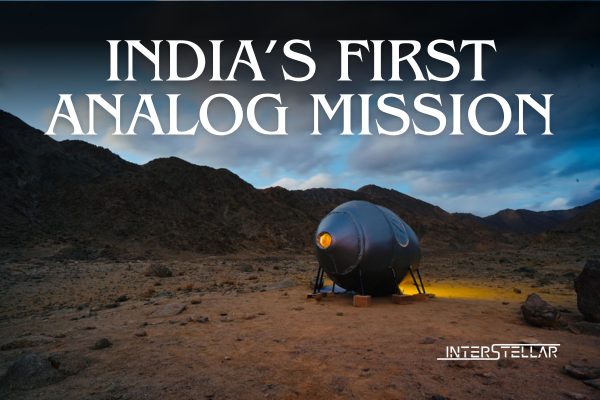
India’s First Analog Space Mission Begins in Ladakh, Simulating Life Beyond Earth
The Indian Space Research Organisation (ISRO) has launched its first analog space mission in Ladakh, aiming to simulate extraterrestrial conditions to help prepare for future space missions. This mission, featuring a compact inflatable habitat known as Hab-1, will replicate life in an interplanetary habitat, allowing scientists to study the unique challenges astronauts may face on long-duration missions.
Exploring Life in Space with Hab-1
ISRO’s new analog mission involves a state-of-the-art habitat, Hab-1, equipped with essentials such as a hydroponics farm, kitchen, and sanitation facilities. This self-sustaining environment will provide crucial insights as India prepares for extended space missions to destinations like the Moon and Mars. “This mission will simulate life in an interplanetary habitat to tackle the challenges of a base station beyond Earth,” ISRO shared on X (formerly Twitter), marking an essential step in India’s journey toward deep-space exploration.
The mission, based in Leh, Ladakh, benefits from the region’s unique landscape, which closely resembles the rocky, cold conditions of Mars and the Moon. Its high altitude and arid terrain provide an ideal environment to test space technologies and strategies necessary for sustained space habitation.
Collaborative Effort Aiming at Future Space Readiness
The mission is a collaborative venture involving ISRO’s Human Spaceflight Centre, AAKA Space Studio, the University of Ladakh, IIT Bombay, and is supported by the Ladakh Autonomous Hill Development Council. The partnership will enable scientists to test new technologies, including robotic equipment, vehicles, and communications, alongside key infrastructure for energy generation, mobility, and storage.
Testing in Ladakh allows researchers to observe how technology functions under extreme conditions similar to those found in space. Rajnagar Divisional Forest Officer Sudarshan Gopinath commented on the mission’s importance, saying, “This analog mission is a significant step towards understanding the complexities of living on other planets,” adding that the findings will be crucial for ISRO’s planned human and robotic exploration missions.
Focusing on Human Health and Interplanetary Challenges
Beyond technology testing, Hab-1 will also examine the effects of isolation and confinement on human health and performance, critical aspects of future space missions. This mission is designed to reveal how astronauts might cope with the psychological and physical demands of space, such as confinement and the lack of real-time communication with Earth.
The data from this mission will support India’s ambitious Space Vision 2047, which includes establishing an Indian space station—named Bharatiya Antariksha Station (BAS)—by 2035, with the goal of landing an Indian astronaut on the Moon by 2040.
ISRO’s analog mission in Ladakh represents a bold step forward in understanding and preparing for the challenges of long-term human space exploration, bringing India closer to its space goals.