


India’s private space sector is preparing for another landmark moment.
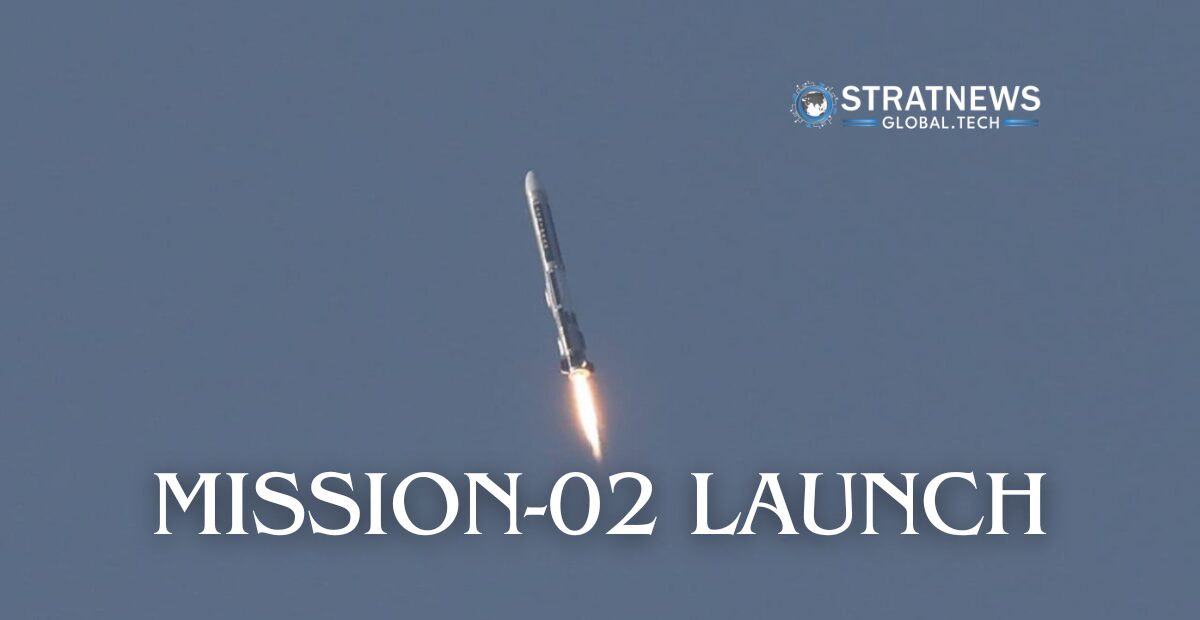
Chennai-based Agnikul Cosmos has unveiled Mission-02, an ambitious programme that aims to achieve India’s first sea recovery of an orbital-class rocket booster by a private company, bringing reusable launch technology within reach.
The mission will use a specially configured two-stage Agnibaan launch vehicle. After stage separation, the first-stage booster will attempt a controlled descent before splashing down in the sea, where recovery teams will retrieve it for inspection, refurbishment and eventual reuse. Success would mark a major advance towards reusable launch systems capable of dramatically lowering the cost of accessing space.
Mission-02 also plans something unusual for its upper stage. Rather than allowing it to burn up after completing its mission, Agnikul intends to convert it into an operational platform in orbit. The company says the stage could later host scientific experiments, technology demonstrations and other in-space applications while helping reduce orbital debris.
The effort places Agnikul among a select group of launch companies pursuing reusable rocket technology. Global players including SpaceX, Blue Origin and Rocket Lab have demonstrated how recovering launch vehicles can transform the economics of spaceflight. Agnikul now hopes to bring similar capabilities to India’s rapidly expanding commercial space sector.
Speaking earlier about the company’s long-term vision, Agnikul Cosmos Co-founder and CEO Srinath Ravichandran said the future of commercial spaceflight lies in launch vehicles that can fly repeatedly instead of being discarded after a single mission. Rapid reuse, modularity and operational flexibility, he said, will be key to making space transportation more affordable and sustainable.
The company has also strengthened its leadership by bringing former ISRO Chairman Dr S. Somanath onto its Board as an Observer. Having overseen programmes including Chandrayaan-3, Aditya-L1, LVM3, SSLV and major Gaganyaan milestones, Somanath is expected to provide strategic guidance as Agnikul undertakes one of the most technically demanding missions attempted by an Indian private space company.
Mission-02 builds on Agnikul’s successful Agnibaan SOrTeD suborbital launch in May 2024. That mission made the startup the first company in the world to fly a rocket powered by a fully 3D-printed single-piece engine. It also showcased India’s first indigenously designed semi-cryogenic engine and lifted off from Dhanush, the country’s first privately developed launchpad at Sriharikota.
The company says its additive manufacturing process replaces thousands of welded components with a single integrated engine, simplifying production, shortening manufacturing timelines and reducing costs while improving reliability.
Backed by ISRO and IN-SPACe, Agnikul has continued refining its launch systems and infrastructure as India’s private launch ecosystem gathers momentum.
If Mission-02 succeeds, it will be more than a successful booster recovery. It would lay the foundation for reusable Indian launch vehicles capable of reducing launch costs, increasing flight frequency and making satellite deployment significantly more economical.
Just as importantly, it would place India among the small group of nations and companies developing reusable orbital launch capability—a technology increasingly seen as essential to the future of commercial spaceflight.