


Mysterious Iron Bar Found Inside the Ring Nebula Baffles Astronomers
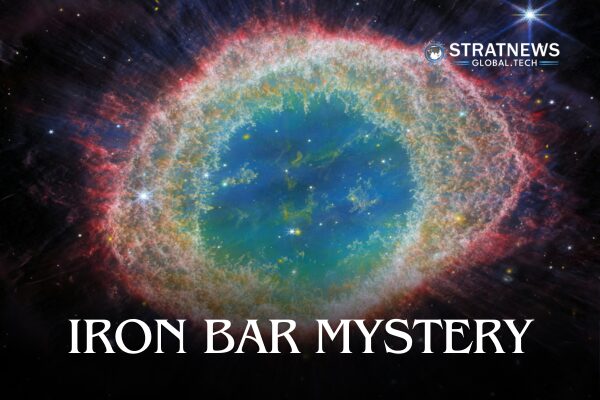
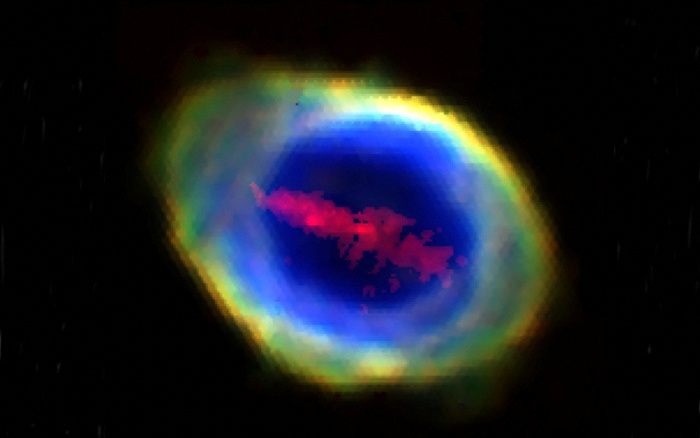
The Ring Nebula, one of the Milky Way’s most studied celestial objects, continues to astonish astronomers nearly 250 years after its discovery by French astronomer Charles Messier in 1779. A team of researchers has recently detected an enormous bar-shaped cloud of iron atoms stretching across the nebula’s glowing shell of gas and dust. The discovery, made using the new WEAVE instrument on the William Herschel Telescope in La Palma, Spain, raises intriguing questions about how the structure formed.
A Cosmic Mystery Hidden in Plain Sight
The iron bar, estimated to be about 3.7 trillion miles (6 trillion kilometres) long, contains roughly the same amount of iron as Earth’s molten core. Researchers suspect it could be the remains of a rocky planet that was vaporised when the nebula’s central star shed its outer layers. However, they emphasise that this explanation remains speculative.
Roger Wesson of Cardiff University and University College London, who led the study published in Monthly Notices of the Royal Astronomical Society, expressed his surprise at the finding. “It is exciting to see that even a very familiar object, much studied over many decades, can reveal a new surprise when observed in a new way,” he said.
Fellow astronomer Janet Drew of University College London noted how unusual the feature is. “No other chemical element that we have detected sits in this same bar. This is weird, frankly. We have no ready explanation for it yet,” she explained.
A Familiar Object with New Secrets
Also known as Messier 57, the Ring Nebula lies about 2,600 light years from Earth in the constellation Lyra. Believed to have formed roughly 4,000 years ago, it represents the death stage of a star about twice the mass of the Sun. When that star exhausted its nuclear fuel, it expanded into a red giant before expelling its outer layers and collapsing into a white dwarf roughly the size of Earth.
From Earth’s perspective, the nebula appears as a glowing ring, though scientists think it is actually a cylindrical shell viewed end-on. It consists mostly of hydrogen and helium, with smaller amounts of heavier elements. Astronomers estimate that around 3,000 similar nebulas exist in our galaxy, offering vital insight into how elements produced inside stars are recycled into space to form new stars and planets.
Looking Ahead
The discovery of the iron bar underscores how much remains unknown about the processes that shape planetary nebulas. Wesson and his colleagues plan to continue their investigation using additional data to better understand the origin of the feature. “We look forward to getting more data to follow up on this discovery, to try to unravel this new problem and work out where the iron bar has come from,” Wesson said.
with inputs from Reuters