

Close Menu
Stratnews GlobalStratnews Global
    Facebook X (Twitter) Instagram
    Trending
    • Bitcoin 16-Month Low Tests $60,000 Amid Global Selloff
    • Intel AMD CPU Shortages Hit China Amid AI Demand Surge
    • Wistron Sees AI Orders Rising
    • India Nuclear Power Capacity Set to Expand to 22,000 MW by 2032
    • NASA Artemis II Mission Delayed to March After Rocket Fueling Issues
    • Germany Plans €35 Billion Military Space Push to Counter Russia and China
    • Super Bowl LX Cybersecurity and Wi-Fi Upgrade Transforms Levi’s Stadium
    • Memory Shortages Weigh on Smartphone Chip Sales
    Stratnews GlobalStratnews Global
    Write for Us
    Saturday, February 7
    • Space
    • Science
    • AI and Robotics
    • Industry News
    Stratnews GlobalStratnews Global
    Home » Shenzhou-19 Crew Advances Scientific Research on Tiangong Space Station

    Shenzhou-19 Crew Advances Scientific Research on Tiangong Space Station

    ReshamBy ReshamDecember 9, 2024Updated:December 10, 2024 Space No Comments2 Mins Read
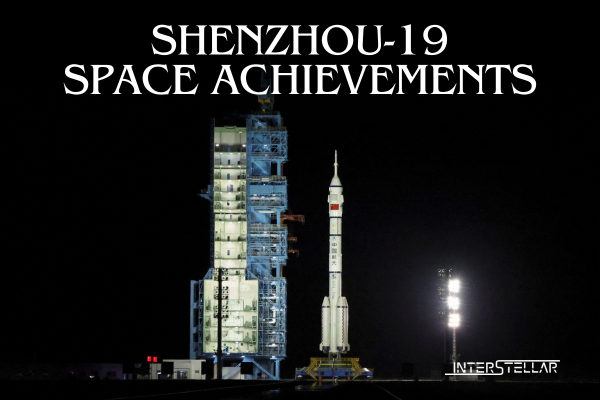
    Shenzhou-19

    Shenzhou-19 Crew Advances Research and Maintenance on Tiangong Space Station

    China’s Shenzhou-19 crew has accomplished significant tasks during their month-long stay aboard the Tiangong space station. These tasks include scientific experiments, space station maintenance, and advanced research projects.

    Shenzhou-19 Crew’s Mission and Research Goals

    Astronauts Cai Xuzhe, Song Lingdong, and Wang Haoze began their six-month mission on October 30. Over the course of their mission, the team will conduct 86 space science and technology experiments.

    Among their accomplishments, the crew has advanced research on the biological effects and molecular mechanisms of fruit flies under a weak magnetic field in space. They cleared petri dishes and replaced gas purification components in the life science facility. This work supports the study of biological systems in unique space conditions.

    The astronauts also investigated how stem cells grow and form three-dimensional tissues in microgravity. They successfully collected and stored cell samples, a key step in developing space drug screening methods and future applications of 3D stem cell tissues.

    Advances in Space Medicine and Technology

    Research on the influence of gravity environments on human visual perception was another critical focus. Using a visual function measurement instrument, eye tracker, and specialised software, the crew explored how weightlessness affects the sensitivity of visual motion perception. This work is vital for human adaptation to deep-space missions and diverse gravity environments.

    In addition to research, the crew worked on technical maintenance tasks. They replaced components in the combustion science experimental cabinet and fluid physics experimental cabinet, ensuring the continued functionality of these systems.

    Safeguarding the Space Station

    To protect the Tiangong space station, the crew installed hatch protection devices to shield against small space debris. These measures minimise potential damage from impacts, ensuring the station’s longevity and safety.

    The astronauts also performed routine maintenance, including cleaning, supply organisation, and equipment inspections in the station’s modules and the Tianzhou-8 cargo spacecraft.

    With their contributions, the Shenzhou-19 crew is advancing China’s space exploration capabilities while laying groundwork for future missions.

    With inputs from Reuters

    Author

    • Resham
      Resham

      Research Associate at Interstellar.| China Scholar | China Social Media & Foreign Affairs|

      View all posts
    Featured
    Share. Facebook Twitter Pinterest LinkedIn Tumblr Email Reddit Telegram WhatsApp
    Resham
    • X (Twitter)

    Research Associate at Interstellar.| China Scholar | China Social Media & Foreign Affairs|

    Keep Reading

    Bitcoin 16-Month Low Tests $60,000 Amid Global Selloff

    Intel AMD CPU Shortages Hit China Amid AI Demand Surge

    Wistron Sees AI Orders Rising

    India Nuclear Power Capacity Set to Expand to 22,000 MW by 2032

    NASA Artemis II Mission Delayed to March After Rocket Fueling Issues

    Germany Plans €35 Billion Military Space Push to Counter Russia and China

    Add A Comment
    Leave A Reply Cancel Reply

    Anti Drone System (CUAS)
    Latest Posts

    Bitcoin 16-Month Low Tests $60,000 Amid Global Selloff

    February 6, 2026

    Intel AMD CPU Shortages Hit China Amid AI Demand Surge

    February 6, 2026

    Wistron Sees AI Orders Rising

    February 6, 2026

    India Nuclear Power Capacity Set to Expand to 22,000 MW by 2032

    February 6, 2026

    NASA Artemis II Mission Delayed to March After Rocket Fueling Issues

    February 6, 2026

    Germany Plans €35 Billion Military Space Push to Counter Russia and China

    February 6, 2026

    Super Bowl LX Cybersecurity and Wi-Fi Upgrade Transforms Levi’s Stadium

    February 6, 2026

    Memory Shortages Weigh on Smartphone Chip Sales

    February 6, 2026

    Third Launch Pad Construction Set for March 2029 Completion

    February 6, 2026

    Slovenia Social Media Ban Planned for Children Under 15

    February 6, 2026

    Subscribe to News

    Get the latest sports news from NewsSite about world, sports and politics.

    • Astronomical Events
    • Space Missions
    • Industry News
    • Science
    StratNewsGlobal Tech
    Facebook X (Twitter) Instagram LinkedIn YouTube
    © 2026 StratNews Global, A unit of BharatShakti Communications LLP
    • About Us
    • Contributors
    • Copyright
    • Contact
    • Write for Us

    Type above and press Enter to search. Press Esc to cancel.