

Close Menu
Stratnews GlobalStratnews Global
    Facebook X (Twitter) Instagram
    Trending
    • Robotics Talent: India’s Brain Gain Flywheel
    • Deep-Tech Robotics: Rebranding India’s Global Opportunity
    • Cobot Automation Guide for India’s MSMEs
    • Nvidia OpenAI Project Gets Smaller Initial Guarantee
    • IN-SPACe Authorisation Becomes India’s Trust Badge
    • ISRO Heritage Builds Trust for India’s Space Startups
    • Space Startups Drive India’s New Space Economy
    • Ukraine Long-Range Strikes Hit Russian Sites
    • Support Us
    Stratnews GlobalStratnews Global
    Write for Us
    Monday, August 17
    • Space
    • Science
    • AI and Robotics
    • Industry News
    • Support Us
    Stratnews GlobalStratnews Global
    Home » Shenzhou-23 Crew Conducts Research on Tiangong

    Shenzhou-23 Crew Conducts Research on Tiangong

    ReshamBy ReshamJune 29, 2026 Space No Comments2 Mins Read
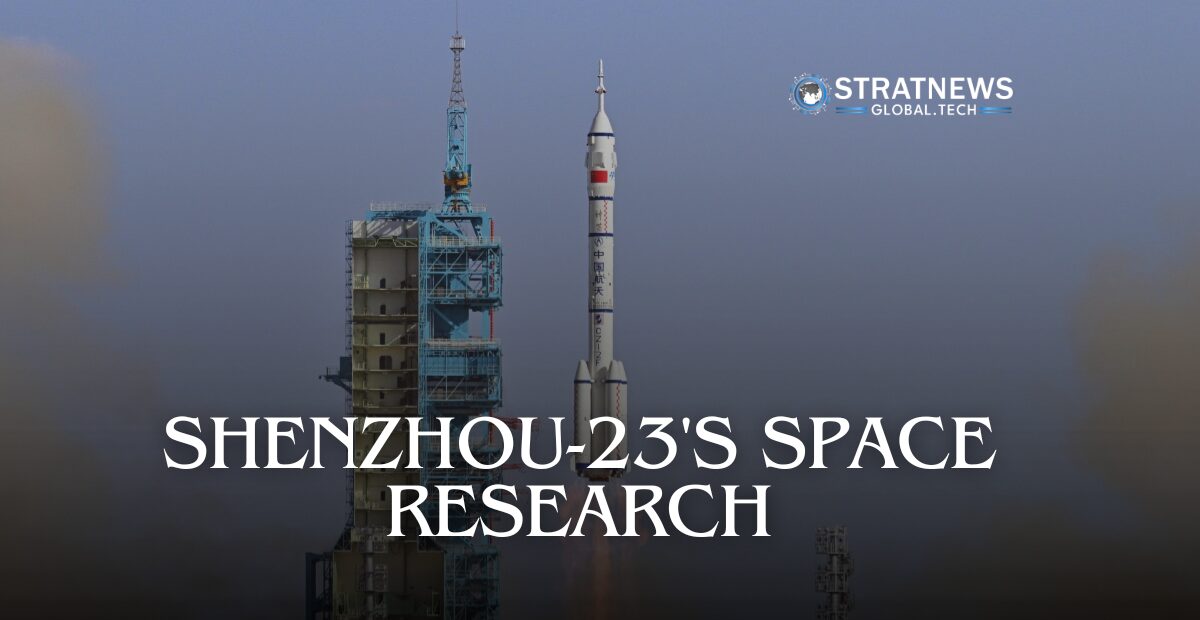
    Shenzhou-23 crew

    Shenzhou-23 Crew Advances Space Research Aboard Tiangong Station

    The crew of the Shenzhou-23 spacecraft has completed a series of scientific experiments aboard the orbiting Tiangong space station during the past week, contributing to ongoing research in space medicine, robotics and microgravity science.

    The three taikonauts, Zhu Yangzhu, Zhang Zhiyuan and Lai Ka-ying, arrived at the space station on May 25. Since then, they have carried out a broad range of experiments focused on human health, electroencephalogram (EEG) studies, human-robot interaction and physical sciences in a microgravity environment.

    Space Medicine Experiments Continue

    The crew used ultrasound diagnostic equipment to assist one another in performing scans of the neck, wrist, abdomen and several other parts of the body. These examinations formed part of a wider programme to better understand how prolonged exposure to space affects the human body.

    The information collected will support multiple research projects. These include studies into pan-vascular blood flow spectroscopy, the spatio-temporal evolution of blood flow and the remodelling of sensitive muscle groups. As a result, researchers will gain valuable data to improve knowledge of physiological changes experienced during long-duration space missions.

    Human-Robot Interaction and EEG Studies

    The taikonauts also worked with a robot to complete a series of touch-interaction tests. Researchers will use the collected data to refine motion behaviour planning methods for robots operating aboard future space missions. Consequently, these findings could help improve robotic assistance for astronauts during extended stays in orbit.

    In addition, the crew conducted several electroencephalogram (EEG) experiments using specialised acquisition equipment. These tests examined visual-motor processing as well as behavioural responses to different lighting conditions. The results are expected to enhance understanding of neurological performance and human adaptation in space.

    Microgravity Science and Health Monitoring

    As part of the station’s microgravity research programme, the crew installed several experiment modules and units. They also cleaned and replaced samples inside the experimental cavity of the containerless materials cabinet. These activities support ongoing investigations into material behaviour under microgravity conditions.

    Meanwhile, the crew continued routine health management tasks using a traditional Chinese medicine (TCM) four-diagnosis instrument. The device collected relevant physiological data to support long-term health monitoring of taikonauts during their time in orbit. Furthermore, the information gathered will provide researchers with a stronger foundation for assessing the health effects of extended spaceflight.

    With inputs from Reuters

    Author

    • Resham
      Resham

      Research Associate at Interstellar.| China Scholar | China Social Media & Foreign Affairs|

      View all posts
    China Featured Industry Space
    Share. Facebook Twitter Pinterest LinkedIn Tumblr Email Reddit Telegram WhatsApp
    Resham
    • X (Twitter)

    Research Associate at Interstellar.| China Scholar | China Social Media & Foreign Affairs|

    Keep Reading

    Robotics Talent: India’s Brain Gain Flywheel

    Deep-Tech Robotics: Rebranding India’s Global Opportunity

    Cobot Automation Guide for India’s MSMEs

    Nvidia OpenAI Project Gets Smaller Initial Guarantee

    IN-SPACe Authorisation Becomes India’s Trust Badge

    ISRO Heritage Builds Trust for India’s Space Startups

    Add A Comment
    Leave A Reply Cancel Reply

    Anti Drone System (CUAS)
    Latest Posts

    Robotics Talent: India’s Brain Gain Flywheel

    August 17, 2026

    Deep-Tech Robotics: Rebranding India’s Global Opportunity

    August 17, 2026

    Cobot Automation Guide for India’s MSMEs

    August 17, 2026

    Nvidia OpenAI Project Gets Smaller Initial Guarantee

    August 17, 2026

    IN-SPACe Authorisation Becomes India’s Trust Badge

    August 17, 2026

    ISRO Heritage Builds Trust for India’s Space Startups

    August 17, 2026

    Space Startups Drive India’s New Space Economy

    August 17, 2026

    Ukraine Long-Range Strikes Hit Russian Sites

    August 17, 2026

    Cl0p Data Theft Claims Target Nearly 50 Companies

    August 14, 2026

    SMIC Wafer Prices Rise As AI Demand Drives Growth

    August 14, 2026

    Subscribe to News

    Get the latest sports news from NewsSite about world, sports and politics.

    • Astronomical Events
    • Space Missions
    • Industry News
    • Science
    StratNewsGlobal Tech
    Facebook X (Twitter) Instagram LinkedIn YouTube
    © 2026 StratNews Global, A unit of BharatShakti Communications LLP
    • About Us
    • Contributors
    • Copyright
    • Contact
    • Write for Us

    Type above and press Enter to search. Press Esc to cancel.