


Close Menu
Stratnews GlobalStratnews Global
    Facebook X (Twitter) Instagram
    Trending
    • Mars Rover Discovers Honeycomb-Like Terrain
    • SpaceX Rocket Set for Accidental Moon Collision
    • Space Debris Returning to Earth Is Increasing
    • BRICS Looks to the Final Frontier: Why Space Cooperation Could Define the Delhi Summit
    • Sharvi Mahajan Develops AI Driver Safety System
    • Bharatiya Antariksh Hackathon 2026 Opens
    • ISRO Apprentice Recruitment 2026 for 410 Posts
    • Shenzhen Tech Tourism Attracts Global Visitors
    • Support Us
    Stratnews GlobalStratnews Global
    Write for Us
    Monday, August 3
    • Space
    • Science
    • AI and Robotics
    • Industry News
    • Support Us
    Stratnews GlobalStratnews Global
    Home » SpaceX Rocket Set for Accidental Moon Collision

    SpaceX Rocket Set for Accidental Moon Collision

    Kanika SharmaBy Kanika SharmaAugust 3, 2026 Space No Comments3 Mins Read
    SpaceX Rocket

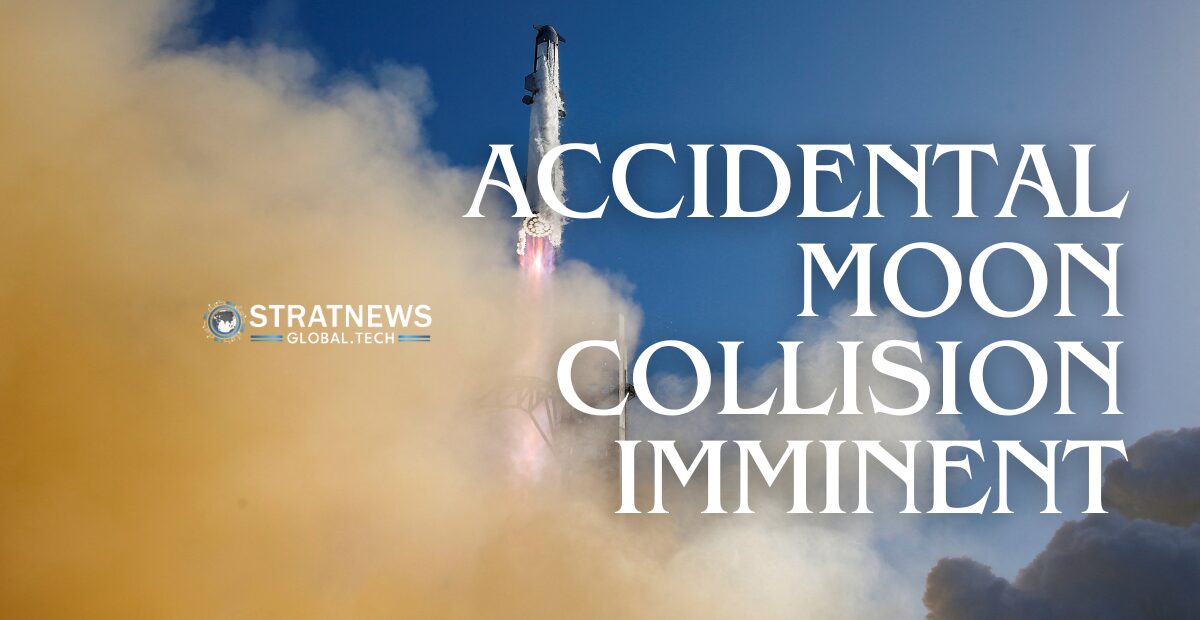
    Drifting SpaceX Rocket Set for Accidental Collision With the Moon

    A drifting SpaceX rocket stage is expected to collide with the Moon after spending more than a year in space following the launch of two lunar landers.

    The rocket’s upper stage is forecast to strike the lunar surface on Wednesday, creating a crater and ejecting a plume of dust and debris. Scientists and amateur astronomers are preparing to observe the impact, which is expected to provide valuable data on how collisions affect the Moon’s surface.

    Rocket Expected to Strike Near Einstein Crater

    According to space tracking expert Bill Gray, the rocket stage is predicted to hit the Moon at approximately 5,400 mph (8,700 km/h), around seven times the speed of sound.

    The impact is expected to occur near Einstein Crater on the Moon’s sunlit western limb. Observers in the eastern United States, Canada and much of South America are expected to have the best opportunity to monitor the aftermath because of the timing of the event.

    Although the collision was not planned, experts say it could have been avoided if the upper stage had been redirected into an orbit around the Sun after completing its mission.

    Growing Focus on Space Debris

    Scientists are not overly concerned about the specific impact, but they say the incident highlights the increasing amount of space debris accumulating in Earth orbit and beyond.

    Bill Gray noted that space is becoming increasingly crowded as more rockets and satellites are launched.

    This will be the second known accidental collision of a discarded rocket with the Moon. In 2022, a Chinese rocket segment struck the lunar far side, leaving behind a pair of craters.

    The upcoming impact is expected to occur on the Moon’s near side and release energy equivalent to roughly three tonnes of TNT.

    Scientists Hope to Learn From the Impact

    Researchers believe the brief flash created by the collision will probably be too faint to observe from Earth. However, the cloud of dust and rock ejected by the impact could extend several miles into space and remain visible through telescopes for tens of minutes.

    Benjamin Fernando of Los Alamos National Laboratory said the Moon’s weak gravity and lack of atmosphere allow dust to remain suspended for longer, making the event particularly valuable for scientific observation.

    He explained that studying the impact could improve understanding of the risks posed by debris strikes to future astronauts operating on the lunar surface.

    Fernando estimates the collision will create a crater measuring approximately 90 feet (27 metres) across and around 16 feet (5 metres) deep. While too small to be seen from Earth, the crater should be visible to spacecraft orbiting the Moon.

    NASA’s Lunar Reconnaissance Orbiter and South Korea’s Danuri lunar orbiter are expected to capture images of the impact site before and after the collision, helping scientists assess the effects of the strike in greater detail.

    Author

    • Kanika Sharma
      Kanika Sharma
      View all posts
    Featured Industry Space US
    Share. Facebook Twitter Pinterest LinkedIn Tumblr Email Reddit Telegram WhatsApp
    Kanika Sharma
    Kanika Sharma

      Keep Reading

      Mars Rover Discovers Honeycomb-Like Terrain

      Space Debris Returning to Earth Is Increasing

      BRICS Looks to the Final Frontier: Why Space Cooperation Could Define the Delhi Summit

      Sharvi Mahajan Develops AI Driver Safety System

      Bharatiya Antariksh Hackathon 2026 Opens

      ISRO Apprentice Recruitment 2026 for 410 Posts

      Add A Comment
      Leave A Reply Cancel Reply

      Anti Drone System (CUAS)
      Latest Posts

      Mars Rover Discovers Honeycomb-Like Terrain

      August 3, 2026

      SpaceX Rocket Set for Accidental Moon Collision

      August 3, 2026

      Space Debris Returning to Earth Is Increasing

      August 3, 2026

      BRICS Looks to the Final Frontier: Why Space Cooperation Could Define the Delhi Summit

      August 3, 2026

      Sharvi Mahajan Develops AI Driver Safety System

      August 3, 2026

      Bharatiya Antariksh Hackathon 2026 Opens

      August 3, 2026

      ISRO Apprentice Recruitment 2026 for 410 Posts

      August 3, 2026

      Shenzhen Tech Tourism Attracts Global Visitors

      August 3, 2026

      India AI Growth Highlighted by PM Modi

      August 3, 2026

      Africa2Moon Mission Set for China Moon Launch

      August 3, 2026

      Subscribe to News

      Get the latest sports news from NewsSite about world, sports and politics.

      • Astronomical Events
      • Space Missions
      • Industry News
      • Science
      StratNewsGlobal Tech
      Facebook X (Twitter) Instagram LinkedIn YouTube
      © 2026 StratNews Global, A unit of BharatShakti Communications LLP
      • About Us
      • Contributors
      • Copyright
      • Contact
      • Write for Us

      Type above and press Enter to search. Press Esc to cancel.