


Vikram-1 Launch Cost Advantage & Global Pricing
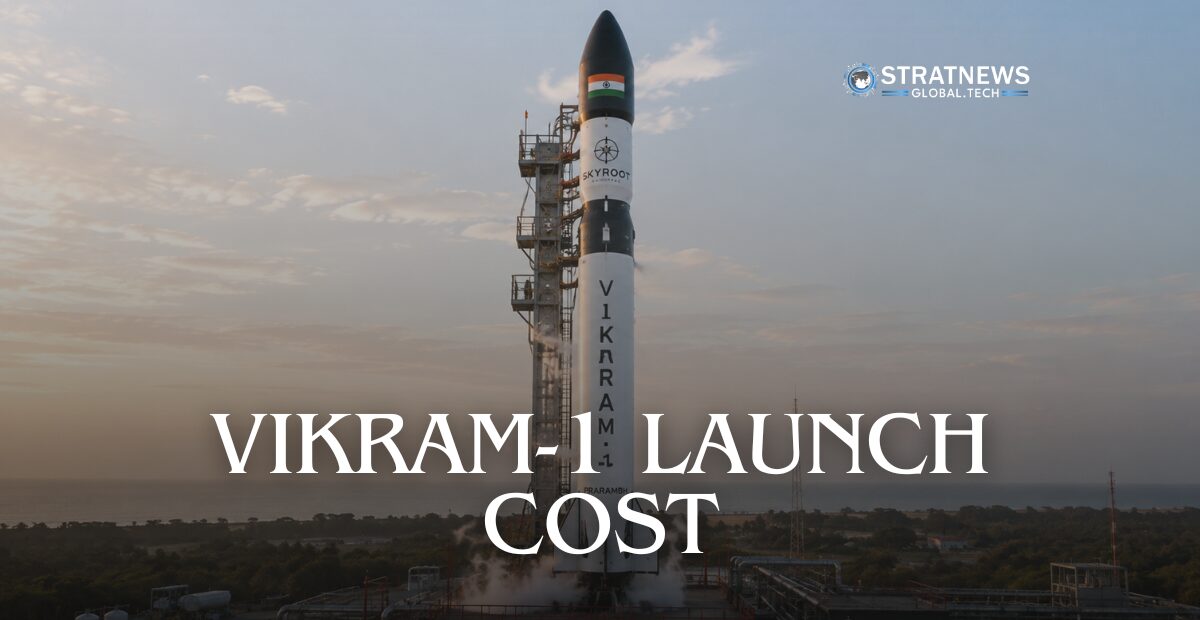
India’s private space sector priced its way into a global conversation on July 18, 2026, when Skyroot Aerospace’s Vikram-1 reached orbit on its first attempt. The launch mattered for more than technical bragging rights. It tested whether an Indian-built, Indian-manufactured rocket can undercut established small-launch providers on price, not just match them on capability.
Cost comparisons in this sector start from a wide spread. Rocket Lab’s Electron lists near $7.5 million per launch for 300 kilograms to low Earth orbit, close to $25,000 per kilogram. Firefly Aerospace’s Alpha runs $15 million to $17.6 million for roughly 1,030 kilograms, near $14,500 per kilogram. SpaceX’s rideshare program undercuts both at roughly $7,000 per kilogram for small payloads willing to accept a shared orbit and schedule. India’s domestic market benchmark, ISRO’s Small Satellite Launch Vehicle, prices between $7,050 and $8,270 per kilogram.
Frugal Engineering describes Skyroot’s operating philosophy: achieving more capability with fewer resources through simplified, resource-efficient design rather than premium materials or redundant systems. The company has applied that thesis to structure, propulsion, and manufacturing simultaneously, betting that lower input costs translate into lower prices for satellite operators rather than just higher margins for Skyroot.
How much does it cost to launch a satellite on Vikram-1?
- Skyroot has not published an official Vikram-1 price list as of August 2026.
- Industry trackers estimate $15 million to $20 million per dedicated launch.
- That works out to roughly $43,000–$57,000 per kilogram at rated 350-kilogram LEO capacity.
- Skyroot’s stated long-term target is closer to $15,000 per kilogram as cadence scales.
- India’s GST exemption on private launch services removes one cost layer for any customer.
Unit Economics: Where the Savings Actually Come From
Payload Fraction measures the ratio of payload mass to total launch vehicle mass. A higher payload fraction means more of a rocket’s liftoff weight reaches orbit as useful cargo rather than structure that gets discarded. Vikram-1’s all-carbon composite airframe pushes this ratio upward by replacing steel and aluminum alloys with lighter structural material throughout the vehicle, including the 10-meter first-stage casing.
That structural saving compounds through the propulsion stack. The Raman-1 engine cluster powering the fourth-stage Orbital Adjustment Module uses a 3D-printed injector, cutting mass by roughly half compared with machined and welded alternatives. Skyroot has also ground-tested a vacuum-optimized Raman-2 variant using water injection to validate performance at sea level, extending the additive-manufacturing approach to future upper-stage work. Production time for a 3D-printed engine runs to days rather than the months a cast-and-welded unit requires, which lowers both capital tied up in inventory and the labor hours billed against each unit.
Skyroot co-founder and COO Naga Bharath Daka framed the ambition directly after Aagaman reached orbit, saying the company aims to be “the most cost-competitive launch vehicle” in the small-payload category, even before economies of scale take effect, according to remarks reported by CNBC. That claim has not yet translated into a published price list. Industry trackers estimate Vikram-1 dedicated launches in the $15 million to $20 million range, which works out to roughly $43,000 to $57,000 per kilogram at the vehicle’s rated 350-kilogram LEO capacity — above Electron’s per-kilogram rate today, though Skyroot has stated longer-term ambitions to push costs toward $15,000 per kilogram as production scales toward one rocket per month.
Labor cost plays a supporting role rather than the lead one. Indian aerospace engineering salaries run well below U.S. and European equivalents, which helps fund a larger in-house engineering team per dollar of capital raised. But Skyroot’s public statements attribute most of its cost ambition to manufacturing method and vertical integration, not wage arbitrage alone.
Vikram-1 vs. Electron, Alpha, and Transporter
Satellite operators comparing Vikram-1 against Western options should separate two different products: dedicated small-lift launch and shared rideshare capacity. Vikram-1 competes in the first category, alongside Electron and Alpha, not directly against SpaceX’s Transporter missions, which serve a different buyer entirely.
| Vehicle | Payload (LEO) | Est. Cost/Launch | Cost per kg (approx) |
|---|---|---|---|
| Vikram-1 | 290kg – 480kg | $15M – $20M (est., unofficial) | ~$43,000 – $57,000 (est.) |
| Electron | 300kg | $7.5M | $25,000 |
| Alpha | 1,030kg | $15M – $17.6M | ~$14,500 |
Skyroot has not published an official Vikram-1 price list, so the figures above rely on industry reporting rather than a company rate card. On that reported basis, Vikram-1 does not yet undercut Electron or Alpha on a strict per-kilogram measure. Its case for operators rests elsewhere: dedicated orbital insertion via the Raman engine’s restart capability, a domestic Indian manufacturing base that sidesteps U.S. export-control paperwork for some payload classes, and a stated production cadence of one vehicle per month once Skyroot’s Hyderabad facility ramps fully.
Novaspace’s India head, Surbhi Patni Dalmia, told IEEE Spectrum that operators who need a specific orbit and fast availability without a rideshare delay would find Skyroot “the preferred choice.” That framing matters for procurement teams: Vikram-1’s pitch is schedule and orbital control at a competitive dedicated-launch price, not a discount below shared-rideshare rates, which remain structurally cheaper on a per-kilogram basis regardless of provider.
Regulatory Catalysts Shaping Final Pricing
Government policy did meaningful work lowering Vikram-1’s effective cost to global customers before the rocket ever reached the pad. India’s GST Council exempted satellite launch services provided by private companies from goods and services tax in July 2023, extending a benefit previously available only to ISRO and its commercial arm, NewSpace India Limited. That exemption removes a tax layer that would otherwise sit on top of any launch contract Skyroot signs with a foreign or domestic customer.
IN-SPACe, the single-window regulator created in 2020 to license private space activity, cut approval friction that once added months to mission planning. Chandana credited India’s licensing process directly after Aagaman succeeded, describing the government’s turnaround as faster than what companies encounter in other countries pursuing orbital launch authorization.
Separately, a government subsidy program tied to India’s small-satellite push offsets launch costs by 30 percent, up to $3,000 per kilogram, according to remarks reported by SpaceNews around Skyroot’s launch preparations. That subsidy applies to qualifying Indian satellite companies rather than foreign customers, but it lowers the effective price floor Skyroot can offer domestic constellation operators, indirectly supporting the company’s broader pricing position.
Vikram-1’s design philosophy adds a second, non-fiscal cost lever. Skyroot built the vehicle to be assembled and launched from a given site within roughly 24 hours once components arrive, according to the company. That turnaround does not appear as a line item on any invoice, but it reduces the fixed overhead — range time, personnel days, facility rental — that traditionally accumulates during a multi-week integration campaign at a shared government launch complex.
Long-Term ROI for LEO Constellation Operators
Constellation operators evaluating Vikram-1 face a different calculation than single-satellite customers. A company launching dozens of replenishment satellites over a decade cares less about one mission’s sticker price and more about production reliability, schedule certainty, and whether a provider’s costs trend downward as cadence increases.
Skyroot’s roadmap gives that calculation some grounding. The company raised $60 million in May 2026, pushing its valuation above $1.1 billion and funding continued production scale-up, and it has stated plans for three to four more test flights before shifting to routine commercial service in 2027. A larger successor, Vikram-II, targets 900 kilograms to LEO with a cryogenic engine, extending the manufacturing and pricing lessons from Vikram-1 to heavier constellation-class payloads.
The company also confirmed plans for a dedicated launch complex separate from ISRO’s shared Sriharikota facility, aimed at removing scheduling competition with government missions as commercial cadence increases. For constellation operators, that independence matters more than any single launch’s headline price: consistent, self-controlled scheduling reduces the replenishment delays that erode a constellation’s operational value over time.
Operators should treat current Vikram-1 pricing estimates as provisional. A single successful flight establishes technical credibility, not a stable cost curve. Budgeting decisions for 2027 launch slots should build in a wide cost range until Skyroot publishes firm commercial rates, and should weigh India’s tax and regulatory advantages as a real, if modest, offset against a still-unproven per-kilogram price.