


Trump Orders Quantum Computing Push To Strengthen U.S. Technology Leadership
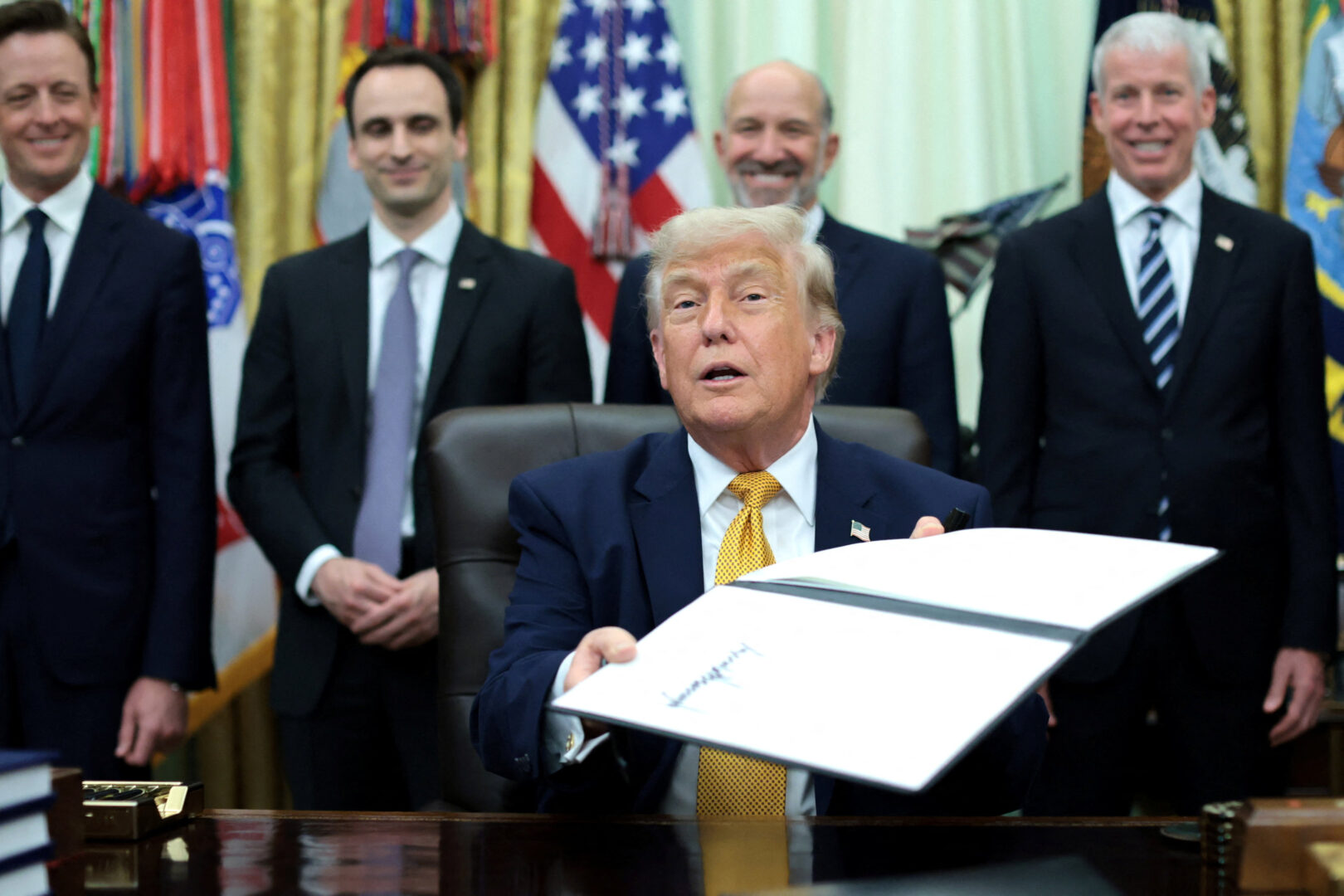
U.S. President Donald Trump on Monday signed two executive orders aimed at accelerating the development of quantum technologies, including efforts to build a powerful quantum computer for scientific research and strengthen protections against future cyber threats.
The measures are designed to reinforce the United States’ position in the global quantum technology race, particularly as competition with China intensifies. Administration officials said the initiatives could drive advances in fields such as artificial intelligence, materials science and chemistry while addressing emerging cybersecurity risks.
According to Michael Kratsios, director of the White House Office of Science and Technology Policy, the administration believes a major quantum computing milestone could be achieved by 2028.
Focus On Post-Quantum Cybersecurity
One of the executive orders directs federal agencies to prepare for the cybersecurity challenges posed by quantum computing.
Quantum computers have the potential to solve certain highly complex calculations much faster than conventional computers. As a result, experts have warned that sufficiently powerful quantum machines could eventually break many of the encryption systems currently used to secure digital communications and government networks.
To address this risk, the administration set a goal of migrating critical government systems to post-quantum cryptography by 2030 or 2031. These next-generation encryption methods are designed to remain secure even against future quantum-enabled attacks.
The move reflects growing concern among governments and technology experts about the long-term security implications of quantum computing.
Pentagon To Expand Quantum Sensor Deployment
The executive orders also place significant emphasis on quantum sensing technologies.
Under the initiative, the U.S. Department of Defense is expected to deploy quantum sensors by 2028. These sensors could provide navigation capabilities for military aircraft operating in environments where GPS signals have been disrupted or blocked.
In addition, quantum sensors mounted on satellites may help detect underground activity from space, including tunnel construction and missile silo development.
Matthew Kinsella, chief executive of Infleqtion, said quantum sensing technologies may reach practical deployment faster than large-scale quantum computers and suggested the proposed timelines are achievable.
Government Backs Quantum Industry Growth
The latest actions follow a broader push by the U.S. government to support domestic quantum technology development.
Last month, the U.S. Commerce Department announced plans to take approximately $2 billion in equity stakes across nine quantum computing companies, including a new venture involving IBM.
The administration views quantum technology as strategically important for both economic competitiveness and national security.
International Cooperation And Supply Chain Security
Beyond research and cybersecurity goals, the executive orders also seek to strengthen international cooperation on intellectual property protection and supply chain security.
Officials said these measures are intended to safeguard critical technologies from foreign competitors and adversaries while supporting long-term U.S. leadership in the sector.
The package further instructs federal agencies to develop plans over the next five years for deploying quantum-enabled sensors and networking technologies, signalling a broader effort to integrate quantum capabilities across government operations.
If successful, the initiatives could accelerate the transition of quantum technologies from research laboratories into practical applications with implications for defence, communications, computing and scientific discovery.
With inputs from Reuters