


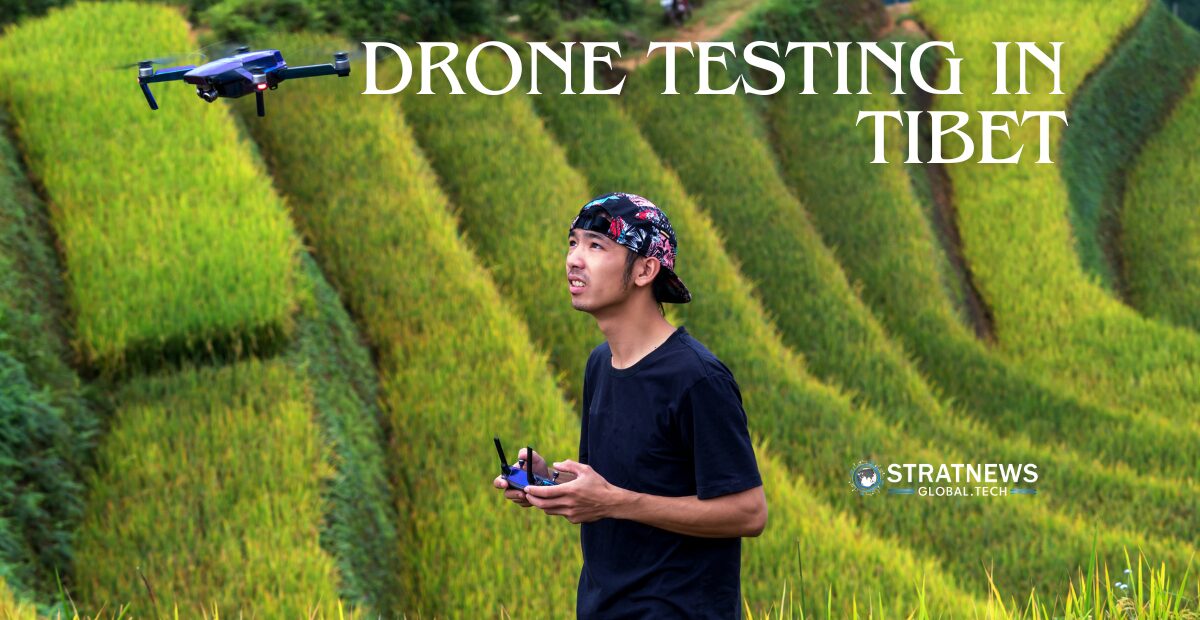
China Expands High-Altitude Drone Testing Facilities in Tibet
China has established specialised high-altitude drone testing and research facilities in Tibet during 2025 and 2026, strengthening its capability to develop and evaluate unmanned aerial vehicles (UAVs) in some of the world’s most demanding operating conditions.
The new facilities include a high-altitude unmanned equipment testing base in Ngari and the Plateau Drone R&D Application Centre at Xizang University. Both sites are located on the Tibetan Plateau, where low oxygen levels, freezing temperatures, rugged terrain and rapidly changing weather provide a challenging environment for testing drone technologies.
The extreme conditions allow researchers to assess how UAVs perform at high elevations, where thinner air and harsh weather can significantly affect flight characteristics and operational reliability.
High-Altitude Testing Base Established in Ngari
China inaugurated the High-Altitude Unmanned Equipment Testing Base in Ngari, western Tibet, on 28 September 2025. The facility is situated at an elevation of more than 4,500 metres and is designed to test unmanned aerial vehicles in thin air, cold temperatures and turbulent weather conditions.
Satellite imagery dated 29 October 2025 showed the facility includes a 720-metre runway along with multiple hangars, supporting a range of testing and operational activities.
The location provides an environment that closely replicates the challenges faced by aircraft operating in high-altitude regions, enabling engineers to evaluate drone performance under demanding conditions.
Plateau Drone R&D Centre Begins Operations
The Plateau Drone R&D Application Centre was launched at Xizang University on 3 July 2026. It is described as China’s first dedicated professional platform for high-altitude drone research and practical deployment.
The centre supports research, testing and application of UAV technologies suited to plateau environments. It is also associated with projects involving border patrols, security operations, logistics and transportation across Tibet.
Furthermore, the centre is expected to contribute to the development of technologies designed to operate efficiently in challenging mountainous terrain.
High Altitude Presents Unique Engineering Challenges
The Tibetan Plateau is widely regarded as one of the most difficult environments for aviation testing because much of the region lies above 4,000 metres.
At such elevations, reduced air density decreases aerodynamic lift, limiting payload capacity while also affecting battery performance, endurance and overall flight efficiency. In addition, rapidly changing weather and rugged landscapes increase the complexity of UAV operations.
These conditions make the plateau a valuable location for evaluating systems intended for use in demanding environments.
Policy Framework Supports UAV Development
The expansion of high-altitude drone testing aligns with the Tibet Autonomous Region Low Altitude Economic Development Plan (2025–2030).
Under the plan, authorities aim to establish a regional UAV service network by 2030. Ngari has been designated as a central testing and dispatch hub for drone operations, supporting research, development and deployment across the region.
The initiative combines infrastructure development with research capabilities, reflecting the growing importance of high-altitude testing in advancing unmanned aerial vehicle technology.

