


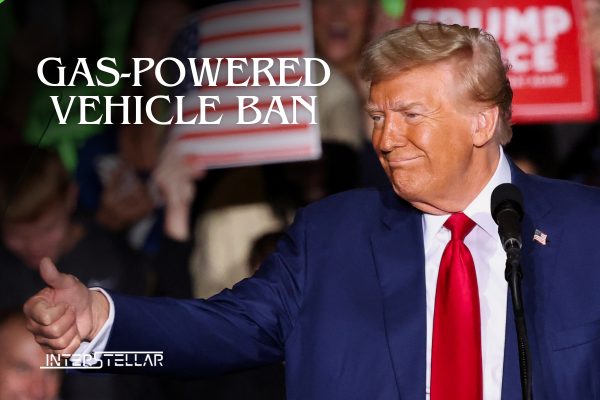
Donald Trump Pledges to Protect Gas-Powered Vehicles if Elected
Republican presidential candidate Donald Trump announced on Thursday that, if elected, he would prevent any state from banning gasoline-powered cars and trucks. Trump aims to highlight the future of the auto industry as a core issue in his campaign, particularly in Michigan, a crucial swing state and home to major automakers.
Trump’s Campaign Focuses on Auto Industry Regulations
During a rally in Saginaw, Michigan, Trump made it clear that he opposes the push towards electric vehicles (EVs). “When I’m president, no state in America will be permitted to ban gas-powered cars or trucks, and I guarantee it – no way,” he stated. Trump’s comments follow his suggestion in August to consider ending the federal tax credit for electric vehicles.
The former president is positioning himself as a defender of traditional automotive manufacturing, hoping to appeal to Michigan voters who are concerned about job security as the industry shifts towards EVs.
California’s Ambitious Zero-Emission Goals
Trump’s stance contrasts sharply with California’s aggressive efforts to transition to cleaner energy. In May 2023, the state sought a waiver from the Environmental Protection Agency (EPA) under the Clean Air Act to mandate that all new vehicles sold in California by 2035 be electric or plug-in hybrids. This move followed California’s approval in August 2022 of its plan to end sales of gasoline-only vehicles by 2035.
California’s initiative aims to set increasing yearly zero-emission vehicle requirements starting in 2026. Eleven other states have adopted similar measures, showing a growing trend in support of EV adoption.
Biden Administration’s Approach to EV Transition
President Joe Biden’s administration has taken a less direct approach. While it has not endorsed a specific date to phase out gasoline-powered vehicles, it has provided substantial financial incentives to encourage the transition to EVs. Biden has set a goal for 50% of new vehicle sales to be EVs by 2030, emphasising that this shift is necessary for the US to remain competitive with China.
In March, the EPA finalised rules to reduce vehicle emissions by 49% by 2032, projecting that 35% to 56% of new vehicles sold between 2030 and 2032 would need to be electric to comply with these stringent regulations.
Automakers’ Concerns Over California’s EV Mandates
Automakers have raised concerns about California’s 2035 target, stating that while early goals may be achievable for the state, other regions with lower EV adoption rates might struggle to meet the same standards. California estimates that its rules would cost $210 billion but yield total benefits of $301 billion through 2040 by reducing smog-causing pollution and promoting cleaner transportation options.
California’s rules mandate that 35% of new cars sold by 2026 must be zero-emission, rising to 68% by 2030 and reaching 100% by 2035. Automakers would still be allowed to sell up to 20% plug-in hybrid vehicles in 2035 to meet the requirements.

