


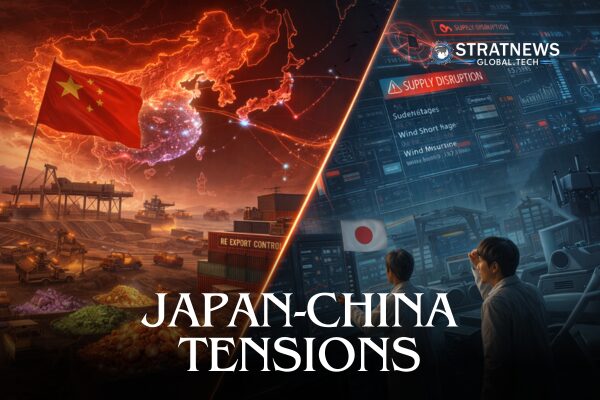
Japan Condemns China’s Dual-Use Export Ban as Tensions Deepen Over Taiwan Remarks
Japan has strongly criticised China’s decision to halt exports of dual-use goods to Japanese firms, describing the move as “absolutely unacceptable and deeply regrettable.” The measure marks the latest escalation in a growing diplomatic row between the two Asian powers following Tokyo’s comments on Taiwan’s security.
Tokyo Denounces Beijing’s Targeted Measures
Beijing’s export ban, announced on Tuesday, restricts the sale of items with both civilian and military applications to Japan. These include certain rare earth materials essential for manufacturing drones, semiconductors and advanced electronics.
Chief Cabinet Secretary Minoru Kihara, Japan’s top government spokesperson, said on Wednesday that the decision “differs significantly from international practice” and directly targets Japan. He declined to comment on the specific industrial impact, noting that details of the restrictions remained unclear.
The dispute was triggered late last year when Japanese Prime Minister Sanae Takaichi said a potential Chinese attack on Taiwan could be viewed as an “existential threat” to Japan. Beijing, which claims Taiwan as its territory, demanded a retraction. Tokyo has not withdrawn the remark, prompting a series of retaliatory measures from China, including travel warnings, seafood import bans and cancelled cultural exchanges.
Rare Earth Risks Loom for Japanese Industry
In a further warning, the state-run China Daily reported that Beijing is considering tightening rare earth export licences to Japan. Analysts said such a move could severely affect Japanese manufacturers, particularly in the automotive and electronics sectors, which remain heavily dependent on Chinese supply.
Despite Tokyo’s efforts to diversify sourcing since China last restricted rare earth exports in 2010, roughly 60 percent of Japan’s imports still come from China. Nomura Research Institute economist Takahide Kiuchi estimated that a three-month export suspension could cost Japanese firms about 660 billion yen ($4.2 billion) and reduce GDP by 0.11 percent. A year-long ban could shave 0.43 percent off output.
As of November, China Customs data showed no immediate drop in rare earth shipments to Japan, with exports up 35 percent year-on-year to 305 metric tonnes—the highest monthly total of 2025.
Diplomatic Strain and Economic Fallout
The growing rift comes amid broader geopolitical tensions. U.S. President Donald Trump, who reached a fragile trade truce with Chinese President Xi Jinping last year, has reportedly urged Takaichi not to intensify the dispute.
Japan’s stock market reflected investor caution, with the Nikkei index falling around one percent on Wednesday. Defence contractors Kawasaki Heavy and Mitsubishi Heavy each dropped about three percent.
Analysts compared the current standoff to the 2012 dispute over the nationalisation of contested islands, which froze high-level dialogue between Tokyo and Beijing for more than two years. “I think this will drag on for quite a while. President Xi seems a bit angry,” said Keita Ishii, president of trading house Itochu Corp, in a television interview.
Despite the diplomatic strain, Takaichi’s popularity at home remains solid, underscoring domestic support for a firmer stance toward Beijing as Japan braces for what some analysts are calling a “long diplomatic winter.”
with inputs from Reuters