


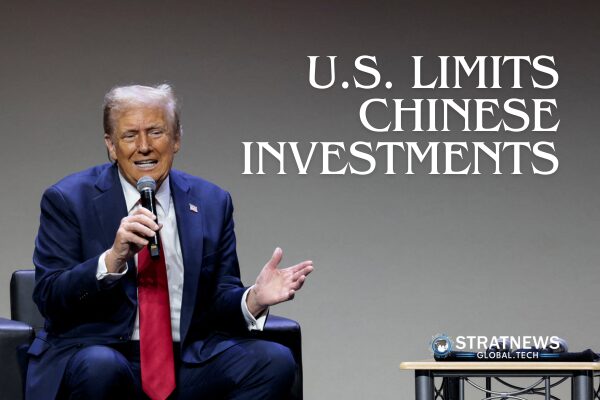
Trump Signs Order to Restrict Chinese Investments in U.S.
President Donald Trump has signed a memorandum directing the Committee on Foreign Investment in the United States (CFIUS) to impose new restrictions on Chinese investments in strategic industries. The move, aimed at safeguarding national security, could further escalate economic tensions between the U.S. and China.
Protecting U.S. Interests from Foreign Influence
The White House described the national security memorandum as a measure to balance foreign investment with national security concerns. According to a White House official, the directive specifically targets China, accusing it of leveraging U.S. capital and technology to strengthen its military, intelligence, and security operations.
Under the new rules, the U.S. will limit foreign adversaries’ access to key American technologies, ensuring that only investments benefiting national interests are permitted. The administration is also considering additional restrictions on U.S. investments in Chinese industries linked to sensitive technologies, such as semiconductors, artificial intelligence, quantum computing, biotechnology, and aerospace.
China’s Response and Growing Economic Tensions
China’s commerce ministry criticized the move, urging the U.S. to stop “politicizing” economic issues. In a statement, the ministry warned that China would closely monitor developments and take necessary steps to defend its economic interests.
This latest action follows previous trade restrictions under Trump’s administration, including increased tariffs on Chinese imports. The measures reflect a broader effort to reduce Chinese influence in the American economy and protect critical sectors from foreign control.
Decline in Chinese Investment and Land Ownership Concerns
CFIUS has already contributed to a sharp decline in Chinese investment in the U.S. According to the Rhodium Group, annual Chinese investments dropped from $46 billion in 2016 to under $5 billion by 2022.
The memorandum also highlights concerns over foreign ownership of U.S. farmland. Foreign investors currently own about 43 million acres of U.S. agricultural land—nearly 2% of all U.S. land. China specifically owns more than 350,000 acres across 27 states, raising security concerns among lawmakers and farm groups. Many argue that foreign acquisitions are driving up land prices and posing risks to national security.
Cybersecurity Threats and Future Restrictions
The order also references ongoing cybersecurity threats, noting that Chinese hackers have repeatedly targeted U.S. entities. Recently, cyberattacks linked to China breached the Treasury Department’s CFIUS office, which is responsible for reviewing foreign investments for national security risks.
Trump could expand upon previous measures, including a 2023 executive order from President Joe Biden, which sought to regulate U.S. investments in China’s sensitive technologies. The new policy could introduce stricter controls and broaden oversight on financial transactions involving Chinese firms.
As economic and security concerns continue to shape U.S.-China relations, these new restrictions mark another step in the ongoing battle over technology, trade, and investment.
With inputs from Reuters