


Close Menu
Stratnews GlobalStratnews Global
    Facebook X (Twitter) Instagram
    Trending
    • AI Image Detection Becomes Increasingly Difficult
    • Chakram Rocket Engine Test Boosts Space Innovation
    • Digital Detox Movement Shapes Gen Z Habits
    • Silicon Photonics India Boosts Chip Innovation
    • Artemis III Core Stage Advances NASA Moon Mission
    • AWS AI Competency Boosts TO THE NEW AI Growth
    • MMGEIS Programme Boosts Geospatial Skills In India
    • Phishing Attacks Linked To Russia Suspected By Germany
    • Support Us
    Stratnews GlobalStratnews Global
    Write for Us
    Monday, April 27
    • Space
    • Science
    • AI and Robotics
    • Industry News
    • Support Us
    Stratnews GlobalStratnews Global
    Home » Chakram Rocket Engine Test Boosts Space Innovation

    Chakram Rocket Engine Test Boosts Space Innovation

    Aditya LenkaBy Aditya LenkaApril 27, 2026 Space No Comments3 Mins Read
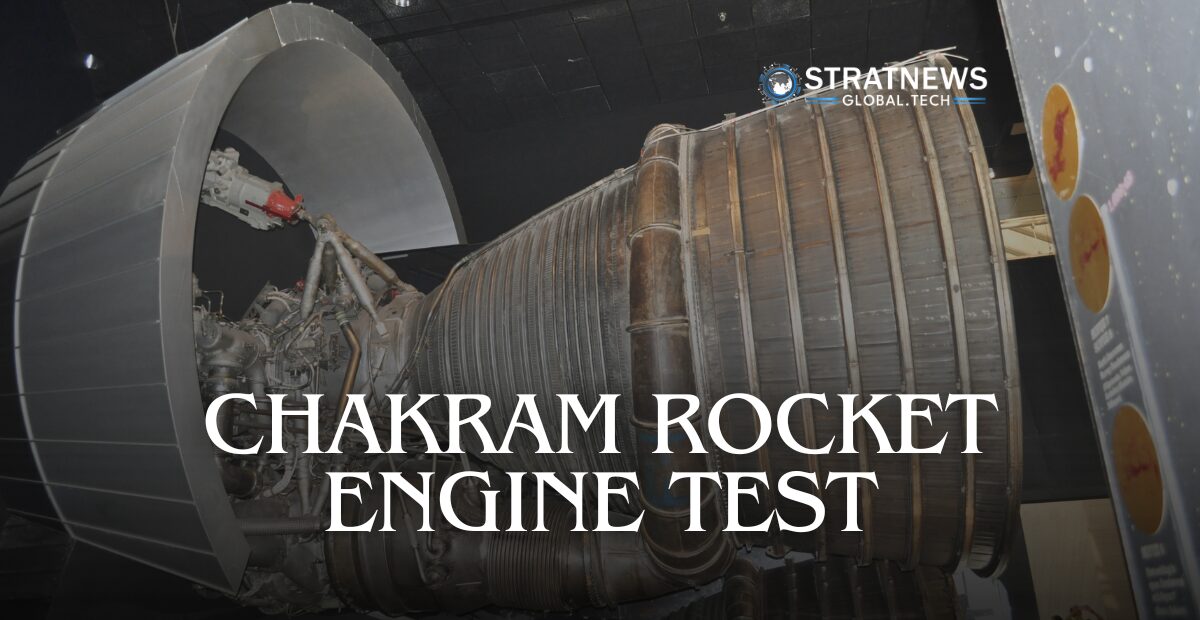
    Chakram Rocket Engine

    Astrobotic Successfully Tests Advanced Chakram Rocket Engine

    Astrobotic, a developer of lunar landers and suborbital rockets, has successfully completed a series of tests for its advanced Chakram rocket engine. The Pittsburgh-based company conducted these tests at NASA’s Marshall Space Flight Center, marking a significant step in the development of next-generation propulsion systems.

    The testing campaign involved two engine prototypes, which collectively fired for 470 seconds. Notably, one of the tests achieved a continuous burn lasting 300 seconds. The company reported no signs of damage following the trials, indicating strong performance and reliability under test conditions.

    Breakthrough In Rotating Detonation Engine Technology

    The Chakram engine is based on rotating detonation rocket engine technology. This advanced approach uses a detonation wave that travels in a circular path within the engine at supersonic speeds. As a result, it offers the potential for higher efficiency compared with conventional rocket engines.

    During testing, the engine generated more than 4,000 pounds-force of thrust. Astrobotic stated that this thrust level ranks among the highest recorded for engines of this type. Furthermore, the 300-second burn represents one of the longest sustained operations achieved for such technology.

    Despite its advantages, rotating detonation technology remains challenging to control. However, the successful tests suggest that Astrobotic has made meaningful progress in addressing these complexities.

    Strong Performance Exceeds Expectations

    The company expressed confidence in the results, noting that the engine performed beyond expectations during initial trials. Engineers had anticipated potential uncertainties when transitioning from design to testing. Nevertheless, the engine demonstrated stable and efficient operation throughout the process.

    The development of Chakram has been supported by NASA through Small Business Innovation Research awards, along with a Space Act Agreement. These programmes have enabled Astrobotic to explore advanced manufacturing methods, including additive manufacturing, to improve engine production.

    The project was completed by a relatively small team working with limited resources. This achievement highlights the effectiveness of focused engineering efforts in advancing complex technologies.

    Future Applications In Lunar And Suborbital Missions

    Astrobotic plans to integrate the Chakram engine into future space vehicles. Potential applications include upgraded versions of its Griffin lunar lander, which is expected to conduct its first flight later this year. In addition, the company aims to deploy the engine in a new line of reusable suborbital vehicles.

    The company previously secured contracts worth 17.5 million dollars from NASA and military partners to develop these suborbital systems. These vehicles are based on designs acquired through the purchase of assets from Masten Space Systems.

    Looking ahead, Astrobotic will continue refining the Chakram engine. Key areas of focus include improving cooling systems, enabling thrust control, and reducing overall engine mass. While no timeline has been provided for flight readiness, ongoing development is expected to bring the technology closer to operational use.

    Author

    • Aditya Lenka
      Aditya Lenka

      A multi-faceted professional with a diverse range of skills and experiences. He currently works as a Producer, Digital Marketer, and Journalist for several well-known media outlets, namely StratNewsGlobal, BharatShakti, and Interstellar. With a passion for storytelling and a keen eye for detail, Aditya has covered a wide range of topics and events across India, bringing a unique perspective to his work.

      When he's not busy producing content, Aditya enjoys exploring new places and cuisines, having traveled extensively throughout India. He's also an avid writer and poet, often penning his thoughts and musings in his free time. And when he wants to unwind and relax, Aditya spends time with his two loyal companions, Zorro and Pablo, his beloved dogs.

      Aditya's dynamic personality and varied interests make him a unique individual, always eager to learn and experience new things.

      View all posts
    Featured
    Share. Facebook Twitter Pinterest LinkedIn Tumblr Email Reddit Telegram WhatsApp
    Aditya Lenka
    Aditya Lenka

      A multi-faceted professional with a diverse range of skills and experiences. He currently works as a Producer, Digital Marketer, and Journalist for several well-known media outlets, namely StratNewsGlobal, BharatShakti, and Interstellar. With a passion for storytelling and a keen eye for detail, Aditya has covered a wide range of topics and events across India, bringing a unique perspective to his work.When he's not busy producing content, Aditya enjoys exploring new places and cuisines, having traveled extensively throughout India. He's also an avid writer and poet, often penning his thoughts and musings in his free time. And when he wants to unwind and relax, Aditya spends time with his two loyal companions, Zorro and Pablo, his beloved dogs.Aditya's dynamic personality and varied interests make him a unique individual, always eager to learn and experience new things.

      Keep Reading

      AI Image Detection Becomes Increasingly Difficult

      Digital Detox Movement Shapes Gen Z Habits

      Silicon Photonics India Boosts Chip Innovation

      Artemis III Core Stage Advances NASA Moon Mission

      AWS AI Competency Boosts TO THE NEW AI Growth

      MMGEIS Programme Boosts Geospatial Skills In India

      Add A Comment
      Leave A Reply Cancel Reply

      Anti Drone System (CUAS)
      Latest Posts

      AI Image Detection Becomes Increasingly Difficult

      April 27, 2026

      Chakram Rocket Engine Test Boosts Space Innovation

      April 27, 2026

      Digital Detox Movement Shapes Gen Z Habits

      April 27, 2026

      Silicon Photonics India Boosts Chip Innovation

      April 27, 2026

      Artemis III Core Stage Advances NASA Moon Mission

      April 27, 2026

      AWS AI Competency Boosts TO THE NEW AI Growth

      April 27, 2026

      MMGEIS Programme Boosts Geospatial Skills In India

      April 27, 2026

      Phishing Attacks Linked To Russia Suspected By Germany

      April 27, 2026

      Robot ‘Hugs’ Student at China University Event, Sparks Safety Debate

      April 27, 2026

      HFCL Radar Expansion Strengthens Defence Technology

      April 27, 2026

      Subscribe to News

      Get the latest sports news from NewsSite about world, sports and politics.

      • Astronomical Events
      • Space Missions
      • Industry News
      • Science
      StratNewsGlobal Tech
      Facebook X (Twitter) Instagram LinkedIn YouTube
      © 2026 StratNews Global, A unit of BharatShakti Communications LLP
      • About Us
      • Contributors
      • Copyright
      • Contact
      • Write for Us

      Type above and press Enter to search. Press Esc to cancel.