


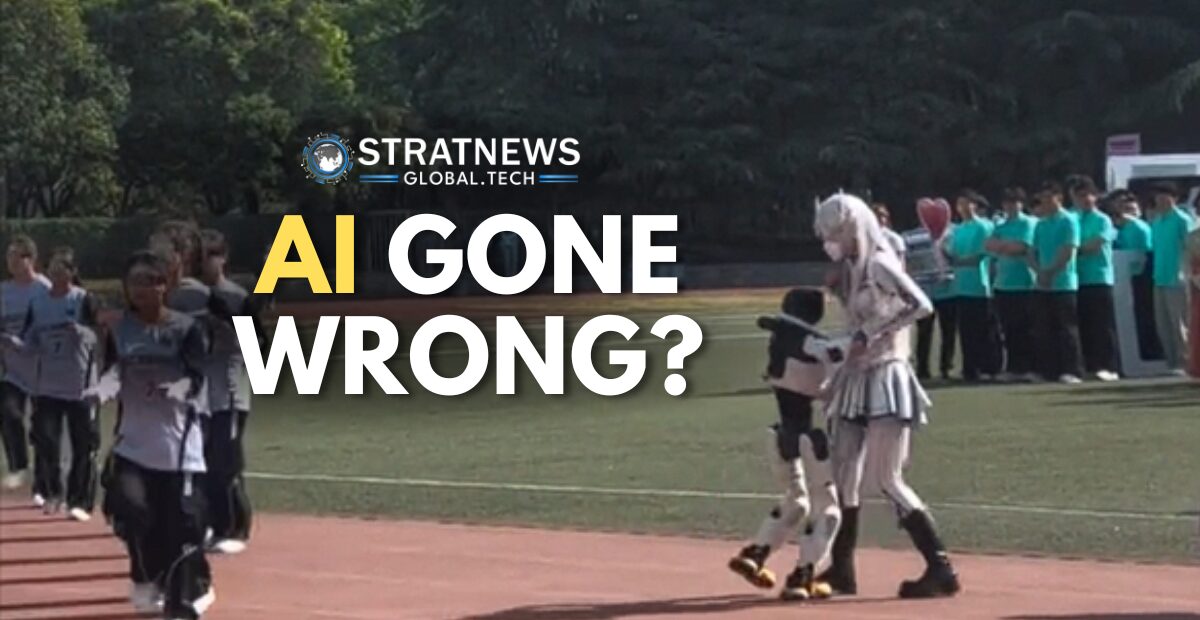
A female student was unexpectedly embraced by a humanoid robot during a dance performance at a university sports event in Shaanxi Province, triggering widespread discussion online about AI behaviour and safety.
According to an article by Global Times, a video circulating on Chinese social media shows the robot suddenly turning and hugging a nearby dancer during a choreographed routine. Staff quickly intervened and pulled the machine away.
The incident occurred during the opening ceremony of a sports meet at Xi’an Eurasia University. The student involved was not injured and later declined media interviews.
Online Debate Over AI Behaviour
The robot’s unexpected action sparked speculation among netizens, with some questioning whether it had developed “independent awareness”, while others suggested the move may have been remotely controlled or staged.
University staff rejected claims that the behaviour was pre-programmed, describing it instead as a malfunction in the AI system.
Signal Interference Blamed
The robot, supplied by a company founded by university alumni, was returned after the event.
According to the report, the company attributed the incident to signal interference at the venue. Multiple drones operating simultaneously during the performance may have disrupted the robot’s control system, leading to abnormal behaviour.
Experts Dismiss ‘Self-Awareness’ Claims
Experts have cautioned against interpreting the incident as evidence of autonomous intelligence.
Gao Huan, deputy director at Chongqing Normal University, said the behaviour was likely due to motion control anomalies, execution deviations or environmental disruptions.
He explained that robots used in performances typically follow pre-programmed scripts, and unintended contact can occur if there are positioning errors, recognition faults or deviations in movement.
Calls for Stronger Safety Measures
The incident has raised broader concerns about safety in human–robot interaction, particularly in open and dynamic environments such as performances.
Experts stressed that robots should not be treated as ordinary stage props, but as intelligent machines with inherent mechanical risks.
They called for stricter precautions, including risk assessments, motion testing, safety distancing, emergency stop systems, and constant human supervision to prevent similar incidents.

