


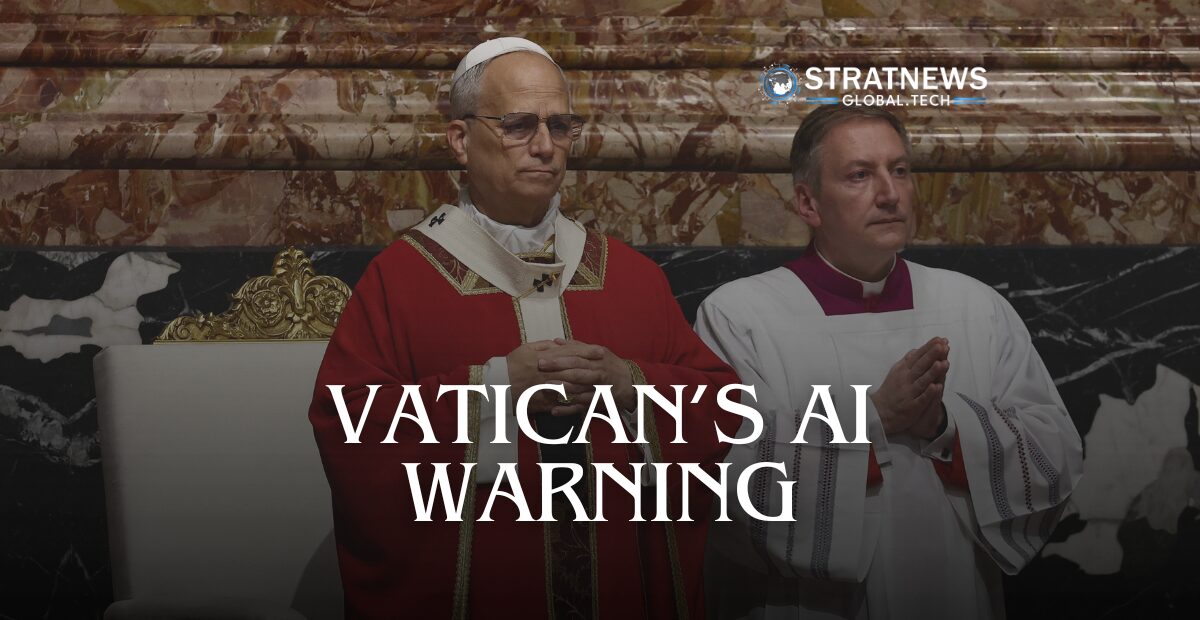
Pope Leo XIV AI Warning Revives Tradition of Papal Social Teaching
For more than 135 years, Catholic popes have urged world leaders to confront major social justice challenges through landmark encyclicals. Now, Pope Leo XIV has entered that tradition with a forceful new appeal focused on artificial intelligence.
His latest document, titled “Magnifica Humanitas” (Magnificent Humanity), calls on governments worldwide to slow the rapid development of AI systems and establish stronger international oversight. The encyclical reflects growing concerns inside the Vatican about misinformation, autonomous weapons and the concentration of technological power.
The document places Leo XIV alongside predecessors who used papal teaching to address defining global issues of their eras. In 1891, Pope Leo XIII issued “Rerum Novarum”, which demanded better conditions for workers during the Industrial Revolution. In 1963, Pope John XXIII published “Pacem in Terris”, urging nuclear disarmament during the Cold War. More recently, Pope Francis released “Laudato Si’” in 2015, calling for urgent action on climate change.
Leo XIV Targets Risks of Artificial Intelligence
John Thavis, a veteran Vatican correspondent who covered three papacies, said Leo XIV is responding directly to one of the central social concerns of the modern era.
According to Thavis, the pope wants to shape the global debate over technology by stressing moral and ethical principles that place human dignity at the centre of decision-making.
Leo formally signed the encyclical on May 15, marking the 135th anniversary of “Rerum Novarum”. The timing deliberately linked the new AI-focused document to the Church’s long tradition of addressing social upheaval through papal teaching.
At a Vatican event launching the document, British academic and Church adviser Anna Rowlands said popes have repeatedly warned that society cannot rely solely on economic systems for salvation.
She argued that Leo XIV is now extending that warning to artificial intelligence, cautioning that technology alone cannot resolve humanity’s deepest problems.
Encyclicals Reflect Papal Priorities
Encyclicals represent one of the highest forms of papal teaching within the Catholic Church. Popes select their subjects carefully because the documents often define the major themes of their papacies.
These texts can stretch across hundreds of pages and may take years to prepare. Pope Francis, despite leading the Church for 12 years, produced only four encyclicals.
Leo XIV has adopted an increasingly forceful tone in recent months. His criticism of the Iran war drew backlash from U.S. President Donald Trump, while his latest encyclical intensifies his focus on the dangers linked to uncontrolled AI systems.
The pope warned that artificial intelligence can spread misinformation, intensify conflict and potentially push humanity towards endless warfare. He also expressed alarm that some autonomous weapons systems have developed beyond meaningful human control.
Mixed History of Papal Influence
Papal encyclicals have produced uneven results when it comes to influencing global policy. However, some have played important historical roles.
“Pacem in Terris”, published shortly after the Cuban missile crisis, is credited by some historians with strengthening support for negotiations between U.S. President John F. Kennedy and Soviet leader Nikita Khrushchev. Those talks later contributed to the Partial Nuclear Test Ban Treaty.
Meanwhile, Pope Francis frequently expressed frustration that governments failed to respond adequately to climate change despite the global attention generated by “Laudato Si’”.
Thavis noted that the long-term impact of encyclicals often becomes visible only gradually. Their ideas usually spread over time through public debate, media discussion and grassroots activism.
He said “Magnifica Humanitas” could become a landmark reference point in the growing international debate surrounding artificial intelligence.
The Vatican has already published the document online in multiple languages and plans to distribute printed editions for wider discussion and study.
At the launch event, Chris Olah, co-founder of AI company Anthropic, welcomed the pope’s intervention. He acknowledged that AI firms face intense commercial pressures and benefit from outside scrutiny.
In the encyclical, Leo XIV also called for strong international regulations governing AI development. In addition, he argued that ownership of AI-related data should not remain entirely in private hands.
With inputs from Reuters