


Germany Pushes For Looser AI Rules To Boost Industry
Germany’s Chancellor Friedrich Merz has called for greater regulatory flexibility within the European Union for artificial intelligence used in industry. He argued that easing restrictions would help unlock productivity gains and strengthen Europe’s competitive position in the global technology race.
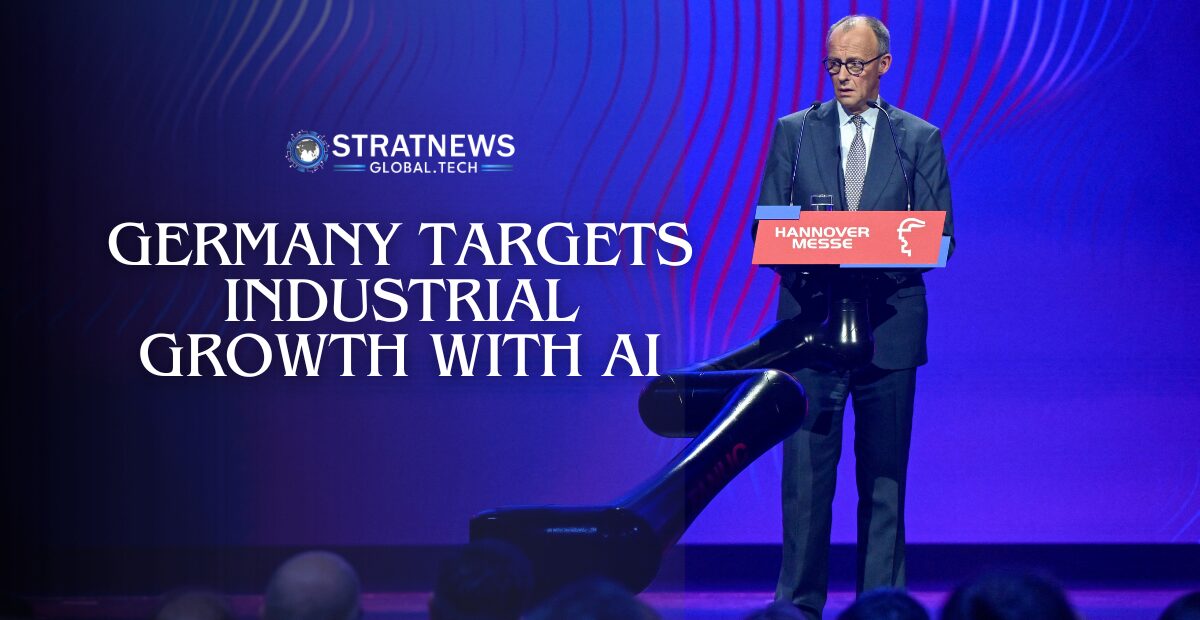
Speaking at the Hannover Messe industrial fair, Merz emphasised the need to differentiate between industrial and consumer applications of artificial intelligence. He stated that current EU regulations place excessive constraints on AI development, particularly in industrial contexts.
Industrial AI Seen As Key To Economic Growth
Merz highlighted the transformative potential of artificial intelligence in manufacturing and other industrial sectors. He explained that AI can significantly improve efficiency, enhance resource utilisation, and reduce operational costs.
Moreover, he stressed that industrial AI applications should not face the same level of regulatory scrutiny as consumer-focused technologies. According to him, a more tailored approach would allow businesses to innovate more freely while maintaining appropriate safeguards.
This stance reflects a broader effort to ensure that European industries remain competitive in a rapidly evolving technological landscape.
Europe Seeks To Close AI Gap
Germany has been working to narrow the gap with leading AI powers such as the United States and China. The country aims to position itself as a hub for advanced technologies while attracting high-value jobs and investment.
To support this ambition, Berlin recently announced plans to significantly expand its AI infrastructure. The initiative includes increasing data processing capacity by at least fourfold by 2030, which is expected to strengthen the country’s technological capabilities.
Calls For Balanced Regulation
Merz’s remarks underscore a growing debate within the European Union over how best to regulate artificial intelligence. While strict rules aim to ensure safety and ethical use, they may also slow innovation if applied too broadly.
By advocating for reduced regulatory pressure on industrial AI, Germany is pushing for a more balanced framework. Such an approach could enable faster adoption of advanced technologies while preserving oversight where it is most needed.
As discussions continue, the outcome may shape the future of AI development across Europe, influencing both economic growth and technological leadership.
With inputs from Reuters