


Close Menu
Stratnews GlobalStratnews Global
    Facebook X (Twitter) Instagram
    Trending
    • OpenAI, Google Offer Free AI Tools in India to Boost User Base and Data Access
    • Freshworks Targets AI Startups with $800 Million Cash for Acquisitions
    • MetaX Surges 700% in Shanghai Debut as China’s AI Chip Race Heats Up
    • Warner Bros Board Set to Reject Paramount’s $108 Billion Takeover Bid
    • Japanese Woman Marries AI Companion Klaus, Challenging Relationship Norms
    • Amazon Eyes $10 Billion Stake in OpenAI Amid $500 Billion Valuation Talks
    • China’s Zhuque-3 Reusable Rocket Reaches Orbit Despite Failed Landing Attempt
    • University of Surrey Engineers Develop Smart Flooring to Reduce Fall Injuries
    Stratnews GlobalStratnews Global
    Write for Us
    Wednesday, December 17
    • Space
    • Science
    • AI and Robotics
    • Industry News
    Stratnews GlobalStratnews Global
    Home » TRISHNA: Advanced Satellite Mission for Monitoring Earth’s Resources

    TRISHNA: Advanced Satellite Mission for Monitoring Earth’s Resources

    Kanika SharmaBy Kanika SharmaJune 6, 2024 Industry News No Comments3 Mins Read
    Trishna

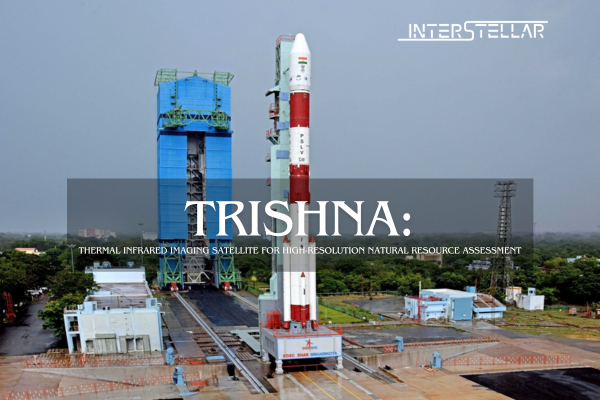
    The TRISHNA (Thermal Infra-Red Imaging Satellite for High-resolution Natural Resource Assessment) mission is a joint initiative by ISRO and CNES. This mission aims to provide high-resolution monitoring of Earth’s surface temperature, emissivity, biophysical variables, and radiation for energy budgeting on a regional to global scale. It focuses on addressing water and food security challenges, human-induced climate change impacts, and efficient water resource management through evapotranspiration monitoring.

    Primary Objectives

    TRISHNA’s main goals include:

    1. Detailed monitoring of the energy and water budgets of the continental biosphere to quantify terrestrial water stress and usage.
    2. High-resolution observation of water quality and dynamics in coastal and inland waters.

    Secondary Objectives

    The mission also aims to:

    • Assess urban heat islands.
    • Detect thermal anomalies related to volcanic activity and geothermal resources.
    • Monitor snow-melt runoff and glacier dynamics.
    • Provide data on aerosol optical depth, atmospheric water vapor, and cloud cover.

    Benefits of TRISHNA

    The TRISHNA mission offers extensive scientific and societal benefits, such as:

    • Agricultural Water Management: TRISHNA will help assess irrigation water use, advise on water savings, and enhance crop water productivity. It will support sustainable water management practices and improve micro-watershed management.
    • Climate Monitoring: The mission will track key indicators like droughts, permafrost changes, and evapotranspiration rates.
    • Urban Planning: Urban planners will benefit from detailed maps of urban heat islands and heat alerts.
    • Water Quality Monitoring: TRISHNA will detect pollution in coastal and inland water bodies and identify sub-marine groundwater discharge at coastal fringes.
    • Geothermal Resources and Cryosphere Monitoring: It will help detect sub-surface fires, assess geothermal resources, and evaluate snow cover and snow-melt patterns, aiding hydrological models.

    TRISHNA Satellite Details

    The TRISHNA satellite is equipped with two primary payloads:

    1. Thermal Infra-Red (TIR) Payload: Provided by CNES, this includes a four-channel long-wave infrared imaging sensor for high-resolution surface temperature and emissivity mapping.
    2. Visible – Near Infra-Red – Short Wave Infra-Red (VNIR-SWIR) Payload: Developed by ISRO, this has seven spectral bands designed for detailed mapping of surface reflectance and biophysical variables.

    The satellite will operate in a sun-synchronous orbit at an altitude of 761 km, with a local time of 12:30 PM at the equator. This orbit offers a spatial resolution of 57 meters for land and coastal areas and 1 km for oceanic and polar regions. The mission is designed for a five-year operational life.

    Global Contributions

    TRISHNA’s data will support several global initiatives, including:

    • GEOGLAM for agricultural monitoring.
    • The UN’s Sustainable Development Goals.
    • The Global Water Watch.

    The mission’s outputs will serve as Essential Agricultural Variables (EAVs) and Essential Climate Variables (ECVs) for the global community.

    Conclusion

    The TRISHNA mission represents a significant advancement in remote sensing technology. It addresses critical water and food security issues and provides essential data to support sustainable solutions for policymakers, watershed managers, agro-industries, and the farming community. With its high-resolution and high-repeat imaging capabilities, TRISHNA will enhance our understanding of Earth’s natural processes and support global efforts in climate change mitigation through optimised resource management.

    Author

    • Kanika Sharma
      Kanika Sharma

      View all posts
    Featured
    Share. Facebook Twitter Pinterest LinkedIn Tumblr Email Reddit Telegram WhatsApp
    Kanika Sharma
    Kanika Sharma

      Keep Reading

      OpenAI, Google Offer Free AI Tools in India to Boost User Base and Data Access

      Freshworks Targets AI Startups with $800 Million Cash for Acquisitions

      MetaX Surges 700% in Shanghai Debut as China’s AI Chip Race Heats Up

      Warner Bros Board Set to Reject Paramount’s $108 Billion Takeover Bid

      Japanese Woman Marries AI Companion Klaus, Challenging Relationship Norms

      Amazon Eyes $10 Billion Stake in OpenAI Amid $500 Billion Valuation Talks

      Add A Comment
      Leave A Reply Cancel Reply

      Anti Drone System (CUAS)
      Latest Posts

      OpenAI, Google Offer Free AI Tools in India to Boost User Base and Data Access

      December 17, 2025

      Freshworks Targets AI Startups with $800 Million Cash for Acquisitions

      December 17, 2025

      MetaX Surges 700% in Shanghai Debut as China’s AI Chip Race Heats Up

      December 17, 2025

      Warner Bros Board Set to Reject Paramount’s $108 Billion Takeover Bid

      December 17, 2025

      Japanese Woman Marries AI Companion Klaus, Challenging Relationship Norms

      December 17, 2025

      Amazon Eyes $10 Billion Stake in OpenAI Amid $500 Billion Valuation Talks

      December 17, 2025

      China’s Zhuque-3 Reusable Rocket Reaches Orbit Despite Failed Landing Attempt

      December 17, 2025

      University of Surrey Engineers Develop Smart Flooring to Reduce Fall Injuries

      December 16, 2025

      Global Smartphone Shipments Set to Drop 2.1% in 2026 amid Chip Shortages

      December 16, 2025

      Blue Origin Developing Space-Based Data Centres for AI, Report Says

      December 16, 2025

      Subscribe to News

      Get the latest sports news from NewsSite about world, sports and politics.

      • Astronomical Events
      • Space Missions
      • Industry News
      • Science
      StratNewsGlobal Tech
      Facebook X (Twitter) Instagram LinkedIn YouTube
      © 2025 StratNews Global, A unit of BharatShakti Communications LLP
      • About Us
      • Contributors
      • Copyright
      • Contact
      • Write for Us

      Type above and press Enter to search. Press Esc to cancel.