

Close Menu
Stratnews GlobalStratnews Global
    Facebook X (Twitter) Instagram
    Trending
    • Google’s New Haaland Easter Egg Goes Viral During FIFA 2026
    • OpenAI Unveils ChatGPT Work To Take On Anthropic’s AI Agent
    • Xi Orders Stronger Push In AI, Deep Space And Advanced Manufacturing
    • Australia Backs Gaganyaan With Cocos Tracking Station
    • How India Plans to Attract Trillions in Long-Term Global Capital
    • AI Productivity Gains Need Wider Inclusion
    • Meta’s AI Photo Tool Sparks Fresh Questions Over Consent
    • Elon Musk Unveils Grok 4.5 Ahead Of OpenAI’s GPT-5.6 Launch
    • Support Us
    Stratnews GlobalStratnews Global
    Write for Us
    Saturday, July 11
    • Space
    • Science
    • AI and Robotics
    • Industry News
    • Support Us
    Stratnews GlobalStratnews Global
    Home » African Scientists Extract Two-Million-Year-Old Proteins, Revealing Human Origins

    African Scientists Extract Two-Million-Year-Old Proteins, Revealing Human Origins

    Aishwarya ParikhBy Aishwarya ParikhJune 30, 2025 Science No Comments3 Mins Read
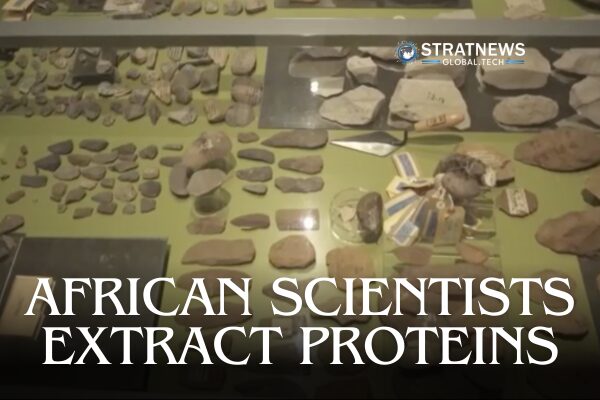
    African scientists extract proteins

    African Scientists Extract Two-Million-Year-Old Proteins in Historic First

    In a scientific first, African researchers have successfully extracted two-million-year-old enamel proteins from fossilised teeth in South Africa. This breakthrough has revealed rare biological details about Paranthropus robustus, an extinct species that lived alongside early humans.

    The fossils were found at the Cradle of Humankind, a UNESCO World Heritage Site near Johannesburg. This site is the world’s richest source of hominin remains, thanks to the region’s unique geology which helped preserve these ancient fossils.

    Unlocking Ancient Secrets with Enamel Proteins

    The research team used palaeoproteomics, a technique that studies ancient proteins that can survive much longer than DNA, especially in warm climates like Africa’s. This method allows scientists to look deeper into human evolution than ever before.

    Dr Robyn Pickering from the University of Cape Town explained that teeth act as “time capsules” preserving enamel proteins. Since these proteins are made by DNA, they provide an “echo” of genetic information from two million years ago, offering insight into our evolutionary history even when DNA cannot survive.

    In Africa, DNA rarely remains in ancient remains older than 20,000 years, making this protein-based method a valuable tool for studying deep human history. Professor Rebecca Ackermann from the University of Cape Town emphasised that these proteins allow scientists to look back far beyond what DNA can show, reaching as far as two million years into the past.

    Revealing Traits of Paranthropus robustus

    Researchers extracted proteins from four fossilised teeth found at the Swartkrans Cave site, identifying the biological sex and traits of these ancient individuals. Dr Lauren Schroeder from the University of Toronto noted that the team discovered the sex of the individuals, revealing details about sexual dimorphism within the species.

    Paranthropus robustus lived between 2.8 and 1.2 million years ago, following a separate evolutionary path from early humans. This discovery provides new insights into their biology and helps scientists understand how these early relatives lived.

    African Scientists Lead a New Era in Human Origins Research

    This project also marks a significant shift in leadership in the field of human origins research. African scientists are taking the lead in uncovering the continent’s past, challenging the Western dominance in the study of ancient biomolecules.

    Dr Palesa Madupe from the University of Cape Town highlighted the importance of including African scientists in such research, ensuring that those from the continent are central in telling the human story from its origins.

    With this breakthrough, African researchers are not only unlocking long-lost biological information but also reclaiming their role in shaping the narrative of human history where it all began.

    with inputs from Reuters

    Author

    • Aishwarya Parikh
      Aishwarya Parikh
      View all posts
    Featured
    Share. Facebook Twitter Pinterest LinkedIn Tumblr Email Reddit Telegram WhatsApp
    Aishwarya Parikh

      Keep Reading

      Google’s New Haaland Easter Egg Goes Viral During FIFA 2026

      OpenAI Unveils ChatGPT Work To Take On Anthropic’s AI Agent

      Xi Orders Stronger Push In AI, Deep Space And Advanced Manufacturing

      Australia Backs Gaganyaan With Cocos Tracking Station

      AI Productivity Gains Need Wider Inclusion

      Meta’s AI Photo Tool Sparks Fresh Questions Over Consent

      Add A Comment
      Leave A Reply Cancel Reply

      Anti Drone System (CUAS)
      Latest Posts

      Google’s New Haaland Easter Egg Goes Viral During FIFA 2026

      July 10, 2026

      OpenAI Unveils ChatGPT Work To Take On Anthropic’s AI Agent

      July 10, 2026

      Xi Orders Stronger Push In AI, Deep Space And Advanced Manufacturing

      July 10, 2026

      Australia Backs Gaganyaan With Cocos Tracking Station

      July 9, 2026

      How India Plans to Attract Trillions in Long-Term Global Capital

      July 9, 2026

      AI Productivity Gains Need Wider Inclusion

      July 9, 2026

      Meta’s AI Photo Tool Sparks Fresh Questions Over Consent

      July 9, 2026

      Elon Musk Unveils Grok 4.5 Ahead Of OpenAI’s GPT-5.6 Launch

      July 9, 2026

      How China Used Drones And AI To Fight Typhoon Maysak

      July 9, 2026

      Mission Aagaman Signals Private Space Breakthrough

      July 9, 2026

      Subscribe to News

      Get the latest sports news from NewsSite about world, sports and politics.

      • Astronomical Events
      • Space Missions
      • Industry News
      • Science
      StratNewsGlobal Tech
      Facebook X (Twitter) Instagram LinkedIn YouTube
      © 2026 StratNews Global, A unit of BharatShakti Communications LLP
      • About Us
      • Contributors
      • Copyright
      • Contact
      • Write for Us

      Type above and press Enter to search. Press Esc to cancel.